Old Photo Restoration & Realistic Colorization
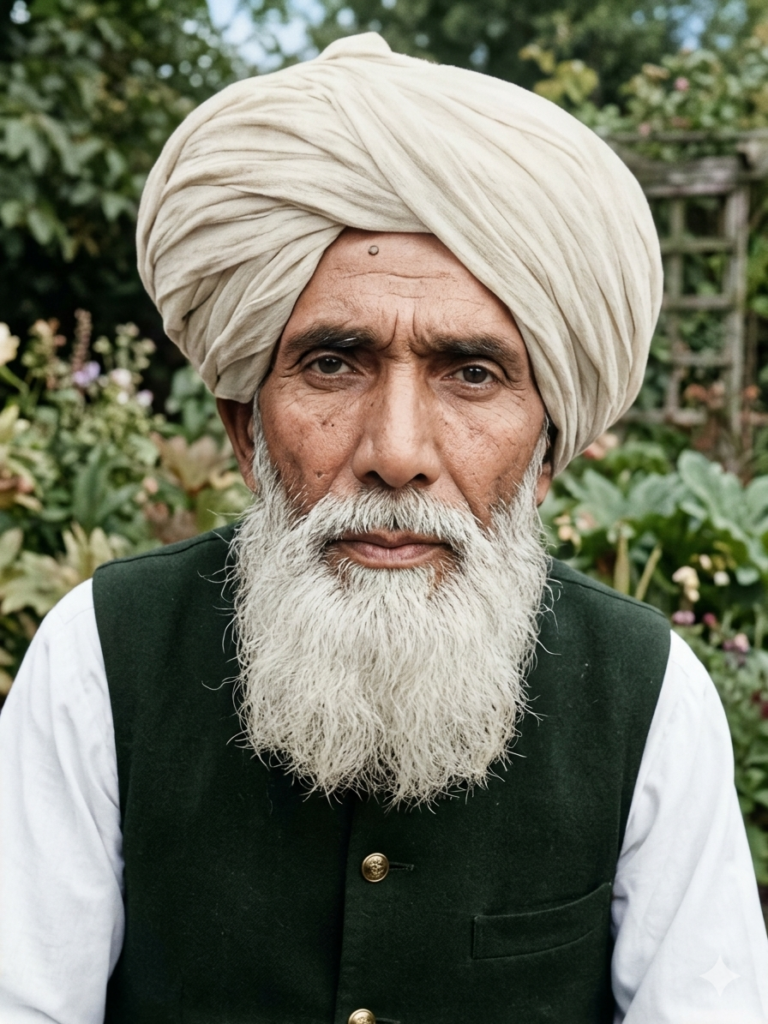
A damaged black-and-white photo restored and colorized, with scratches and stains cleaned away. The same person, pose, and scene stay untouched, tested in Gemini.
Using the provided reference image, perform a professional old-photo restoration and realistic colorization. Keep the original composition, the single standing person, pose, clothing shape, body proportions, and background layout unchanged. Remove all visible aging damage: mold-like white patches, peeling emulsion, scratches, stains, cracks, creases, faded contrast, and worn borders. Reconstruct missing image areas naturally without inventing new objects or changing the subject's identity. Convert the black-and-white damaged photo into a clean natural-color photograph from the {argument name="photo era" default="1970s"}: green outdoor foliage, a white long-sleeve shirt, dark trousers, natural skin tones, and soft daylight. Improve clarity, exposure, and texture while preserving the original documentary look; do not beautify, slim, reshape facial features, alter clothing, change the pose, add modern effects, or make it look like a newly staged portrait.
How to use this prompt
This prompt works in AI Art, best at 2:3. It takes less than a minute.
Copy the prompt
Press the copy button above.
Open AI Art
If the prompt edits a photo, upload one clear, front-facing photo first.
Paste and send
Paste in the chat box (Ctrl+V, or long-press on a phone) and send.
Not perfect?
Change a few words and try again, or use a follow-up reply from this page.
Behind the prompt
Good colorization needs a clean original scan, so start with the sharpest photo you have. If colors look painted on, add 'natural muted colors, realistic skin tones'.
Generation details
Fix it fast
Quick moves when the first result is not right.
If the colorization looks fake or the face changes, rerun it and stress 'natural muted colors, realistic skin tones' and remind it not to beautify or reshape features.
Try a different decade: change the era default from the 1970s to the 1960s or 1980s to shift the color palette and clothing tones.
Keep the same person and pose — just clean the damage and use softer, more natural colors.
Questions about this prompt
Will the person still look like the original?
Yes. The prompt restores damage and adds color while keeping the same person, pose, clothing shape, and background layout untouched.
What kind of photo works best?
Start with the sharpest scan you have. A clean, high-resolution scan gives the restoration far more real detail to rebuild from.
Why do the colors look painted on?
That happens when the color sits on top instead of blending in — rerun and add 'natural muted colors, realistic skin tones'.