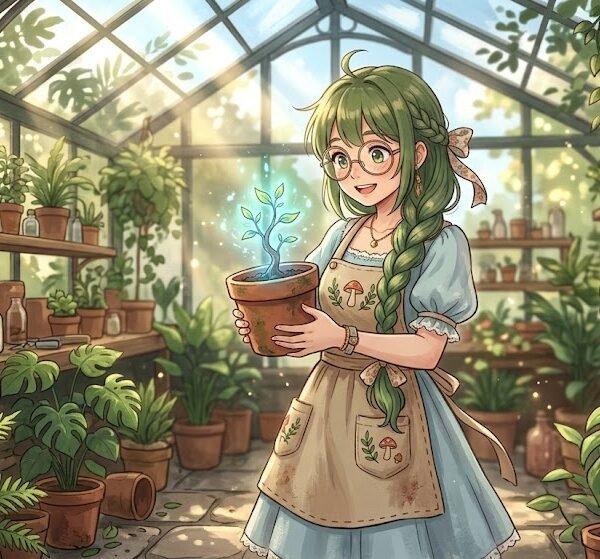
Charming original anime girl character, a cozy greenhouse botanist with braided green hair and oversized round glasses. She wears a cute canvas apron over a pastel dress, holding a glowing magical sapling in a terracotta pot. Bright sunbeams filtering through glass panels, lush tropical plants, warm atmospheric colors, soft painterly anime aesthetic.
💡 Expert Insight: The phrase soft painterly anime aesthetic is crucial here, as it signals the AI model to blend edges and reduce harsh line work, yielding an atmospheric finish. Modern diffusion models excel at rendering foliage, but combining bright sunbeams with a glowing magical sapling often leads to overexposed highlights that bleed into the subject’s pastel dress. If the generated lighting feels too intense or washes out character features, replace bright sunbeams with soft diffused morning light. This modification lowers the overall contrast, allowing the generator to balance the plant's localized bloom against the background without smudging delicate details like the glasses frames.