Brain Activity Myth Versus Anatomical Fact
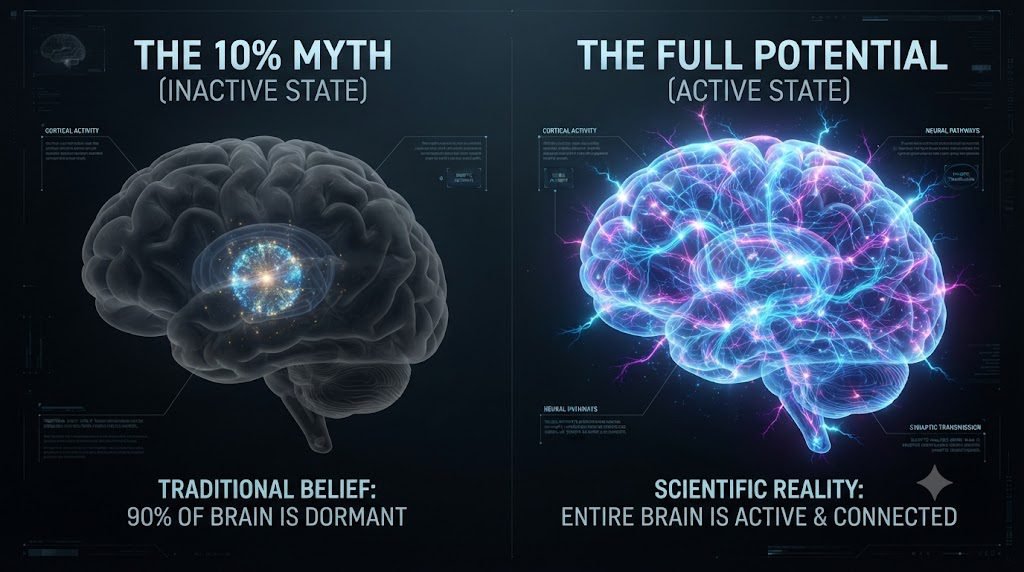
A dual-panel illustration debunking the ten-percent brain myth: a dim brain with a tiny glowing core beside a fully illuminated neural network. Tested in Gemini.
Dual-panel cinematic illustration comparing human brain myths. Left side shows a dim gray brain with a tiny ten percent glowing core. Right side showcases a vibrant fully illuminated neural network with firing synapses, glowing axons, and dynamic electrical pathways. Clean medical infographic style, volumetric glowing light, detailed volumetric cortex rendering, dark background.
Try in Gemini copies the prompt first, then opens it. Paste it in the chat box and press send.
How to use this prompt
This Anatomy prompt works in Gemini, best at 16:9. It takes less than a minute.
Copy the prompt
Press the copy button above.
Open Gemini
If the prompt edits a photo, upload one clear, front-facing photo first.
Paste and send
Paste in the chat box (Ctrl+V, or long-press on a phone) and send.
Not perfect?
Change a few words and try again, or use a follow-up reply from this page.
Behind the prompt
The phrase 'volumetric glowing light' is crucial here because it prevents the AI from rendering flat, two-dimensional electrical lines and instead forces depth across the neural branches. Diffusion models like Midjourney typically struggle with dual-panel symmetry, often blending the left and right sides together or bleeding colors across the divider. If the model merges the two visual concepts into a single chaotic brain, insert a hard structural keyword like 'split-screen canvas with a solid vertical black dividing line' to enforce clear compositional separation between the myth and the factual representation.
Generation details
Fix it fast
Quick moves when the first result is not right.
If the myth and fact sides merge into one brain, add 'split-screen canvas with a solid vertical black dividing line' and rerun.
Turn it into a single glowing brain with the myth side fading into the fully lit side for a one-image version.
Keep both panels, but add a solid black dividing line so the two sides stay separate.
Questions about this prompt
Do I need a reference image?
No. This infographic illustration is generated from text alone.
Why do the two panels blend together?
Dual panels often bleed into each other. Add 'split-screen canvas with a solid vertical black dividing line', as the page tip suggests.
Can I use this for a presentation?
Yes. The clean infographic style suits slides and articles about the ten-percent brain myth.