Deoxygenated Blood Color Myth Medical Cross Section
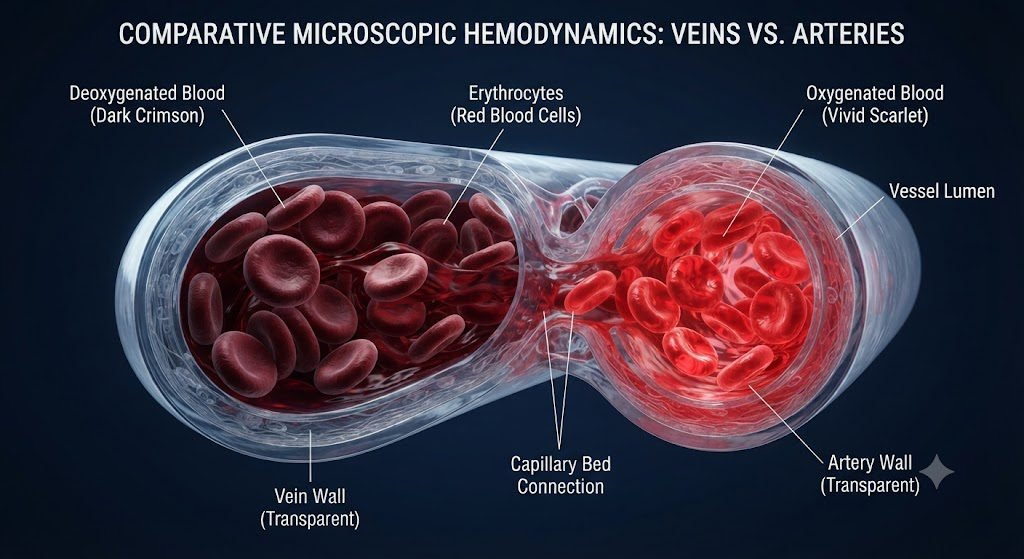
A microscopic cross-section of veins and red blood cells contrasting dark crimson deoxygenated blood with vivid scarlet oxygenated blood. Tested in Gemini.
Microscopic cross-section of human veins and red blood cells, contrasting dark crimson deoxygenated blood with vivid scarlet oxygenated blood. Transparent glass vessel walls, realistic fluid dynamics, subtle subsurface scattering on cellular membranes, soft directional studio lighting, dark navy background, hyper-detailed anatomical infographic presentation, hyperrealistic texture.
Try in Gemini copies the prompt first, then opens it. Paste it in the chat box and press send.
How to use this prompt
This Anatomy prompt works in Gemini, best at 4:5. It takes less than a minute.
Copy the prompt
Press the copy button above.
Open Gemini
If the prompt edits a photo, upload one clear, front-facing photo first.
Paste and send
Paste in the chat box (Ctrl+V, or long-press on a phone) and send.
Not perfect?
Change a few words and try again, or use a follow-up reply from this page.
Behind the prompt
Utilizing 'subsurface scattering' signals the image generator to simulate light penetrating translucent tissue, which gives the red blood cells organic depth rather than a solid plastic appearance. Generative models tend to over-saturate fluids when prompted with medical contrast, often turning dark crimson into artificial neon tones. To fix unwanted neon hues and achieve a grounded clinical aesthetic, add 'muted earthy undertones' or specify 'desaturated ambient color temperature' in your prompt parameters, which controls the light bounce and restores authentic vascular pigmentation.
Generation details
Fix it fast
Quick moves when the first result is not right.
If the crimson turns neon, add 'muted earthy undertones, desaturated ambient color temperature' and rerun.
Pull the camera back to show a full vein network across an arm cross-section with the same two blood tones.
Keep the same cross-section, but mute the colors so the blood looks natural, not neon.
Questions about this prompt
Do I need a reference image?
No. This medical cross-section is generated from text alone.
Why do the blood colors look neon?
Models over-saturate medical contrast. Add 'muted earthy undertones' or a desaturated color temperature, as the page tip suggests.
Can I show only one blood type?
Yes. Drop the contrast line and describe a single vessel of oxygenated blood for a simpler diagram.