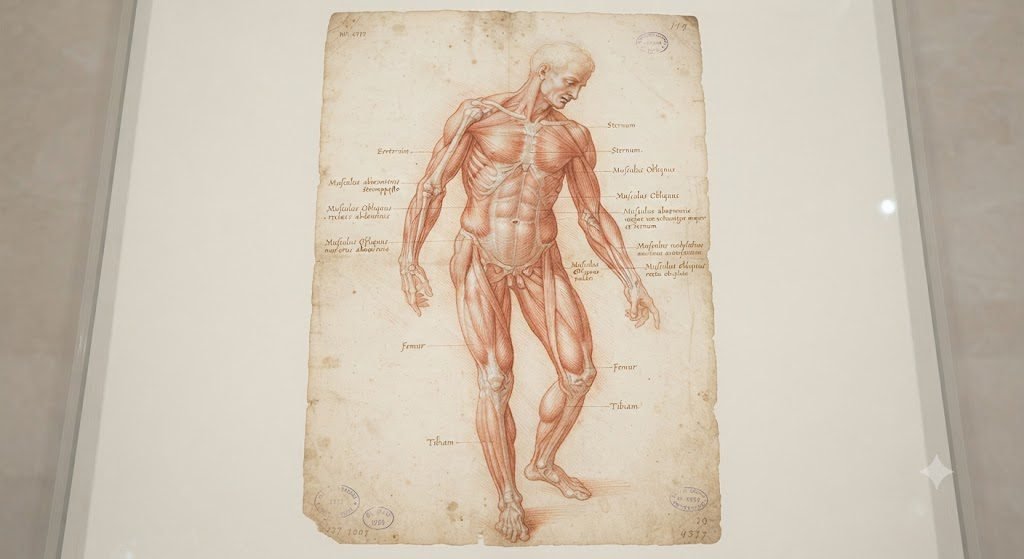
Classical Renaissance Chalk Anatomical Figure Study
Full body anatomical study of a standing male figure in dynamic contrapposto pose, executed in red and white chalk on aged parchment paper. Detailed cross-section rendering of the superficial skeletal system alongside deep muscular layers of the torso and limbs. Fine hatching, realistic shading, subtle smudging, dynamic anatomical proportions, authentic historical medical sketch style, ambient soft museum lighting.
Try in Gemini copies the prompt first, then opens it. Paste it in the chat box and press send.
How to use this prompt
This Anatomy prompt works in Gemini. It takes less than a minute.
Copy the prompt
Press the copy button above.
Open Gemini
If the prompt edits a photo, upload one clear, front-facing photo first.
Paste and send
Paste in the chat box (Ctrl+V, or long-press on a phone) and send.
Not perfect?
Change a few words and try again, or use a follow-up reply from this page.
Behind the prompt
Specifying "dynamic contrapposto pose" is essential for classical anatomical accuracy because it forces the model to calculate realistic weight distribution, shifting muscle tension across the pelvic girdle and calves naturally. Text-to-image models generally excel at historical chalk media, though they frequently over-render anatomical details into chaotic line work. The parchment texture acts as a dampener, softening harsh generated contours. If you notice the skeletal and muscular layers blending together confusingly, isolate the figure by specifying a dual-panel split canvas layout, placing the pure skeletal framework on the left and muscle groups on the right.