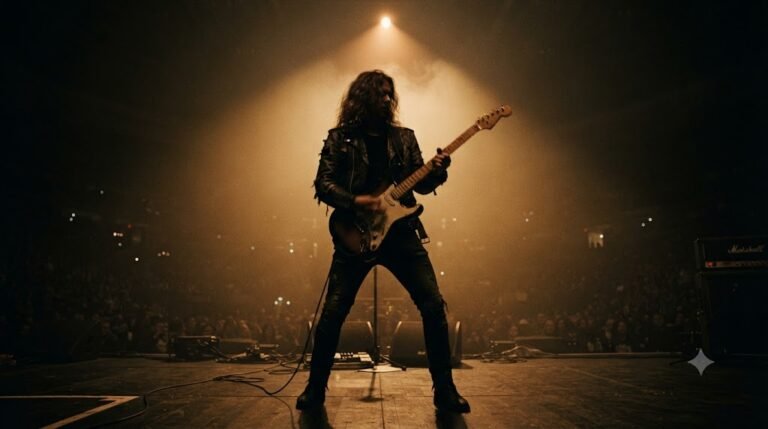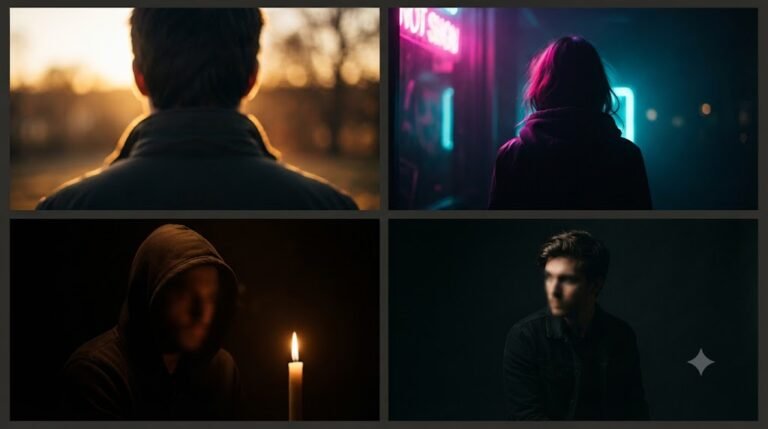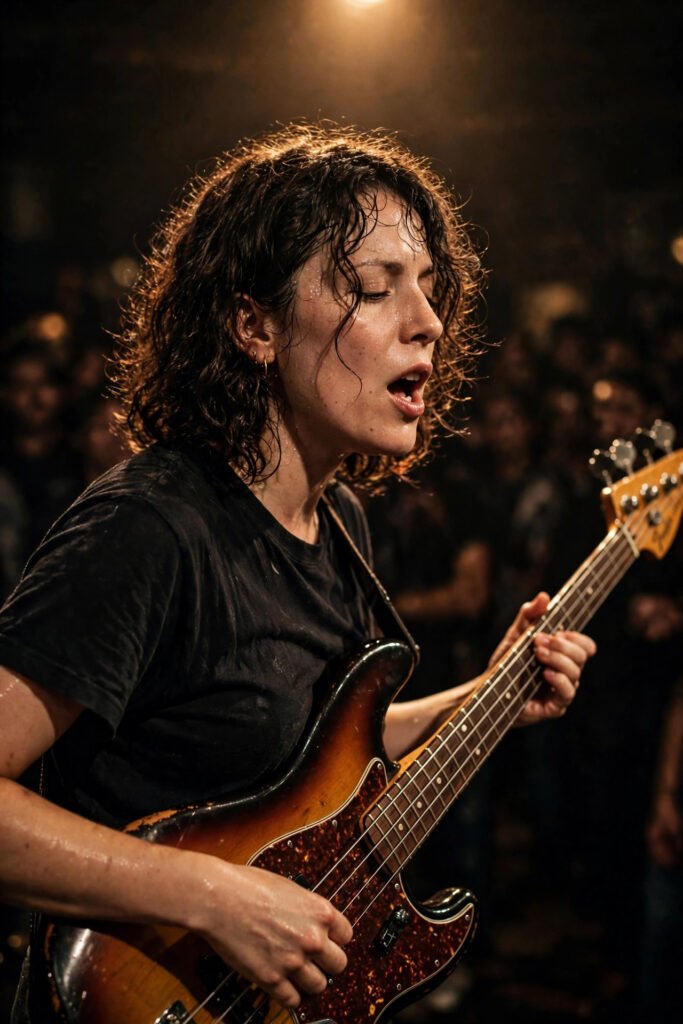
If you are looking for the best musician image prompt, the honest answer is that there is no single one. A rap studio shot, a DJ set, and a jazz club portrait need completely different light, lenses, and framing. This guide fixes the flaw every other guide ignores: AI mangling instruments, with guitars growing extra strings and hands growing extra fingers. Below are 50 prompts across seven genres and three real-world formats, each with its structure and why it works, so the prompt you copy actually produces a usable photo.
Cheat-Sheet: Genre, Camera, Light, and What to Avoid
| Music Genre | Lens Range Used Below | Ideal Lighting | What to Avoid |
|---|---|---|---|
| Rock / Metal | 24mm wide to 85mm | Hard rim light, stage smoke, single spotlight | plastic skin, extra guitar necks |
| Hip-Hop / R&B | 50mm to 85mm | Warm tungsten, neon, golden hour | over-airbrushed skin, cartoonish jewelry |
| Pop | 50mm to 85mm | High-key pastel, stage color wash | harsh shadows, uncanny smiles |
| Electronic / DJ | 24mm to 35mm | Strobes, lasers, RGB haze | daylight, empty crowd |
| Folk / Acoustic | 35mm to 85mm | Golden hour, firelight, window light | digital sharpness, 3D render |
| Jazz / Soul | 50mm to 85mm f/1.4 | Low-key tungsten, single amber spotlight | harsh flash, oversaturated colors |
| Classical / Cinematic | 50mm to 85mm (24mm for orchestra) | Rim light, hall light, chiaroscuro | modern clutter, cropped hands |
The Anti-Glitch Prompt Formula
Rule 1: The Instrument Safety Rule. AI renders hands cleanly when they are doing one clear task, shown fully in frame, at medium distance. Prompt for waist-up or over-the-shoulder shots, silhouettes, or motion blur on the hands. Avoid extreme hand close-ups and never crop through the fingers.
Rule 2: Eliminate Prompt Bloat. Keep prompts between 40 and 65 words. Walls of 250-word text get ignored by modern models, so every prompt below is written inside that window.
Rule 3: Engine-Specific Tags. Never put Midjourney parameters on a Gemini prompt. The table below covers every engine once, so the prompts stay clean and copy-ready.
Engine Tags: One Table for Every Prompt
| Engine | What to add |
|---|---|
| Midjourney v6.1 (same flags work on v7) | Paste the prompt, then add --style raw --ar 4:5. Use the Ratio shown under any prompt that overrides the default. |
| Flux | Natural language as written, plus a sensor note: shot on 35mm Portra 400 for most scenes, Kodak Tri-X 400 for black and white, 100mm macro lens for close-ups. |
| Gemini / DALL-E 3 | Plain English as written. Gemini and DALL-E have no parameters, so state the ratio in words: “portrait 4:5 orientation”. |
Album cover prompts only: add --no text, letters, logo on Midjourney, and end the prompt with “No text or lettering in the image” on Gemini and DALL-E. Title text is always added afterwards.
How to Adapt Any Prompt in 30 Seconds
Keep the structure line and swap three slots: the instrument (guitar to saxophone), the light (amber spotlight to blue side light), and the lens (85mm for a portrait, 24mm for a crowd). Everything else, the moment, the imperfection, and the grain, stays. Example: take Saxophone Solo in a Jazz Club, change the sax to a trumpet and the amber light to cool blue, and you have a new shot.
Rock & Metal Prompts
Low-Angle Stage Jump
Prompt Structure: Jump moment + Low pit angle + Crowd blur + Pyro glow + Lens + Grain
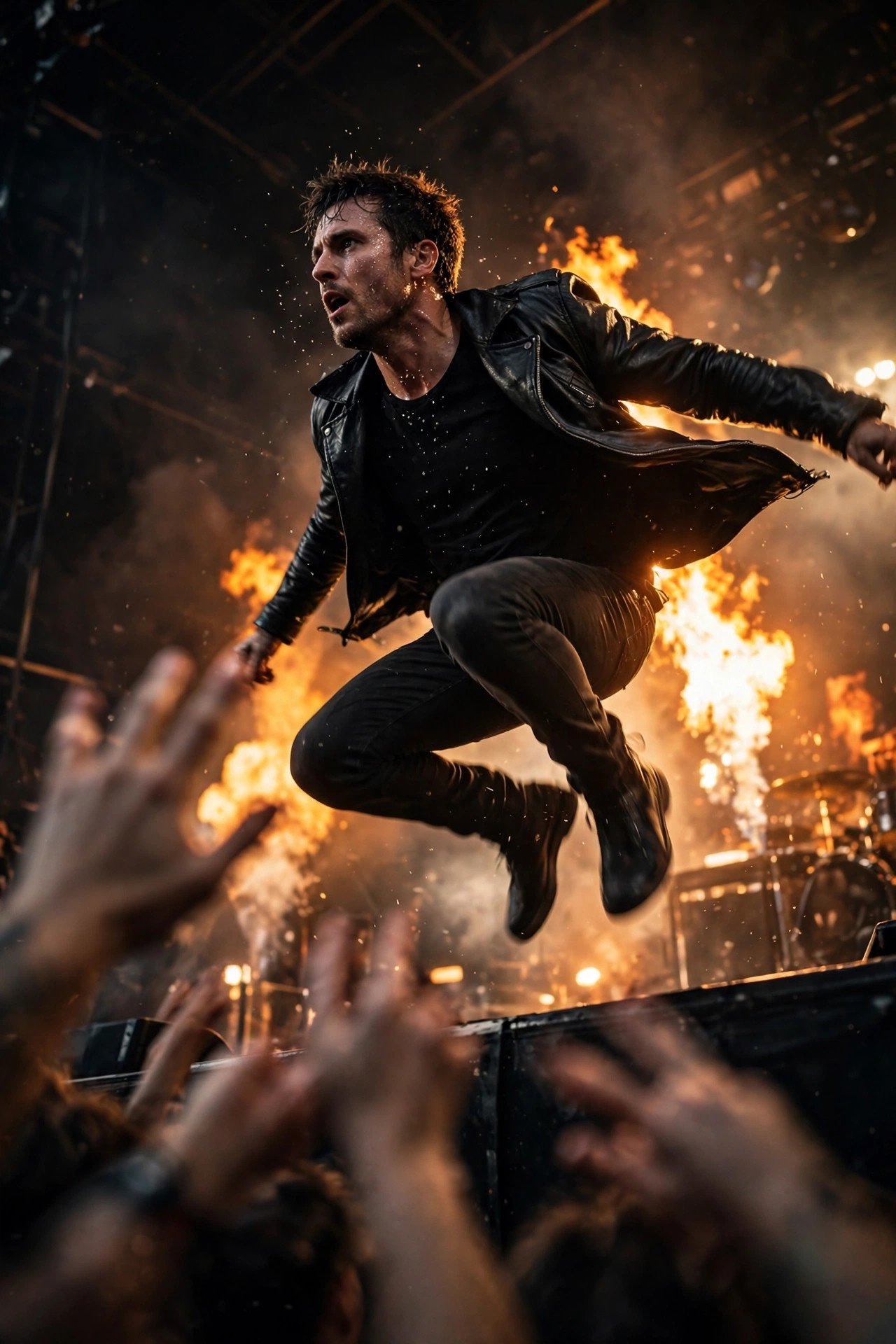
Rock vocalist frozen mid-jump above a stage, shot from a low angle in the photo pit, crowd hands blurred in the foreground, pyro glow behind, sweat visible on the face, leather jacket mid-motion. 24mm wide lens, high shutter speed, hard rim light, stage smoke, high contrast, film grain, natural skin texture.
Why it works: The low pit angle makes the jump monumental instead of flat, and blurred crowd hands put the viewer in the pit. Pyro glow separates the figure from the dark stage, and a high shutter speed freezes the peak moment.
Sweaty Guitar Solo
Prompt Structure: Solo + Single spotlight + Sweat + Waist-up framing + Lens + Texture
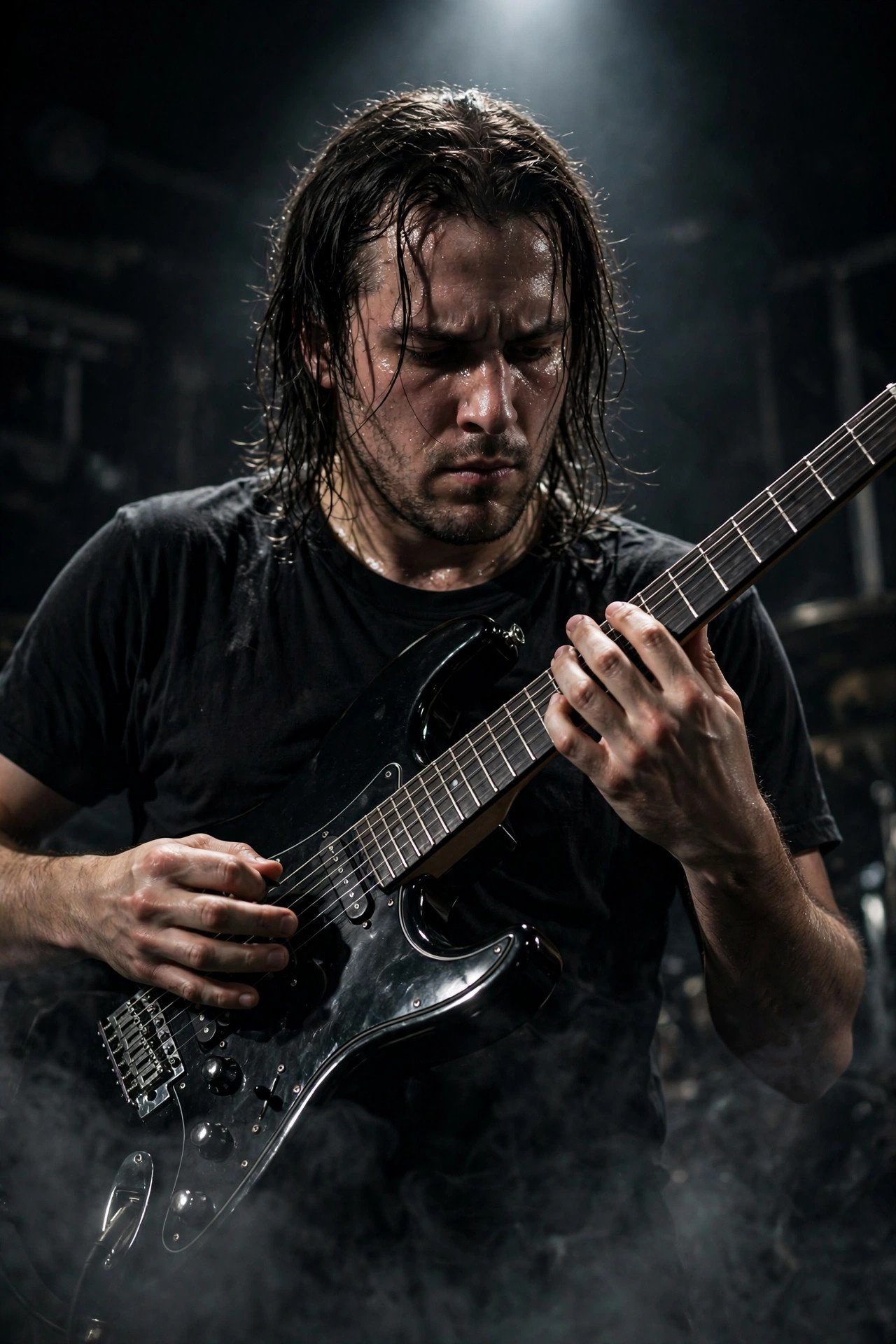
Metal guitarist mid-solo under a single white spotlight, medium shot from the waist up, both hands fully in frame on the guitar, sweat running down the face, dark stage behind, smoke curling at the feet. 85mm lens, shallow depth of field, high contrast, sharp focus on the face, natural skin texture, film grain.
Why it works: A single spotlight over a dark stage isolates the solo: one player, one light. The waist-up frame with hands fully visible follows the Instrument Safety Rule, and sweat plus grain stop the plastic-skin look.
Smoke Silhouette Riff
Prompt Structure: Silhouette + Smoke + Backlight + Rim + Lens + Contrast
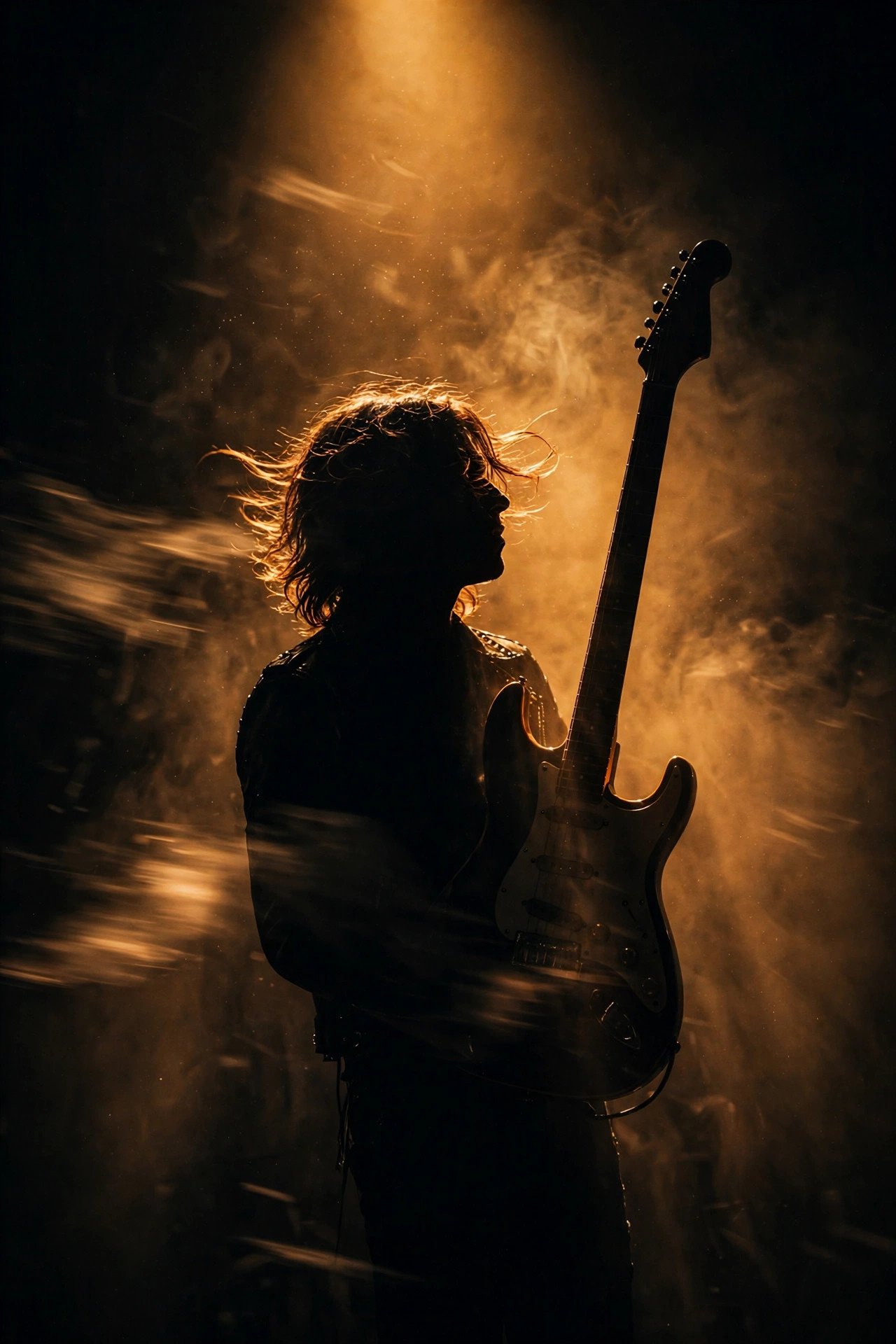
Metal guitarist in silhouette inside thick stage smoke, backlit by a single amber spotlight, guitar neck raised, rim light tracing the body and hair, deep blacks around the figure, dust in the beam. 35mm lens, high contrast, slow shutter blur on the smoke only, sharp outline, grainy analog look.
Why it works: Silhouette removes everything except shape, so the model cannot fumble faces or hands. Dust in the beam gives the light texture, and blur on the smoke alone while the outline stays sharp is how real smoke shots behave.
Drum Kit Thunder
Prompt Structure: Over-kit angle + Motion + Cymbal flash + Sweat + Smoke + Lens
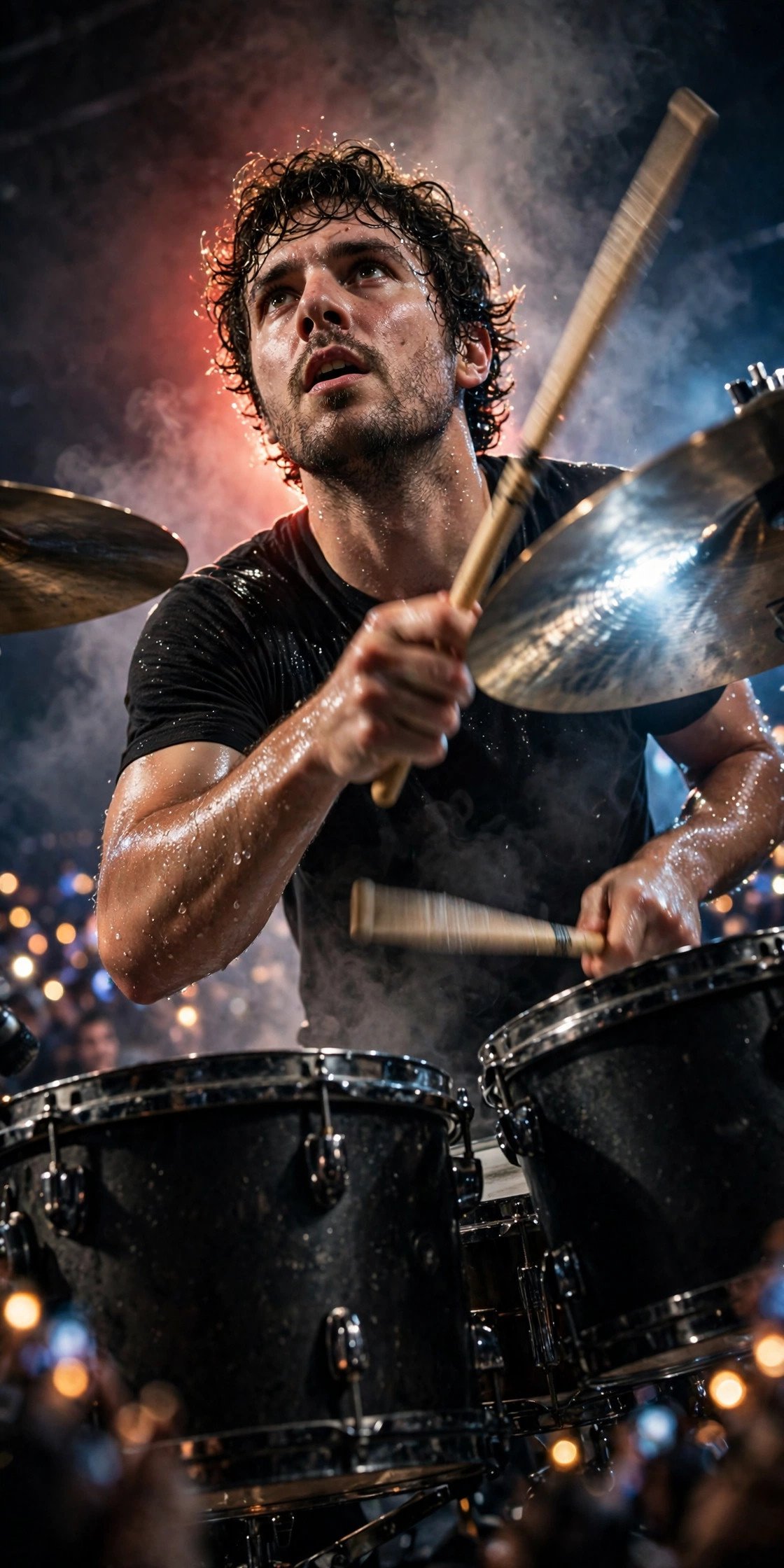
Rock drummer mid-hit viewed over the drum kit, sticks blurred in motion, cymbals catching a flash of light, sweat on the arms, stage smoke rising behind, crowd glow at the frame edge. 50mm lens, high shutter freeze on the face, low angle, high-contrast stage lighting, natural skin texture.
Why it works: The over-kit angle puts the viewer behind the drums, where the action is. Blurred sticks against a frozen face show motion and control in one frame, and smoke plus crowd glow add depth without stealing focus.
Metal Crowd Wall
Prompt Structure: Wide stage + Crowd wall + Reach + Pyro + Rig + Lens + Haze

Metal band facing a wall of raised crowd hands, wide shot from the stage, lead singer reaching toward the crowd, pyro light washing over the scene, banners and rigging above, haze in the beams. 24mm wide lens, high contrast, deep blacks, energetic candid framing, film grain.
Ratio: --ar 16:9 (widescreen 16:9 on Gemini/DALL-E)
Why it works: Only a wide frame can sell the wall of hands, and the singer reaching into it gives the shot a subject. Pyro wash plus haze gives the light volume, and deep blacks keep it heavy rather than washed out.
Want more? The full deep dive has 36 prompts: Top Rock Image Prompts for Musicians That Look Real.
Hip-Hop & R&B Prompts
Studio Booth Bars
Prompt Structure: Subject + Booth + Chain detail + Control-room glow + Lens + Imperfection
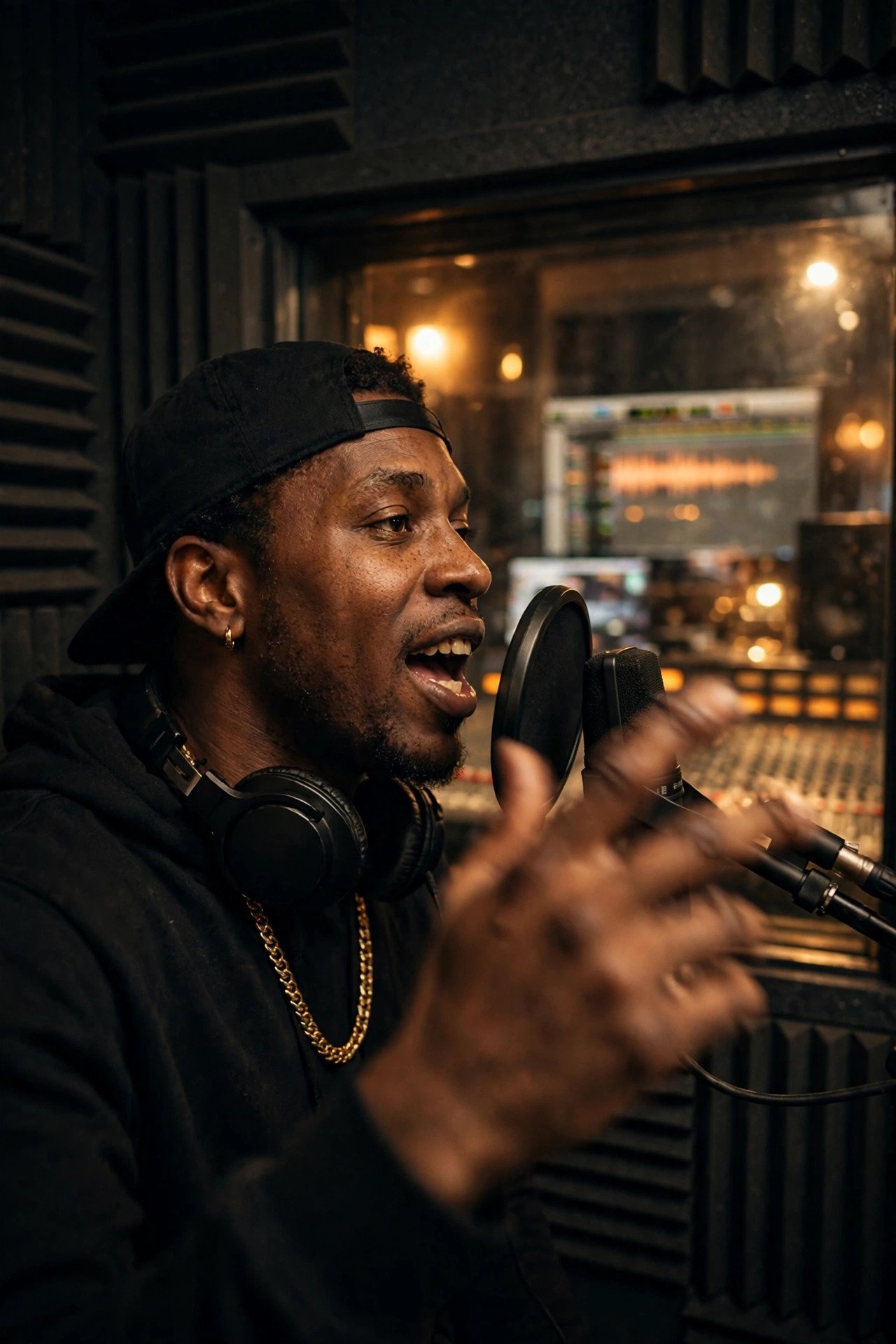
Rapper mid-verse inside a vocal booth, one hand on the microphone, gold chain catching the warm control-room glow through the glass, foam panels behind, headphones hanging around the neck. Shot on a 50mm lens, shallow depth of field, warm tungsten balance, slight motion blur on the gesturing hand, natural skin texture.
Why it works: Foam panels, glass, and control-room glow are the three studio tells. The chain catching light gives one bright detail to anchor the eye, and motion blur on the hand keeps it a performance instead of a posed portrait.
Street Cypher at Dusk
Prompt Structure: Circle + Golden-hour backlight + Brick + Blurred crowd + Lens + Grain
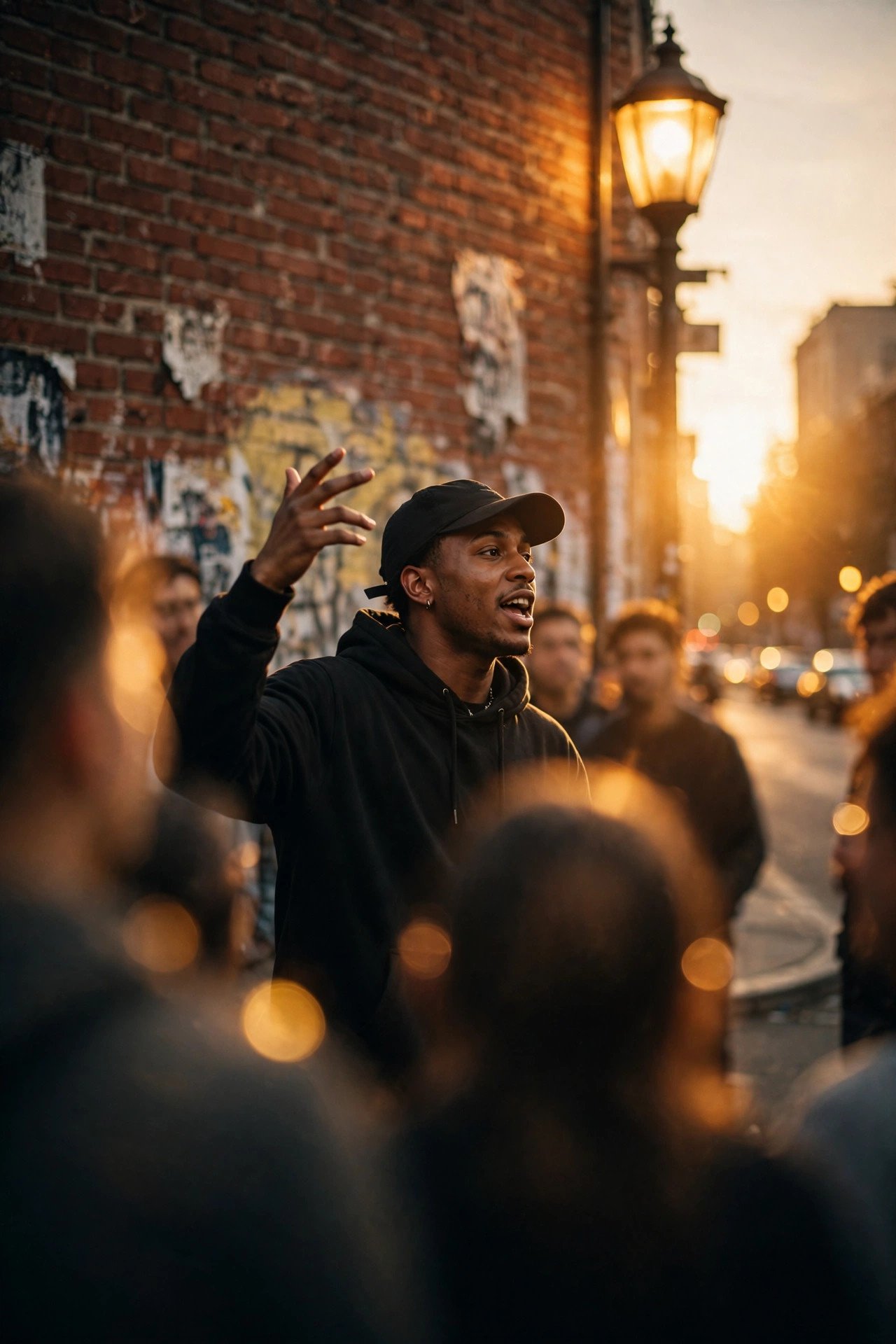
Freestyle cypher on a city street corner at dusk, one rapper mid-gesture in the center of a loose circle, brick wall behind, onlookers reduced to soft blur, golden-hour backlight mixing with a streetlamp. 35mm lens, documentary framing, warm amber grade, film grain, candid unposed energy.
Why it works: Golden-hour backlight plus a streetlamp gives the two-tone light real street corners have at dusk. A blurred circle keeps focus on one performer while proving a crowd exists, and documentary framing avoids the staged music-video look.
Gold Chain Close-Up
Prompt Structure: Macro + Chain + Hoodie + Studio light + Shallow depth + Fine detail

Extreme close-up of a gold chain and pendant resting on a dark hoodie, one studio light from the side, shallow depth of field, fine detail on the links and engraving, subtle sweat sheen on skin at the frame edge. 100mm macro lens, high contrast, warm metallic grade.
Why it works: Macro forces the model to render texture (links, engraving, fabric weave), which is where smooth AI renders usually fail. A single side light gives the metal dimension, and skin at the frame edge proves a person is wearing it.
Rooftop Rap Video Still
Prompt Structure: Rooftop + Skyline bokeh + Wind + Amber light + Lens + Candid energy
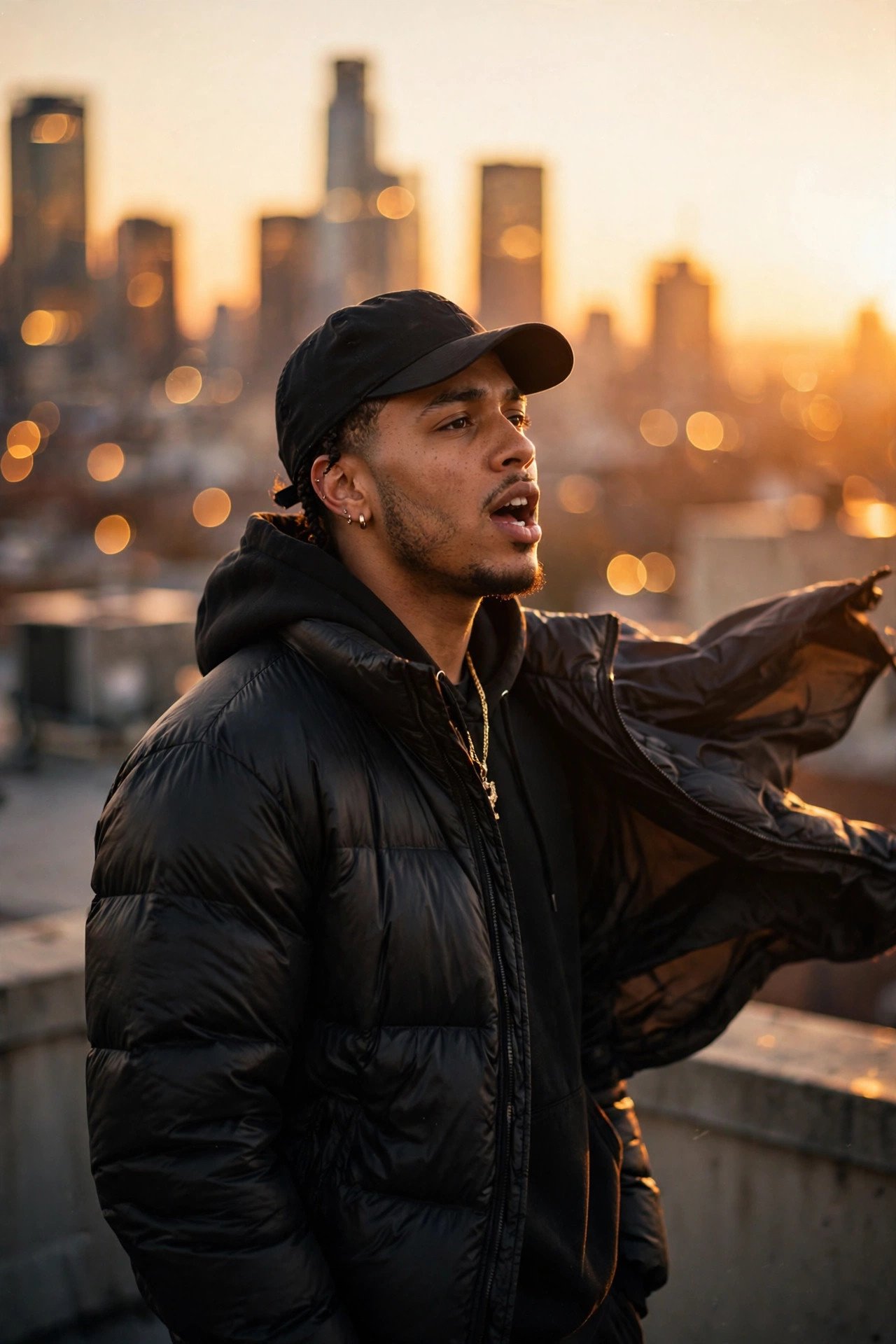
Rapper standing on a city rooftop at sunset, jacket moving in the wind, skyline reduced to soft bokeh behind, warm amber light on the face, mid-verse expression, cinematic framing. 85mm lens, shallow depth of field, warm sunset grade, slight film grain.
Why it works: Wind in the jacket and a mid-verse face make it a video still rather than a portrait. The skyline as bokeh keeps the city as atmosphere, and warm amber on the face unifies the shot.
R&B Slow Jam Portrait
Prompt Structure: Singer + Neon control room + Satin + Closed eyes + Lens + Neon grade

R&B singer delivering a slow jam in a moody neon control room, satin shirt catching pink and blue light, eyes closed mid-phrase, vintage microphone in hand, mixing desk glowing behind, haze in the air. 85mm f/1.4 lens, shallow depth of field, smooth neon grade, natural skin texture, film grain.
Why it works: Closed eyes mid-phrase say feeling rather than posing, which is the R&B portrait code. Satin catching pink and blue light brings color from the environment, and the glowing desk proves a studio without a wide shot.
Pop Prompts
Pop Star Stage Power
Prompt Structure: Center stage + Chorus moment + Dancers blur + Color wash + Lens + Grain
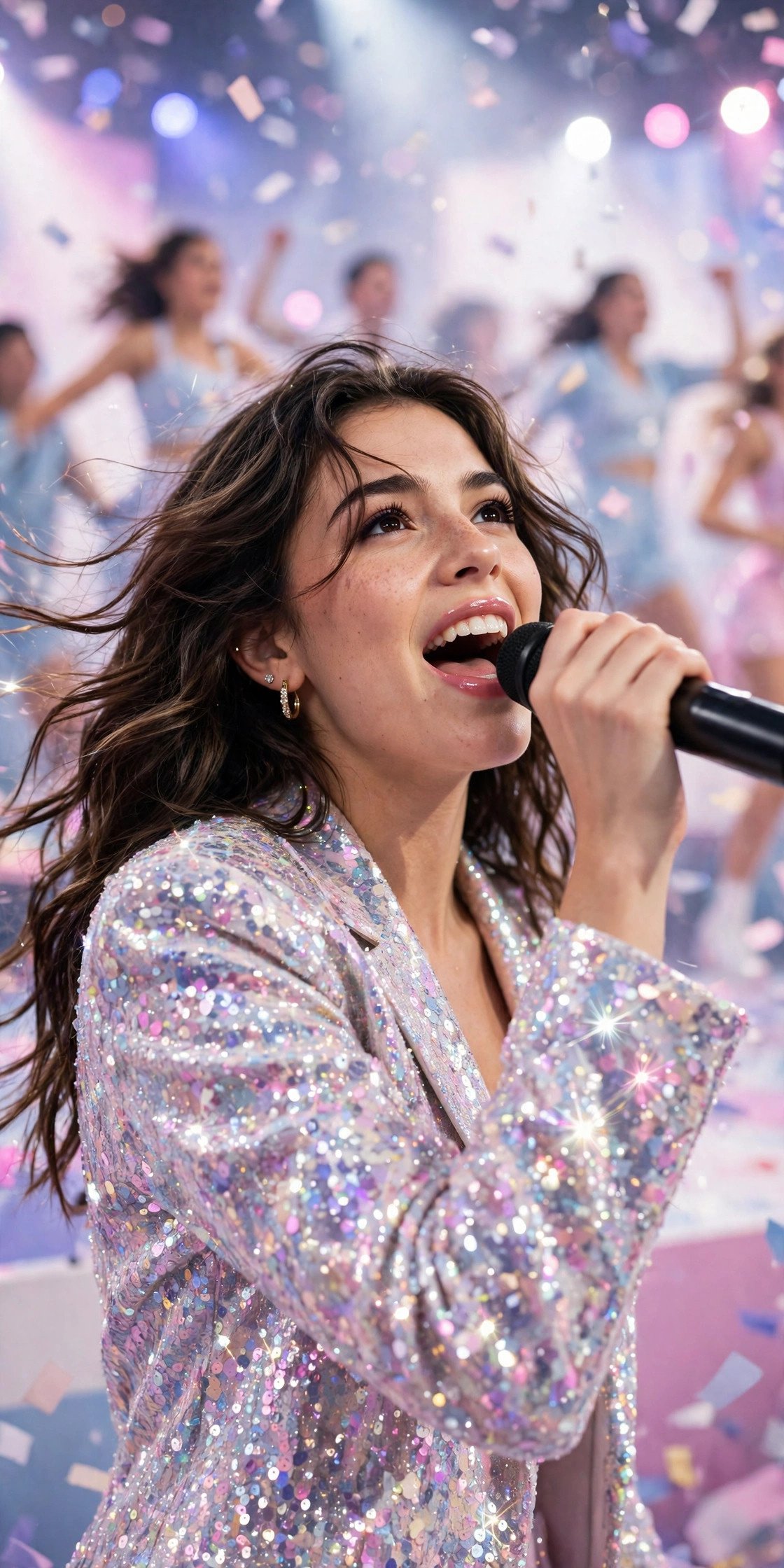
Pop singer mid-chorus at center stage, one arm lifted, dancers in synchronized motion blurred behind, bright magenta and cyan stage lights, confetti in the air, sharp focus on the face. 50mm lens, shallow depth of field, high-key concert lighting, natural skin texture, film grain.
Why it works: One raised arm and a sharp face make a clear focal point, while blurred dancers prove production scale without extra faces to render. The two-color wash is the pop stage signature.
Pastel Music Video Portrait
Prompt Structure: Pastel set + Styled look + Direct gaze + Soft key + Lens + Candy grade
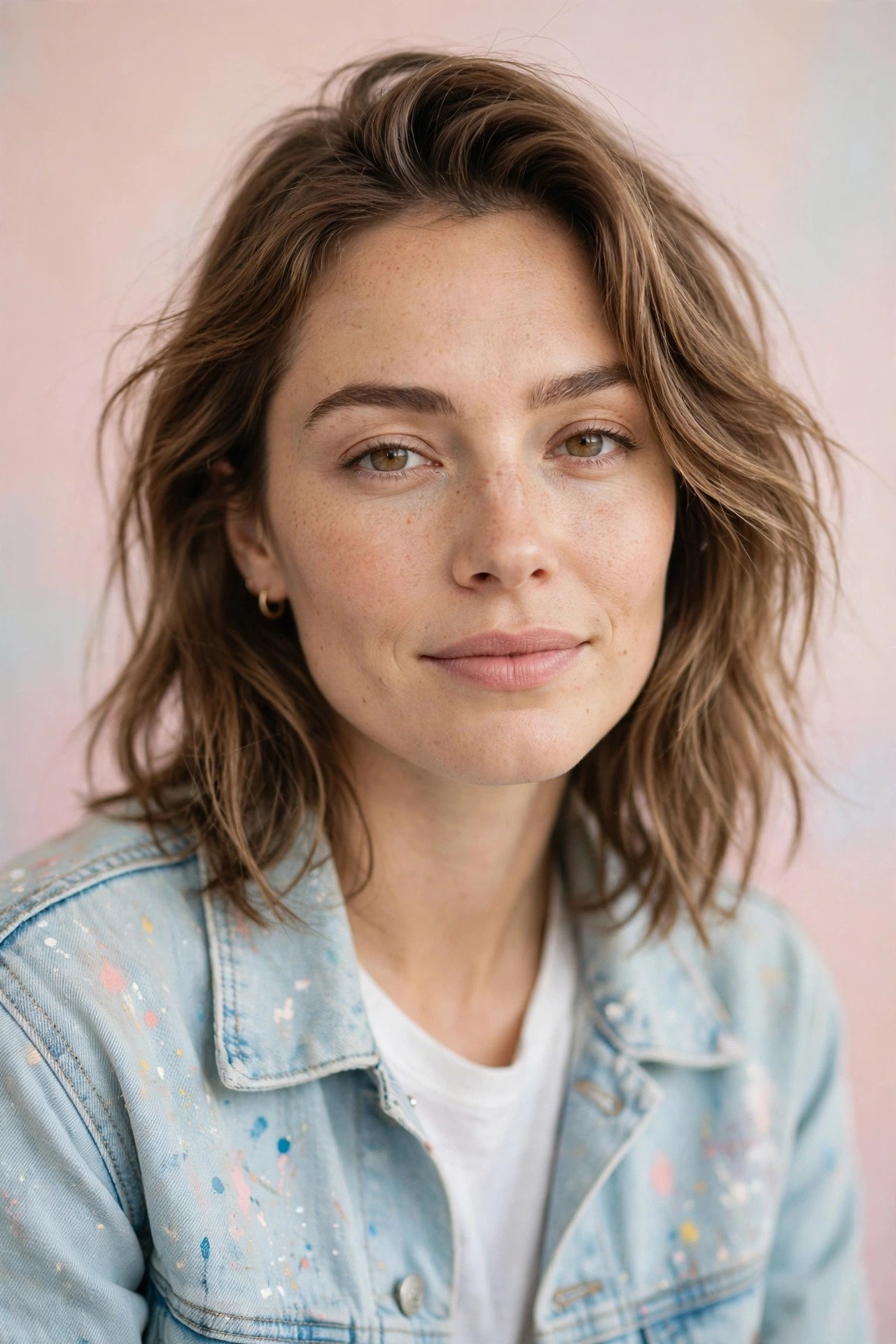
Pop artist in a pastel pink studio set, glossy styled hair, sparkly jacket, direct playful gaze, soft diffused key light with gentle shadows, balloons softly blurred in the background. 85mm lens, shallow depth of field, bright candy color grade, natural skin texture, cinematic music video framing.
Why it works: Soft diffused light and a pastel backdrop give the clean, bright look of a pop video still. Natural skin texture stops the face turning to plastic under such even light.
Rehearsal Room Choreography
Prompt Structure: Mirrored studio + Dancers + Motion blur + Mixed light + Lens + Documentary
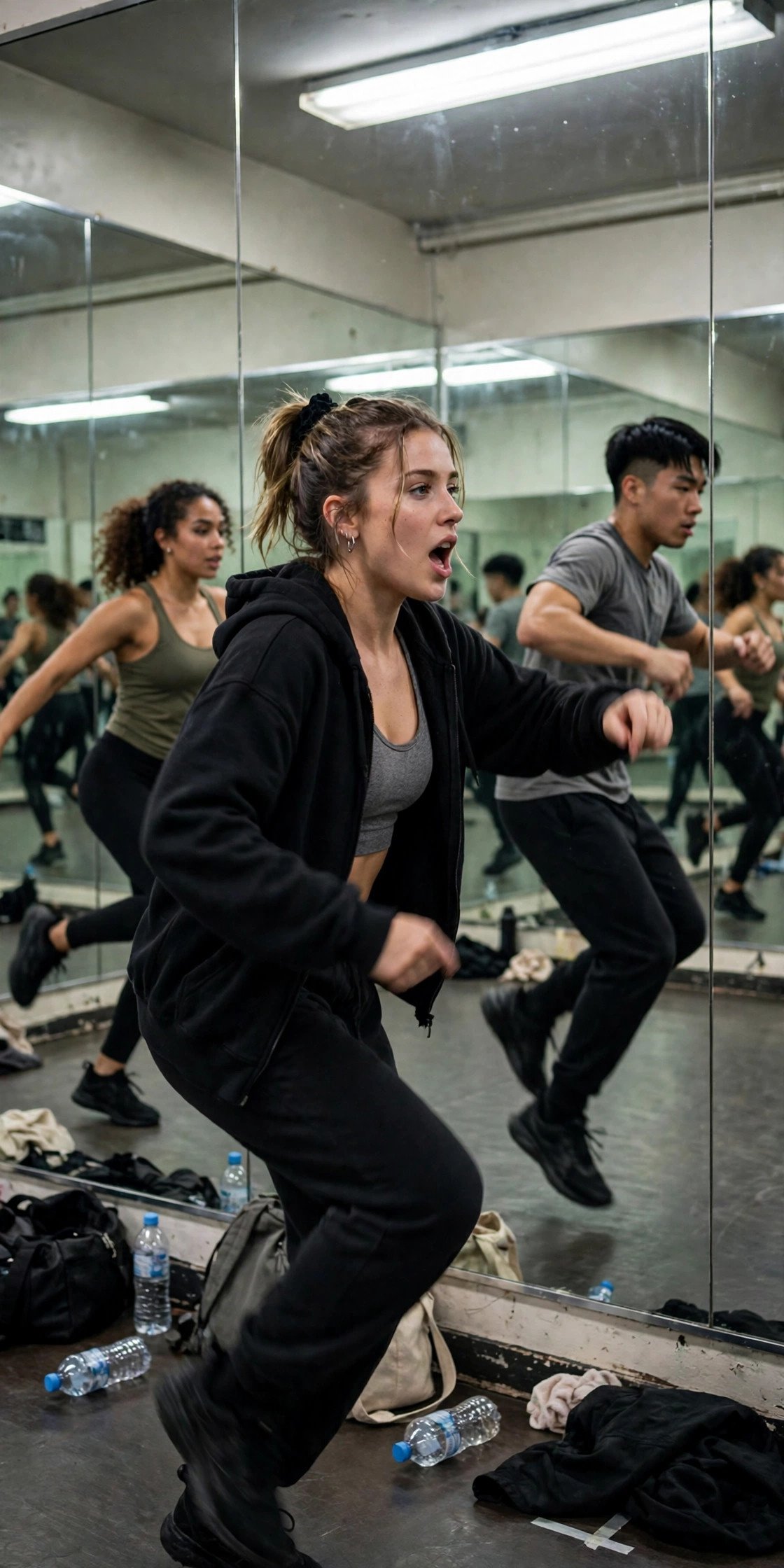
Pop singer and two dancers rehearsing in a mirrored dance studio, mid-step with limbs in motion blur, sneakers and sweatshirts, fluorescent overhead light mixing with window daylight, water bottles on the floor. 35mm lens, slight motion blur on the limbs, candid documentary framing, film grain.
Why it works: Behind-the-scenes realism sells better than polish: sweatshirts, water bottles, and mixed light make it feel captured, not generated. Motion blur on the limbs hides the hardest anatomy.
Stadium Silhouette
Prompt Structure: Silhouette + Phone lights + Spotlight beams + Evening sky + Wide lens + Haze
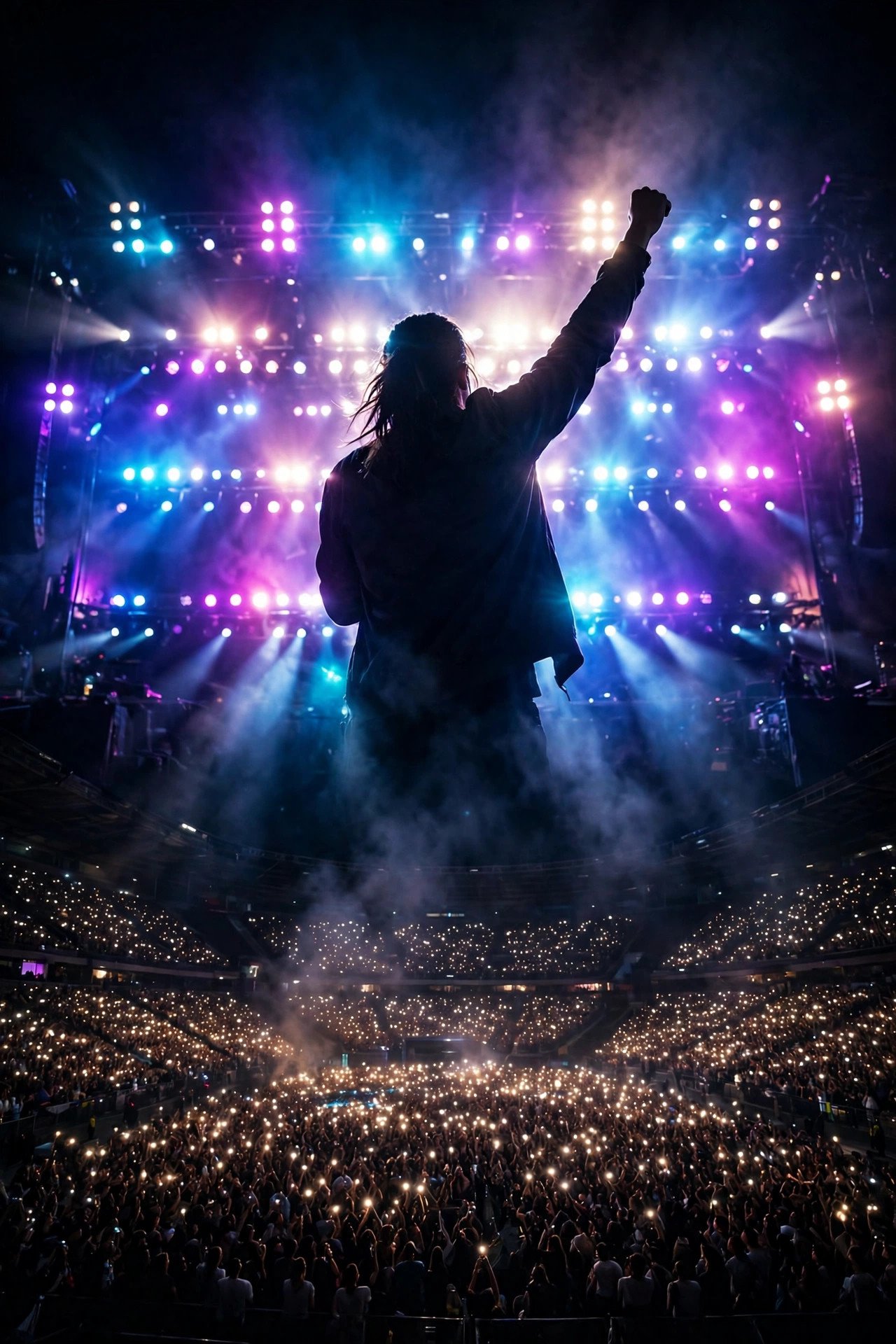
Pop star in silhouette at the edge of a stadium stage, arms spread wide, thousands of phone lights glowing across the crowd, spotlight beams crossing overhead, evening sky behind. 24mm wide lens, deep blacks, high contrast, sharp outline, light haze, cinematic framing.
Ratio: --ar 16:9 (widescreen 16:9 on Gemini/DALL-E)
Why it works: Phone lights give the crowd scale without a single face to render, and silhouette keeps the star clean. Crossing beams and haze give the sky depth.
Backstage Glam
Prompt Structure: Mirror bulbs + Makeup + Sparkle outfit + Warm glow + Lens + Candid
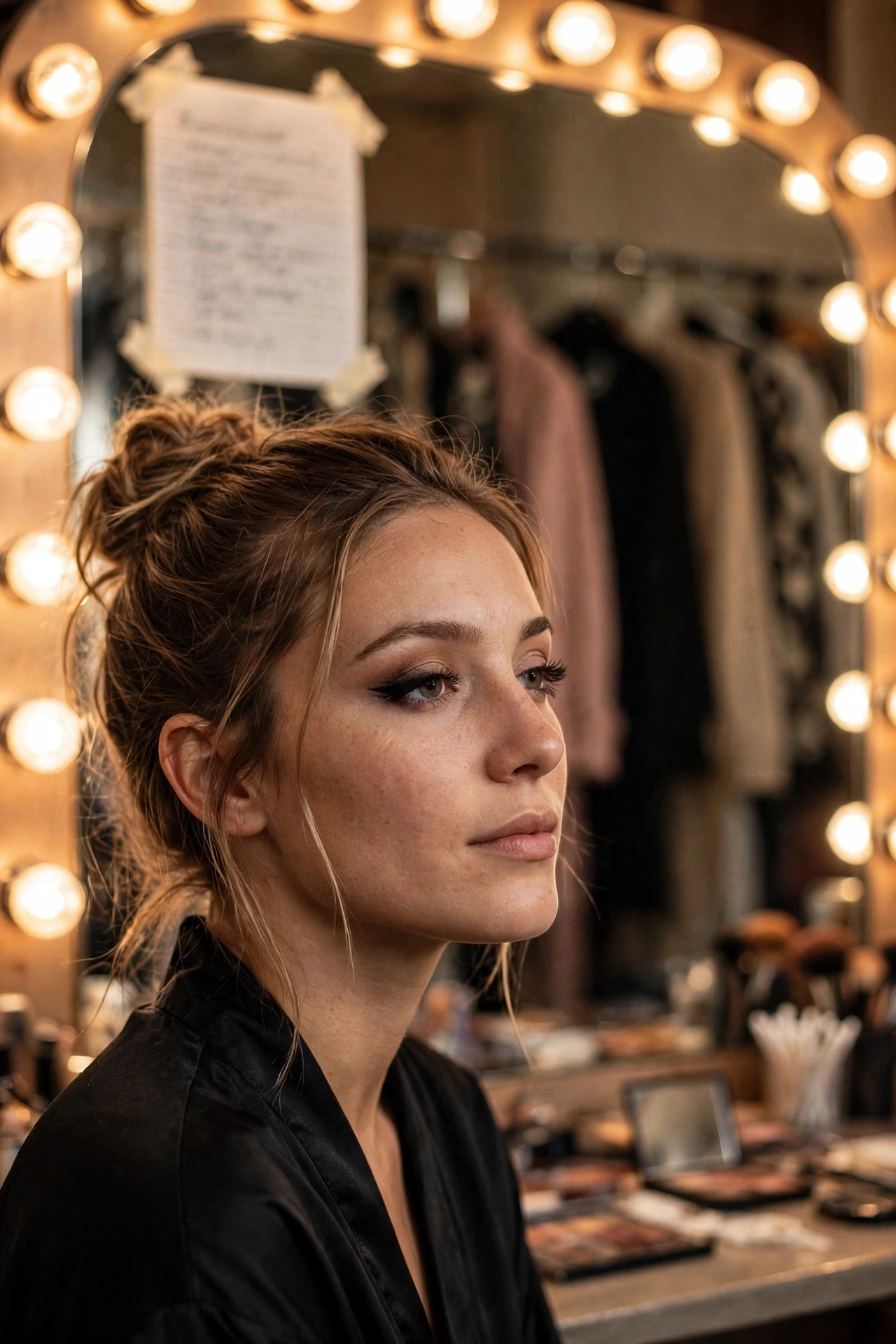
Pop singer seated at a backstage mirror ringed with bulb lights, makeup in progress, glittery outfit, warm bulb glow on the face, hairbrushes and flowers on the counter, candid unposed look. 50mm lens, shallow depth of field, warm tungsten grade, natural skin texture, film grain.
Why it works: Mirror bulbs are a built-in warm light source, and small props (brushes, flowers) prove a real room. A candid pose avoids the stiff look generators default to.
Electronic & DJ Prompts
Boiler Room Set
Prompt Structure: Small room + Decks + Crowd hands + Strobe + Haze + Wide lens + Contrast

DJ behind the decks in a packed small room, crowd hands raised and blurred in the foreground, red and blue strobe light cutting through thin haze, DJ mid-mix with one hand on the mixer. 24mm wide lens, high contrast, deep blacks, energetic candid framing.
Ratio: --ar 3:2 (landscape 3:2 on Gemini/DALL-E)
Why it works: A wide lens in a small room is the Boiler Room look, where the crowd becomes the frame. Strobe plus haze gives the light texture, and blurred foreground hands put the viewer inside the room.
Festival Mainstage Drop
Prompt Structure: Mainstage + Drop moment + Pyro + CO2 + Crowd + Dusk sky + Wide lens
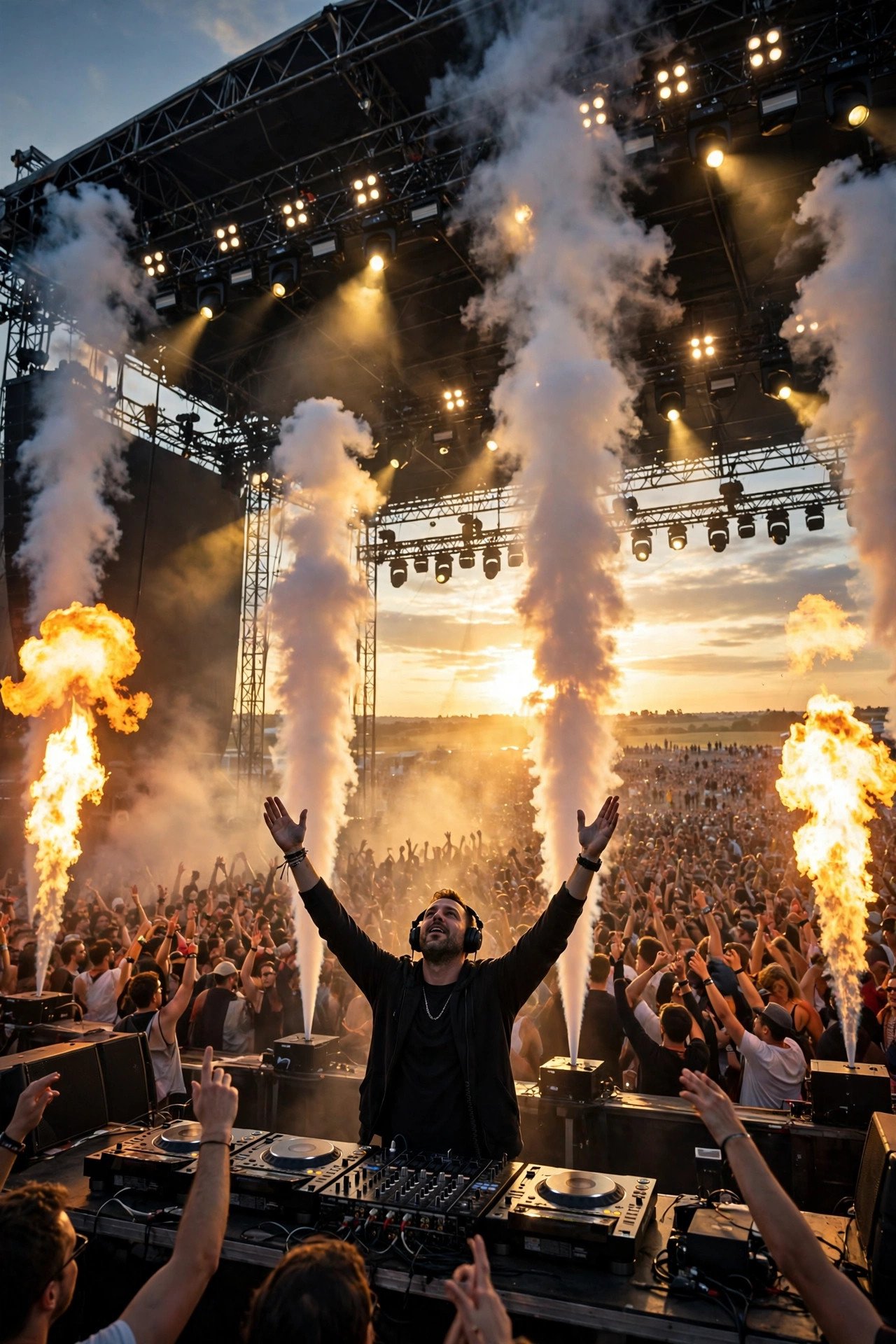
DJ with both arms raised at the drop on a festival mainstage, pyro flames and CO2 jets firing, massive crowd with hands up stretching to the horizon, dusk sky behind the stage rig. 24mm wide lens, golden-hour backlight mixing with stage spotlights, high energy, light haze.
Ratio: --ar 16:9 (widescreen 16:9 on Gemini/DALL-E)
Why it works: Only a wide frame can sell mainstage scale, and the drop moment (arms up, pyro firing) reads instantly. Dusk sky plus stage light gives the two-tone backdrop real festival photos have.
Headphones Around Neck Portrait
Prompt Structure: Portrait + Headphones + Neon reflection + Shallow depth + Editorial
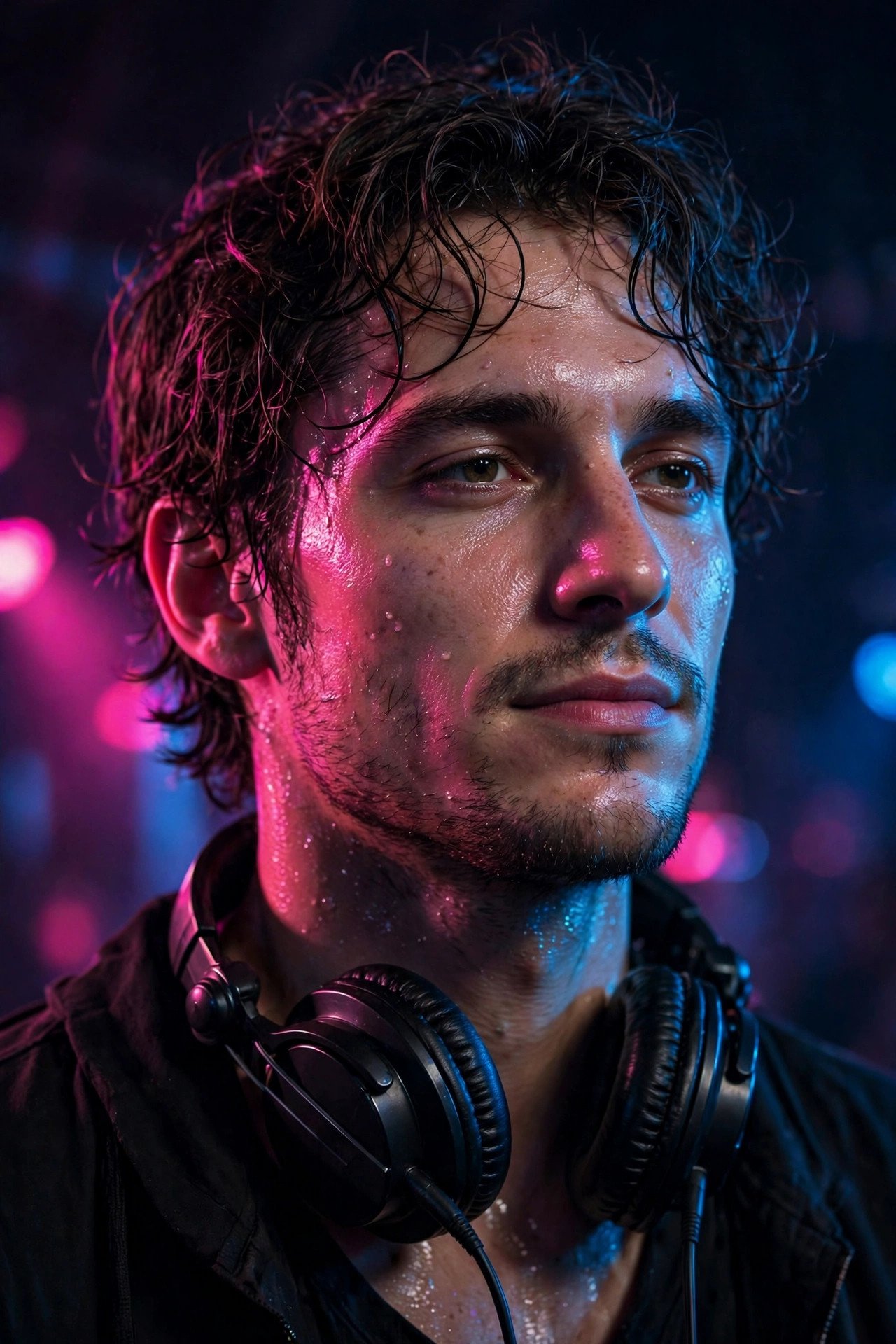
DJ portrait with headphones resting around the neck, neon pink and blue reflections on the face, dark background, calm confident expression after a long set, editorial concert photography framing. 85mm f/1.4 lens, shallow depth of field, natural skin texture, high-contrast neon grade.
Why it works: Headphones around the neck say DJ without a single deck in frame. Neon reflected on skin brings color from the environment, and shallow depth keeps the face the only sharp story.
Decks Over the Shoulder
Prompt Structure: Over-the-shoulder + Hands mid-task + Mixer + Neon spill + Medium shot + Lens
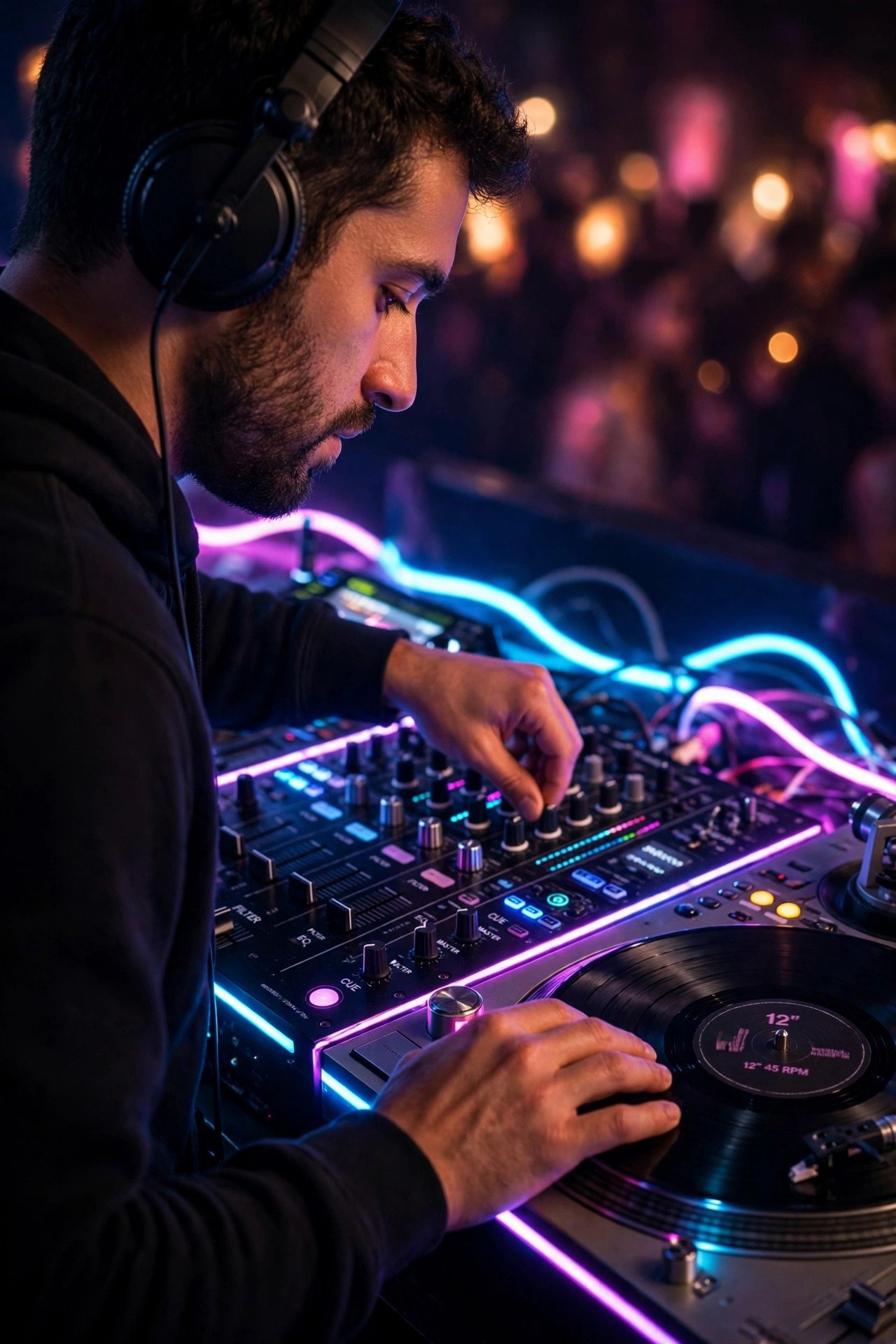
Over-the-shoulder view of a DJ mixing at the decks, both hands fully in frame on the mixer and a record, neon light spilling across the equipment, face in soft profile, crowd glow blurred beyond. Medium shot, 35mm lens, shallow depth of field, high contrast, cool neon grade with warm skin tones.
Why it works: Over-the-shoulder at medium distance shows craft (mixer, record, hands mid-task) without the extreme close-up where fingers fail. Neon spill gives color and place.
Laser Tunnel
Prompt Structure: Silhouette + Laser beams + Smoke + Deep blacks + Sharp outline

DJ silhouette standing in a tunnel of laser beams, thick smoke catching the light, sharp outline against deep blacks, one hand raised toward the crowd at a warehouse rave, strobes frozen mid-burst. 35mm lens, high contrast, saturated laser color, grainy low-light look.
Why it works: Silhouette removes everything except shape, so the model cannot fumble faces or hands. Smoke catching the lasers gives the light volume, and deep blacks keep it photographic.
Acoustic & Indie Folk Prompts
Campfire Folk Song
Prompt Structure: Campfire + Dusk + Firelight + Friends blur + Guitar + Lens + Warm grade
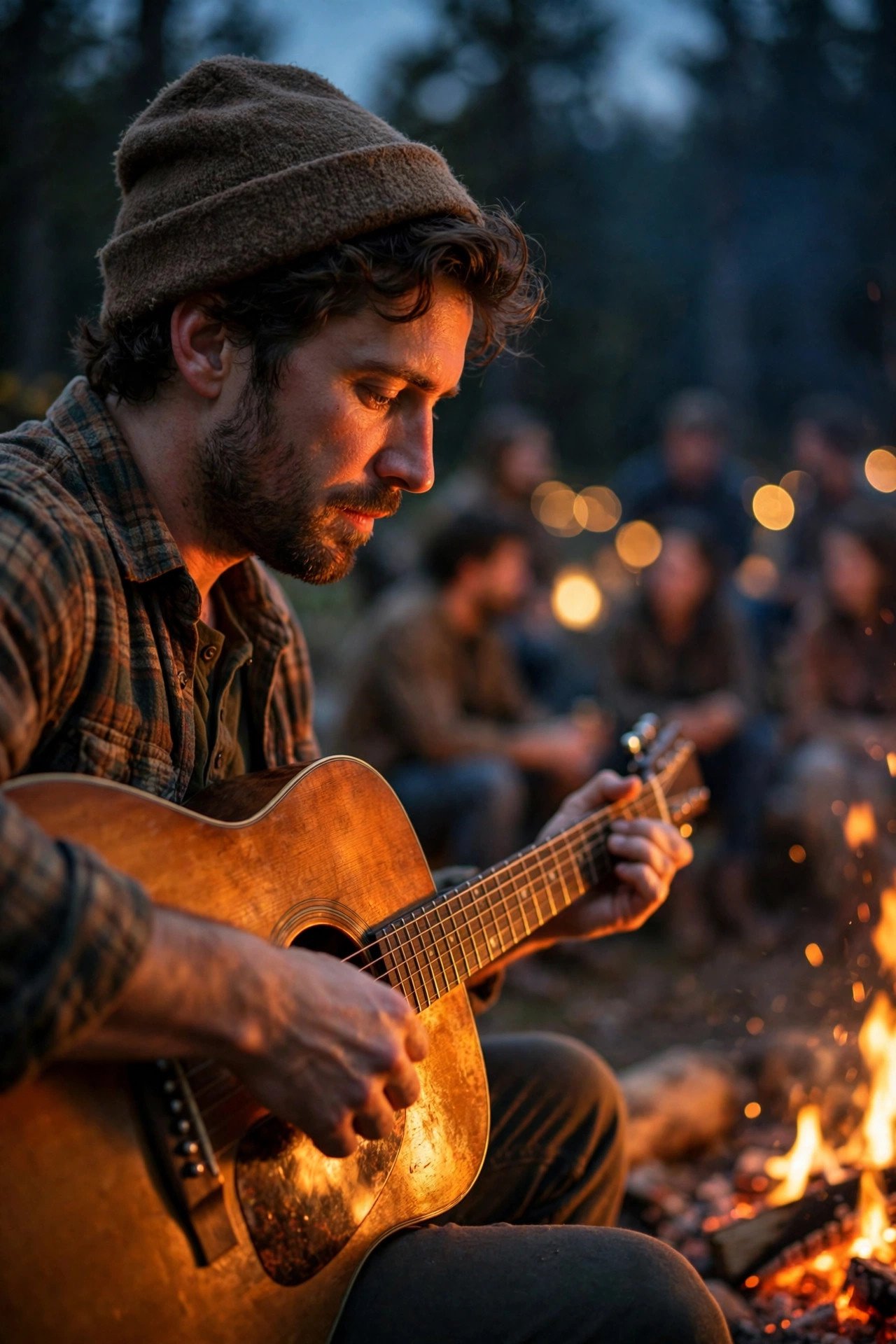
Folk musician playing guitar beside a campfire at dusk, warm firelight on the face, friends reduced to soft blur around the fire, guitar body catching the flames, quiet evening mood. 50mm lens, shallow depth of field, warm firelight grade, film grain, natural skin texture.
Why it works: Firelight is the only light source, which gives one consistent warm grade and deep shadows that read as night. Friends as blur prove a gathering without inventing faces.
Porch Banjo Morning
Prompt Structure: Porch + Morning light + Dust + Banjo + Wood + Lens + Documentary

Folk musician picking a banjo on a wooden porch in morning light, dust motes in the sunbeams, weathered wood boards, acoustic guitar leaning nearby, tall pine trees softly blurred behind, quiet rural mood. 35mm lens, documentary framing, warm morning grade, natural color balance.
Why it works: Morning light with dust in the beams gives the single light source a visible job. Weathered wood and a leaning guitar prove a lived-in place rather than a set.
Open Mic Night
Prompt Structure: Cafe stage + Single bulb + Notebook + Coffee + Small crowd + Lens
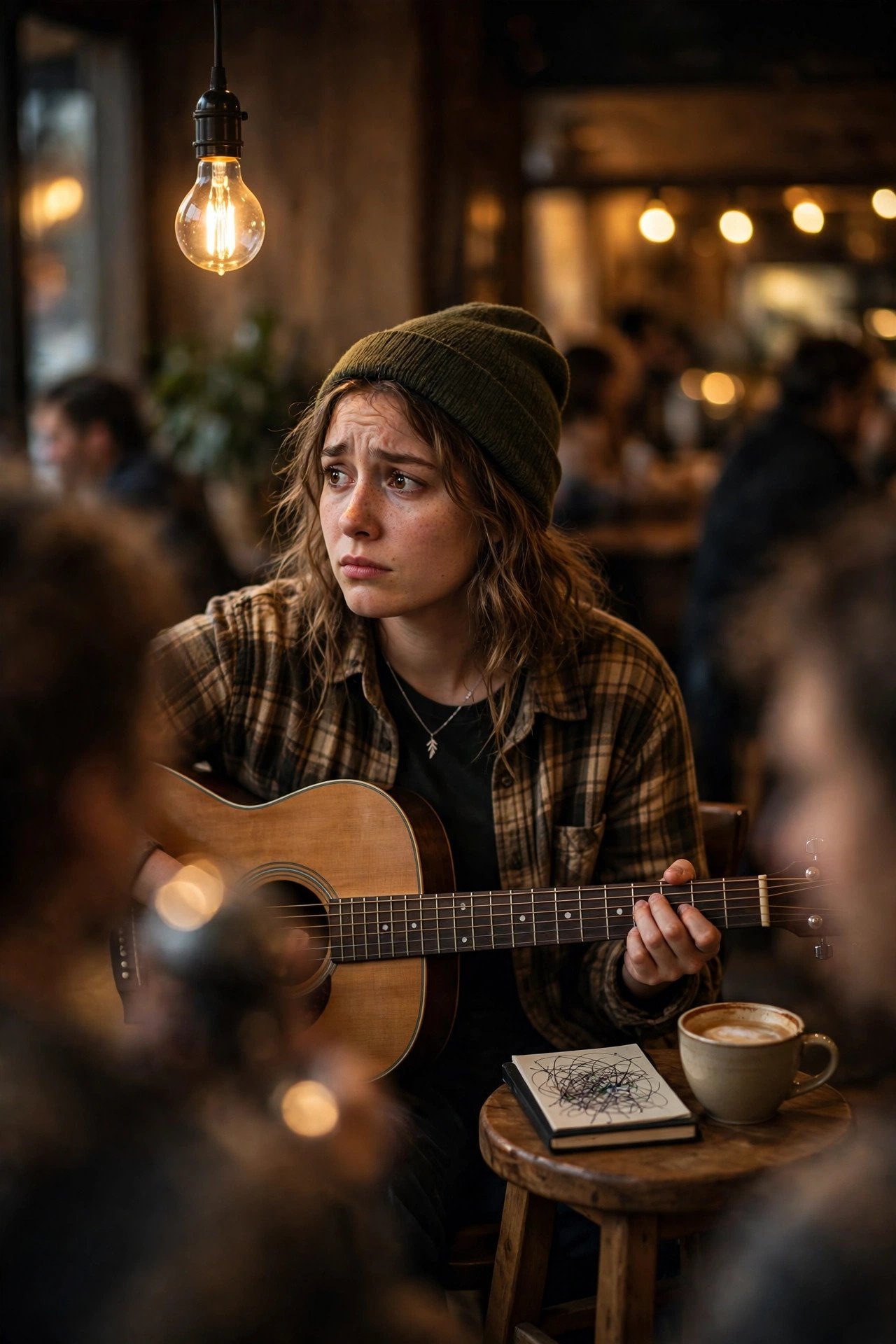
Folk singer at a small cafe open mic, single bare bulb overhead, notebook and coffee cup on a stool beside them, tiny audience blurred in the foreground, nervous honest expression. 50mm f/1.8 lens, warm dim grade, shallow depth of field, candid framing.
Why it works: A single bulb, a notebook, and a coffee are the whole open mic story. The blurred audience gives scale without faces, and a nervous honest expression beats a confident stage pose for this genre.
Mountain Road Busker
Prompt Structure: Street + Mountain backdrop + Golden hour + Guitar case + Lens + Vast sky
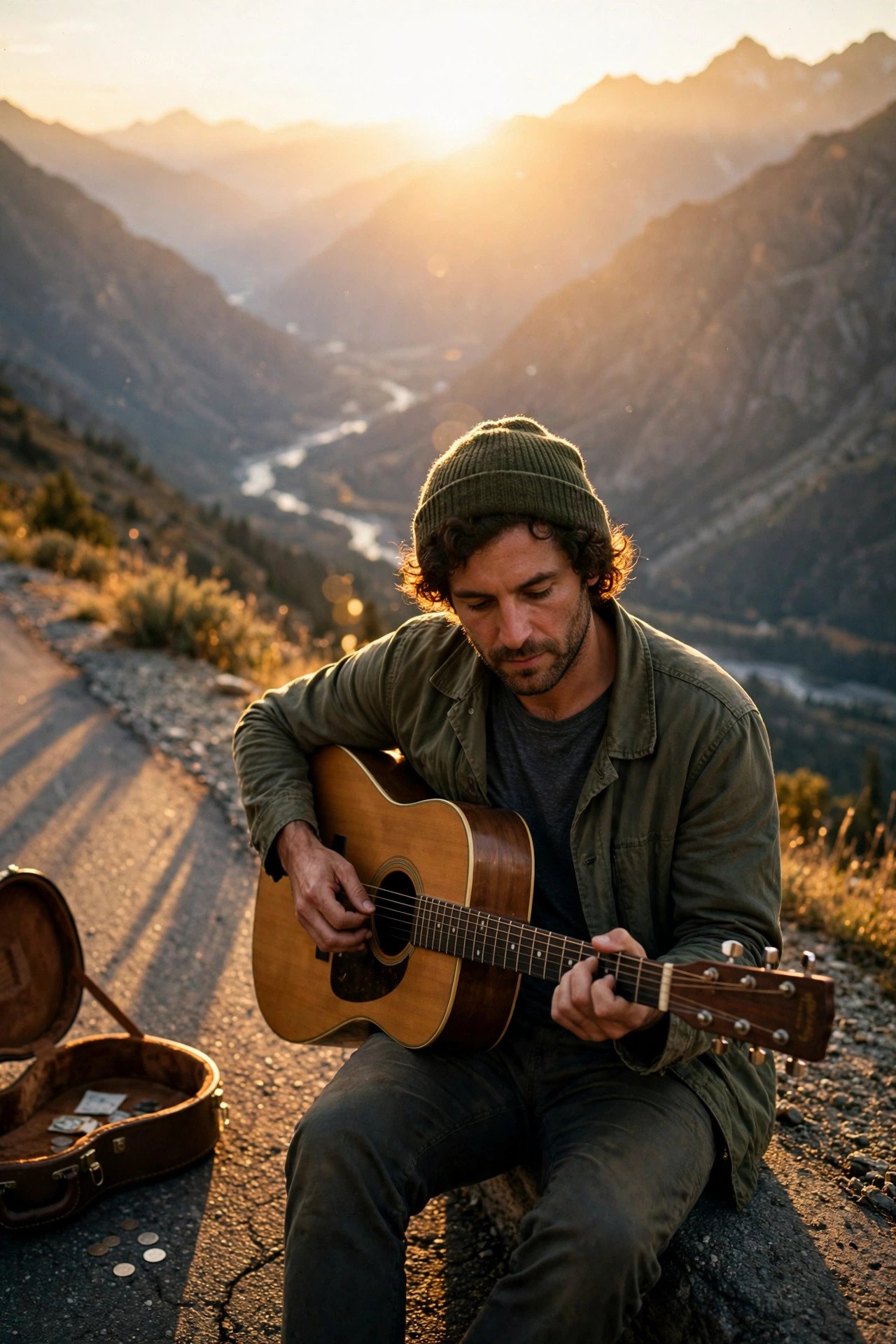
Street musician busking with a guitar on a mountain road at golden hour, open guitar case on the ground, vast mountain landscape behind, distant river valley below, long shadows, warm backlight. 85mm lens, shallow depth of field, golden-hour grade, film grain.
Why it works: Golden-hour backlight with long shadows is the mountain road’s real light. The open case tells the busking story in one detail, and the vast landscape makes solitude the subject.
Kitchen Table Songwriting
Prompt Structure: Table + Notebook + Guitar + Window light + Morning + Soft daylight
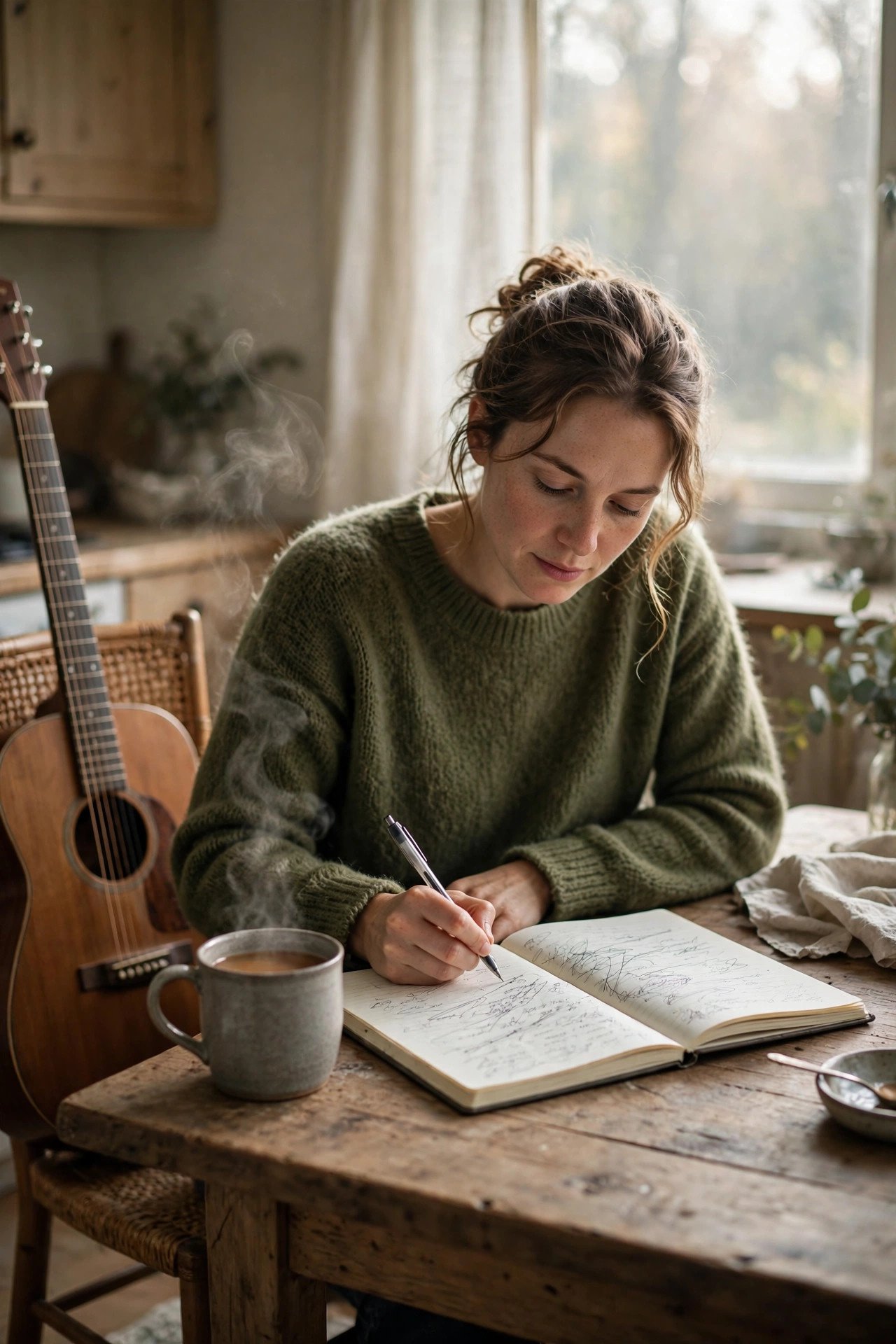
Folk musician writing a song at a kitchen table in morning light, notebook open with handwritten lines, acoustic guitar leaning on a chair, soft window light, steam rising from a mug. 50mm lens, soft daylight balance, quiet intimate framing, natural color, subtle film grain.
Why it works: Handwritten lines, a leaning guitar, and steam from a mug show songwriting as a morning habit. Soft window light as the only source keeps the grade gentle and consistent.
Jazz & Soul Prompts
Saxophone Solo in a Jazz Club
Prompt Structure: Club + Solo + Amber light + Haze + Tables bokeh + Lens + Grain

Saxophonist mid-solo in a small jazz club, warm amber spotlight, thin stage haze in the air, small round tables reduced to soft bokeh in the foreground, eyes closed in concentration. 85mm lens, shallow depth of field, warm analog grade, film grain, candid unposed framing.
Why it works: Amber light plus haze is the jazz club look, and closed eyes say listening rather than posing. Foreground table bokeh gives depth, and shallow depth keeps the saxophonist the only sharp story.
Blue Note Portrait
Prompt Structure: Portrait + Side light + Deep shadow + Cool grade + Lens + Texture
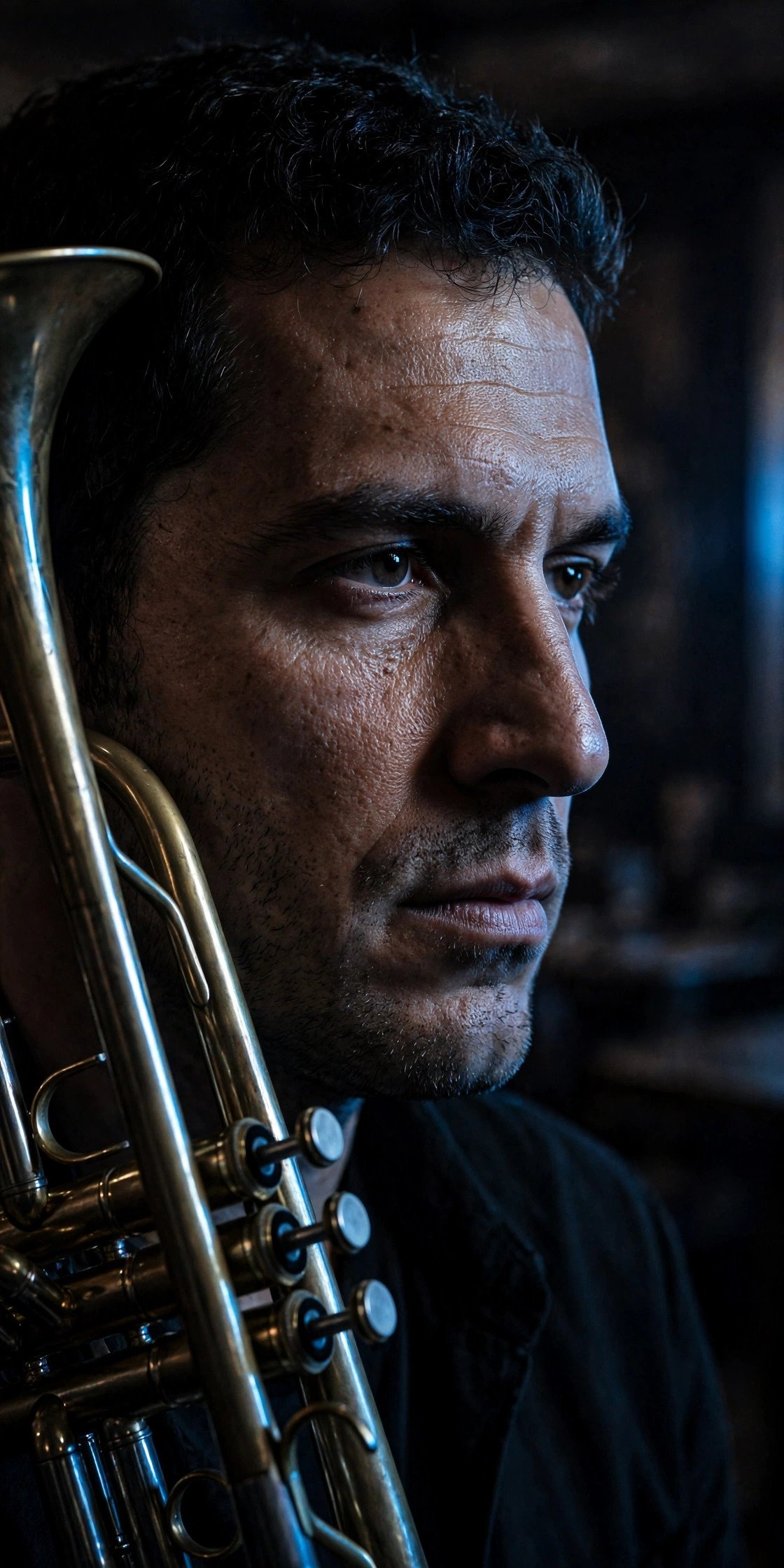
Trumpeter portrait in a dark club, single cool blue side light, deep shadow across one half of the face, trumpet catching a rim of light, natural skin texture with visible pores, calm focused expression. 85mm lens, high-contrast grade, no color cast beyond the blue light itself.
Why it works: One side light with deep shadow is the classic jazz portrait. It works on light alone, and visible pores are mandatory because a smooth face breaks the documentary feel instantly.
Piano Trio
Prompt Structure: Trio + Low club light + Candid + Depth + Lens + Warm grade
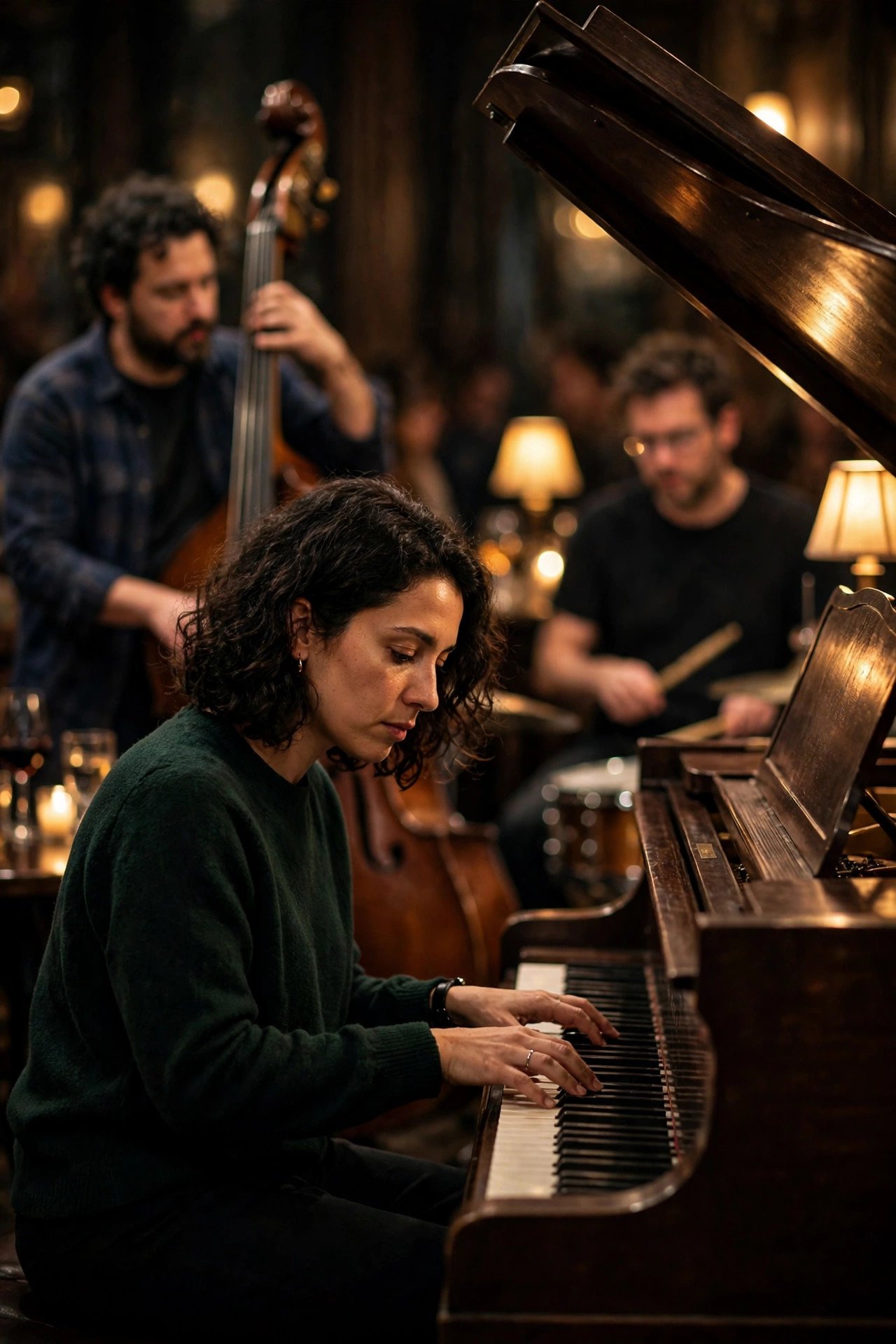
Jazz piano trio mid-set in a low-lit club, pianist in focus with bassist and drummer softly blurred behind, warm lamp light from the tables, candid unposed expressions, upright piano lid catching the light. 50mm lens, shallow depth of field, warm tungsten balance, documentary framing.
Why it works: Focus on the pianist with the trio blurred behind gives depth in one frame: three musicians, one subject. Warm table lamps set the club hour, and candid expressions keep it a set rather than a promo.
Double Bass Mid-Shot
Prompt Structure: Medium shot + Hands mid-task + Strings + Warm spotlight + Wood detail + Lens

Medium shot of a bassist playing an upright double bass, both hands fully in frame on the strings, warm spotlight from above, wood grain and worn varnish visible on the body, dark club background. 50mm lens, shallow depth of field, high contrast, warm amber grade, film grain.
Why it works: A medium shot keeps both hands in frame at a safe distance while still showing the instrument’s wood grain and age. One warm spotlight gives the hands dimension, and the dark background removes everything else.
Rainy Window Jazz
Prompt Structure: Window + Rain + Neon bokeh + Musician + Lens + Mood
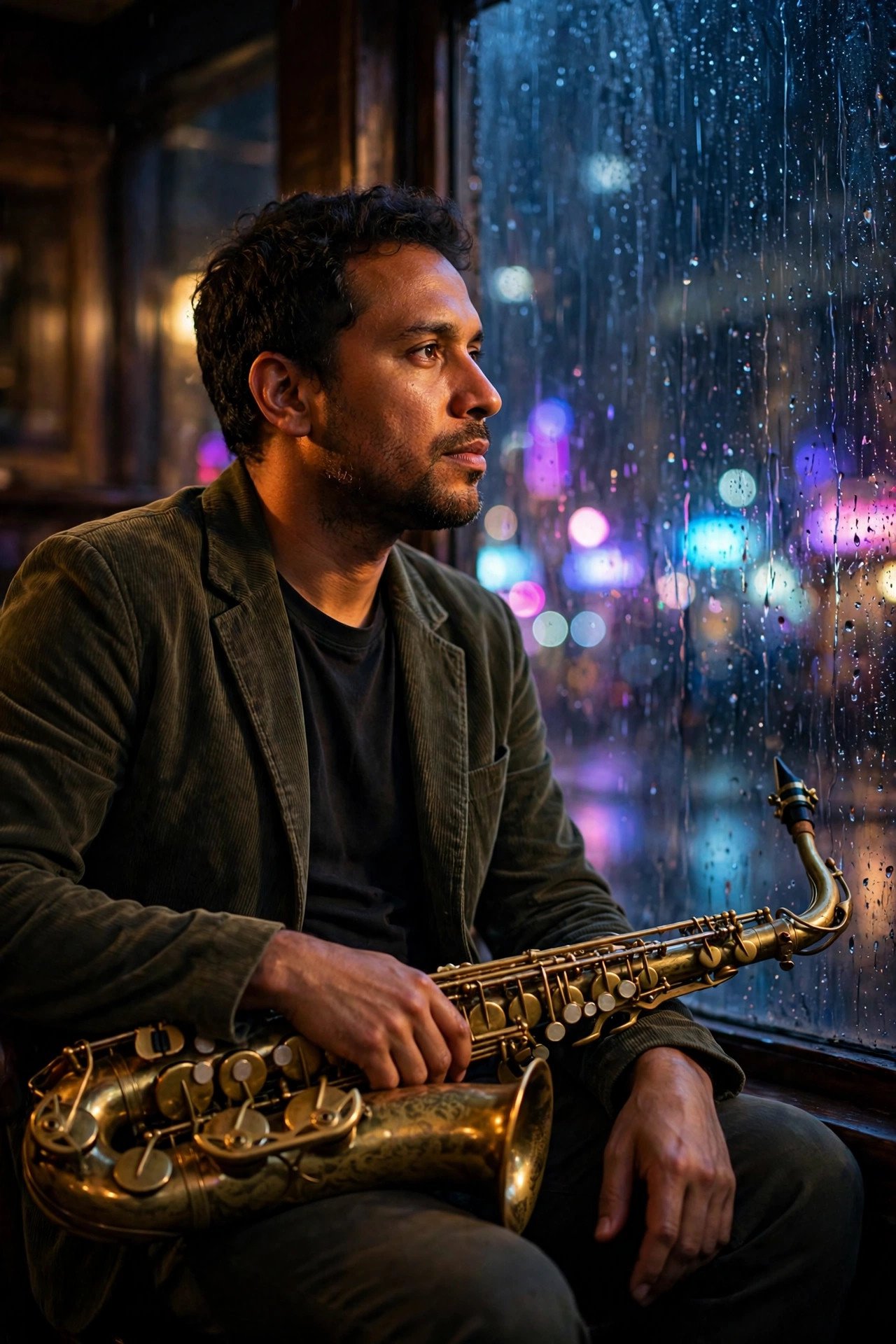
Jazz musician sitting by a rainy club window at night, saxophone resting on the knee, neon sign outside reduced to soft colored bokeh through rain-streaked glass, quiet reflective mood. 50mm f/1.8 lens, shallow depth of field, cool night tones with warm skin light, subtle film grain.
Why it works: Rain on glass plus neon bokeh does the atmosphere work without a stage light. The resting saxophone says musician even in stillness, and warm skin light against cool tones keeps the face from vanishing.
Classical & Cinematic Prompts
Grand Hall Cello
Prompt Structure: Hall stage + Rim light + Bokeh seats + Wood reflection + Lens + Grade
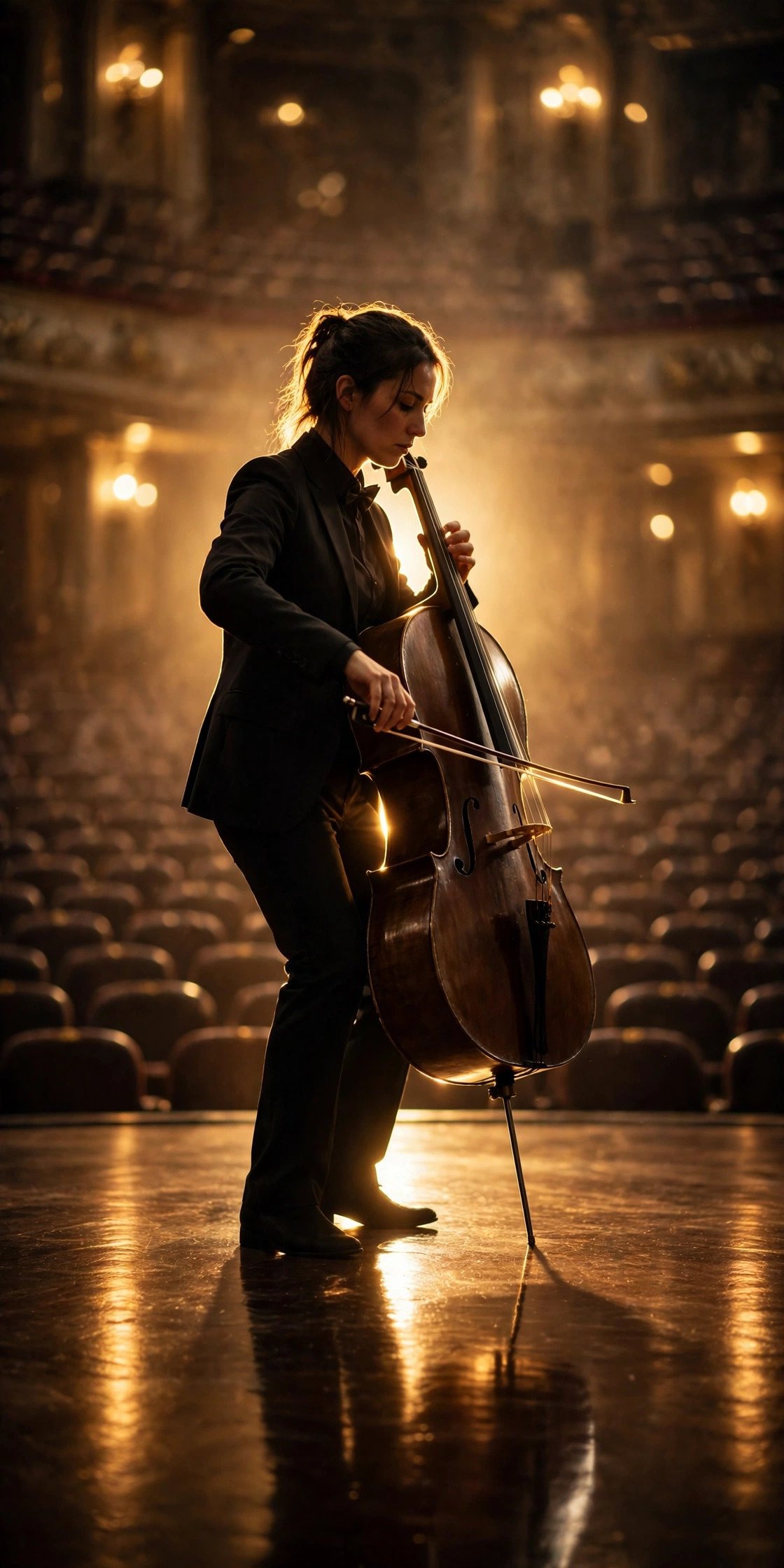
Cellist performing on a grand concert hall stage, dramatic rim light tracing the cello and bow, empty hall seats reduced to soft bokeh behind, polished wood floor reflecting the light, formal black attire. 85mm lens, shallow depth of field, high contrast, warm stage grade, film grain, natural posture.
Why it works: Rim light on the cello and bow carves the performer out of a dark hall, and empty seats as bokeh give scale without an audience to render. The wood floor reflection doubles the light story.
Piano Spotlight Sonata
Prompt Structure: Spotlight + Grand piano + Side view + Dark hall + Sheet music + Lens
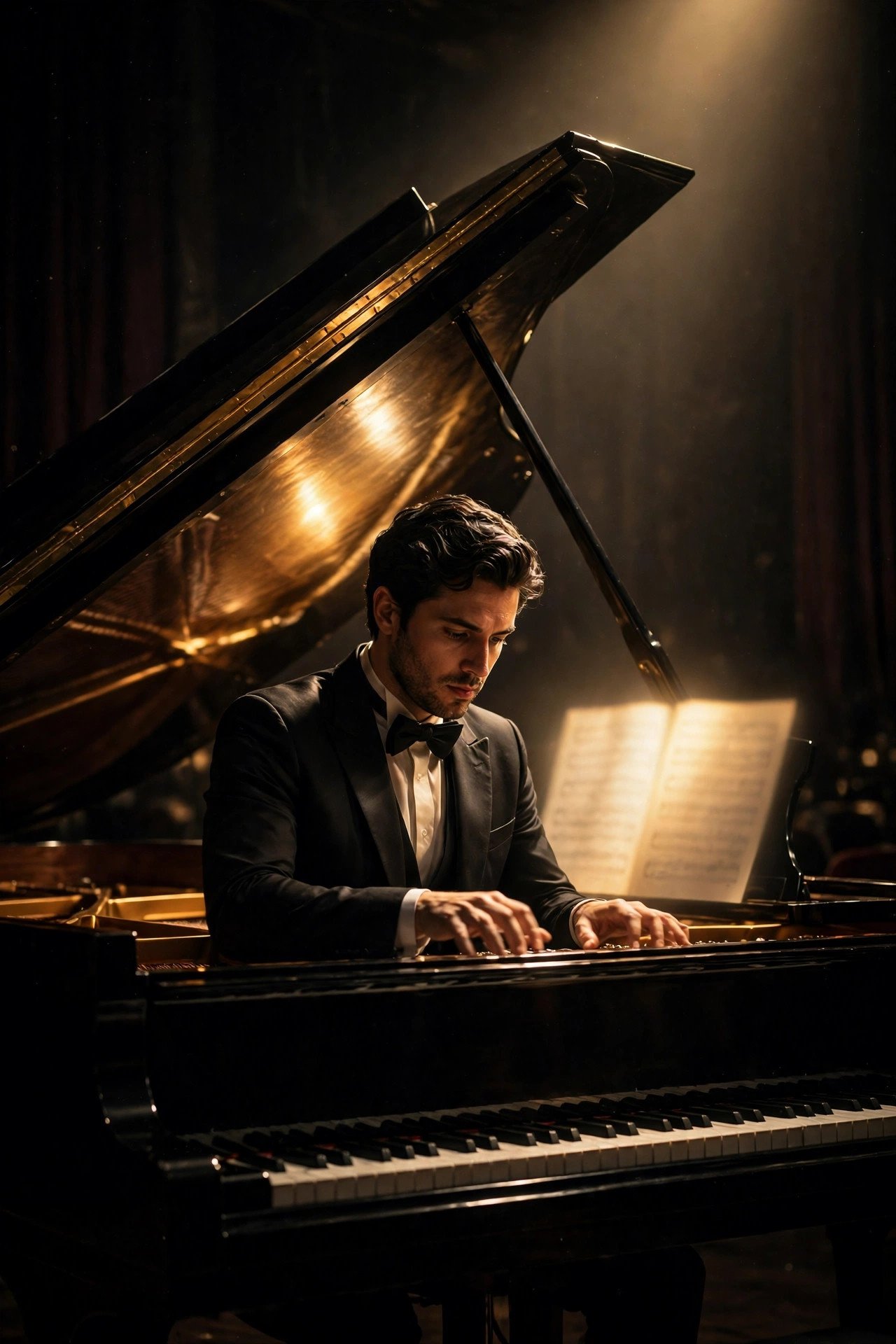
Pianist under a single spotlight at a grand piano, seen from the side in a medium shot, lid raised catching the light, both hands fully in frame on the keys, dark hall around the stage, sheet music glowing faintly. 50mm lens, shallow depth of field, dramatic chiaroscuro lighting, warm tungsten grade, film grain.
Why it works: One spotlight and a dark hall make the piano the whole world. A side medium shot with hands fully in frame avoids the broken-finger glitch, and glowing sheet music adds a second small light.
Orchestral Wide
Prompt Structure: Full orchestra + Conductor + Layered rows + Hall light + Wide lens + Grade
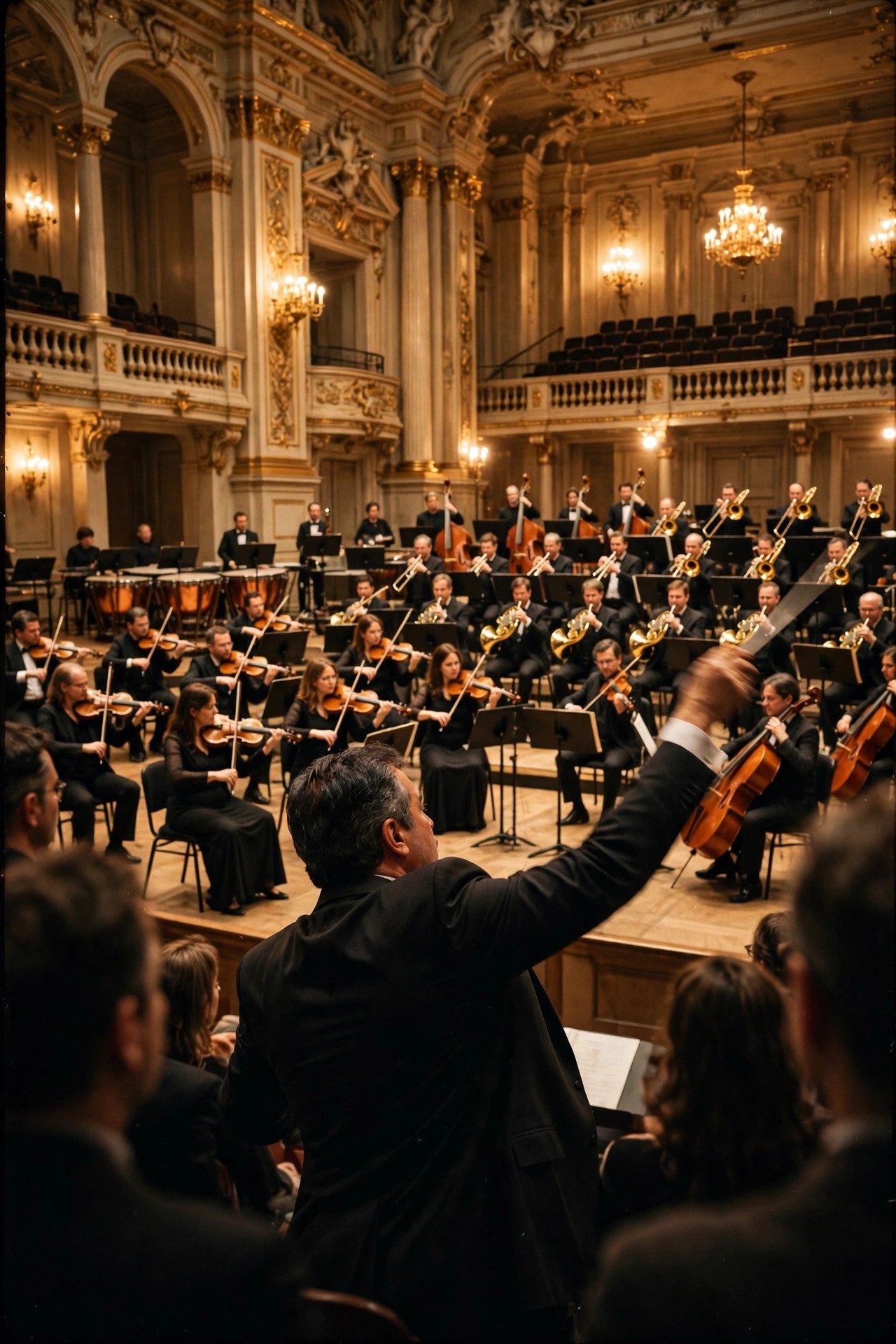
Full orchestra mid-performance in a grand hall, conductor mid-gesture in the foreground, strings and brass in layered rows, warm hall light washing over the stage, audience silhouettes at the frame edge. 24mm wide lens, deep depth of field, warm golden grade, cinematic framing, film grain.
Ratio: --ar 16:9 (widescreen 16:9 on Gemini/DALL-E)
Why it works: Only a wide frame holds an orchestra, and the conductor in the foreground gives it a subject. Layered rows plus warm hall light create depth, and audience silhouettes avoid rendering faces.
Solo Violin Silhouette
Prompt Structure: Silhouette + Hall windows + Rim + Dust + Dark hall + Lens + Outline
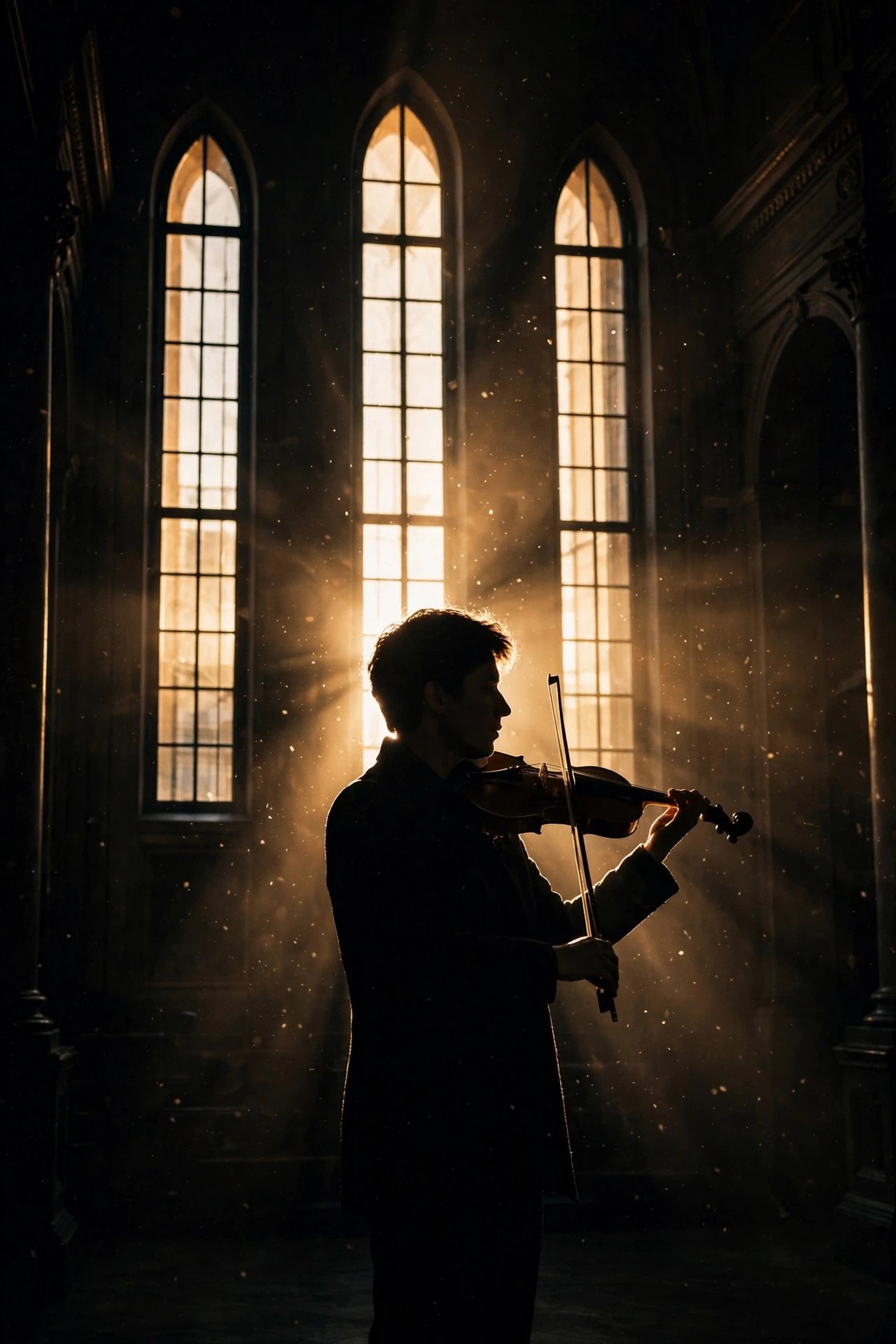
Solo violinist in silhouette against tall hall windows, rim light tracing the violin and bow, dust motes glowing in the light beams, dark hall around the figure, quiet dramatic mood. 85mm lens, high contrast, deep blacks, warm window light, film grain, sharp outline.
Why it works: Silhouette removes everything except shape, so the model cannot fumble the violin or the hands. Dust glowing in the beams gives the light volume.
Cinematic Score Session
Prompt Structure: Composer + Strings + Clip lights + Soft rows + Mood + Lens + Grade
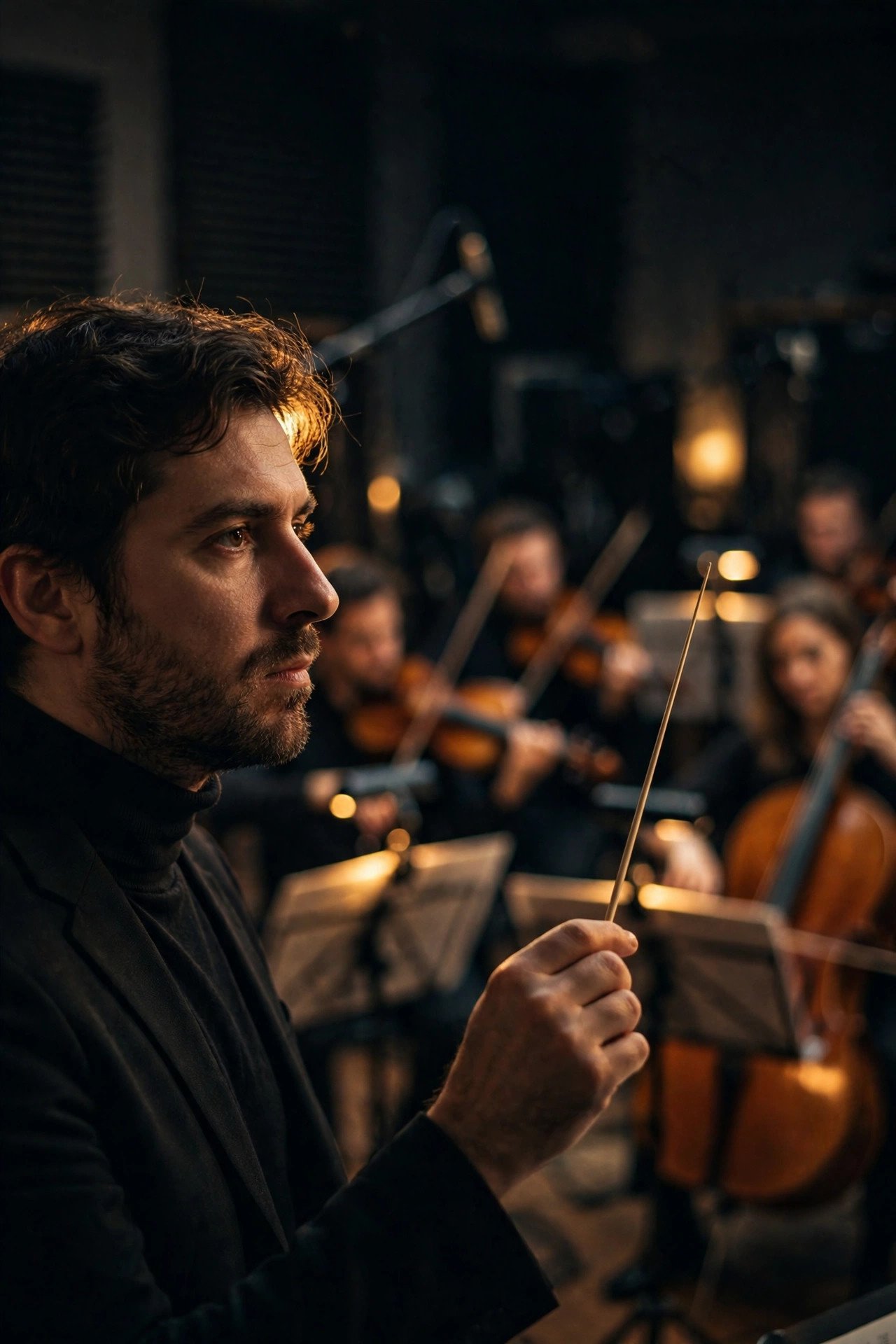
Composer conducting a small string section in a studio, moody low light, music stands glowing under clip lights, cello and violins in soft focus rows, film-score atmosphere, quiet intensity. 50mm lens, shallow depth of field, warm tungsten balance, cinematic grade, film grain.
Why it works: Clip lights on the stands give many small warm lights instead of one flat wash, which is the score-session look. Soft-focus rows give depth, and quiet intensity suits a recording room.
Spotify Canvas & Stories Prompts (Vertical 9:16)
Canvas is a looping video. Use these as the start frame for an image-to-video tool, or as a static Stories image. Midjourney: add --ar 9:16 instead of 4:5.
Vertical Stage Burst
Prompt Structure: Vertical frame + Chorus + Confetti + Pastel light + Lens + Tall composition
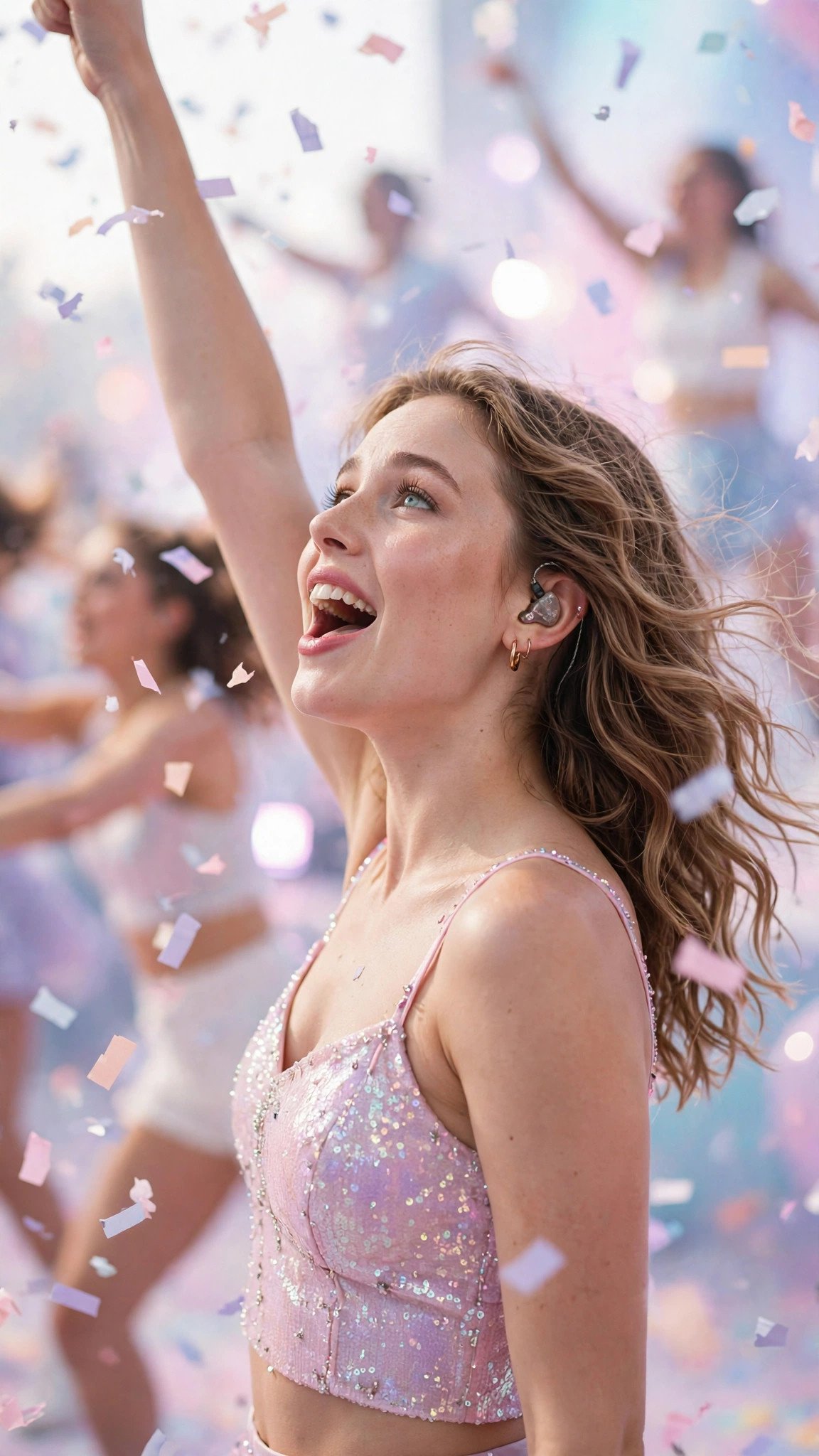
Vertical 9:16 frame of a pop singer mid-chorus on stage, confetti falling through pastel light, one arm raised, dancers blurred behind, bright clean grade, sharp focus on the face, tall portrait composition. 85mm lens, shallow depth of field, high-key lighting, film grain.
Why it works: Built for the tall frame, not cropped from a horizontal shot: the singer fills the frame and confetti falls through it. Sharp focus on the face keeps the star readable on a phone.
Vertical Studio Portrait
Prompt Structure: Vertical frame + Neon + Headphones + Dark bg + Lens + Tall composition
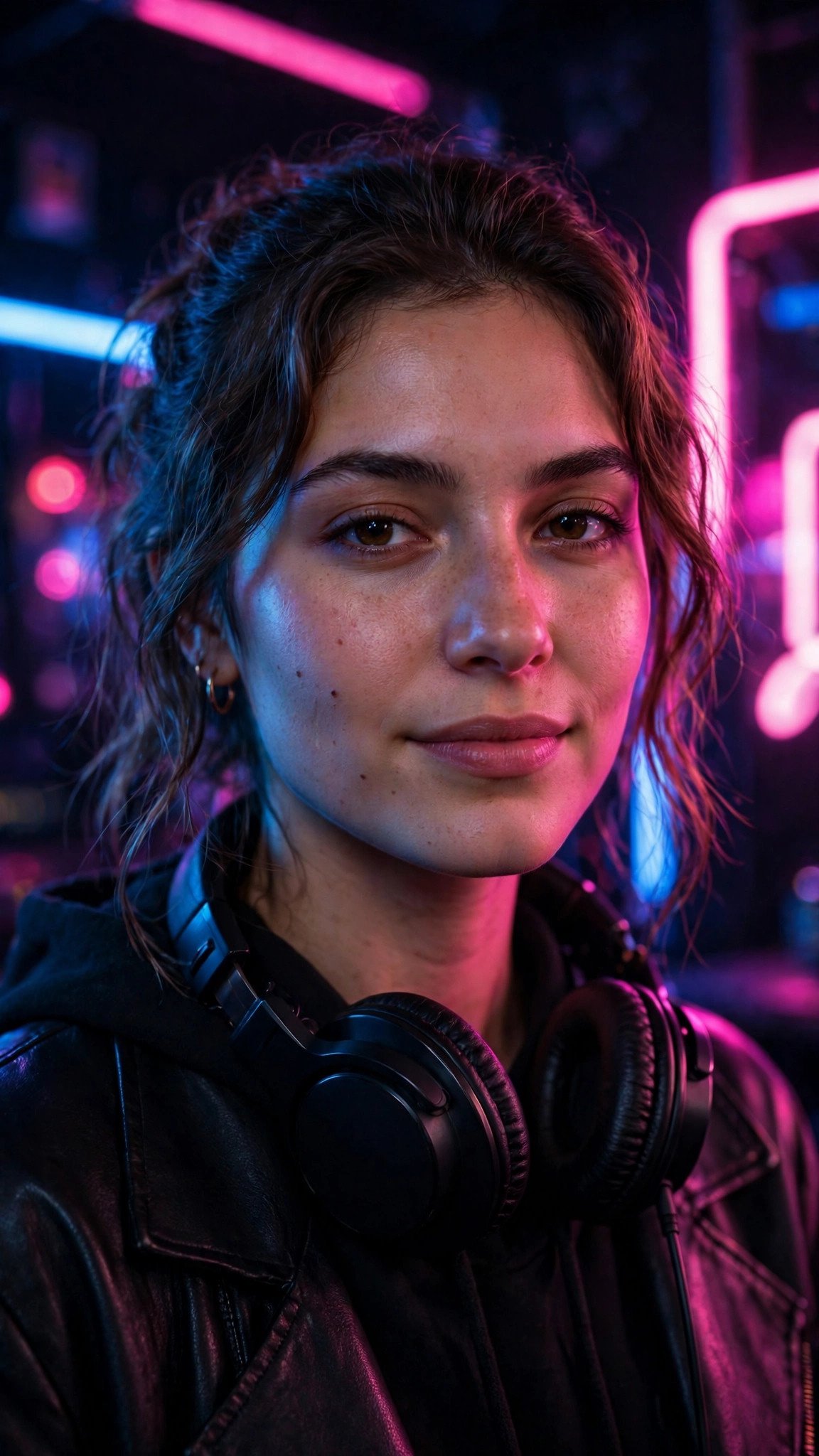
Vertical 9:16 portrait of a singer in a neon studio, headphones around the neck, pink and blue reflections on the face, dark background, calm confident expression, tall portrait composition. 85mm f/1.4 lens, shallow depth of field, neon grade, natural skin texture.
Why it works: Neon reflected on skin is color from the environment, and the tall frame suits Stories without cropping head or shoulders. The dark background keeps the face the only story.
Vertical Lyric Moment
Prompt Structure: Vertical frame + Mic close + Closed eyes + Spotlight + Lyric space + Lens
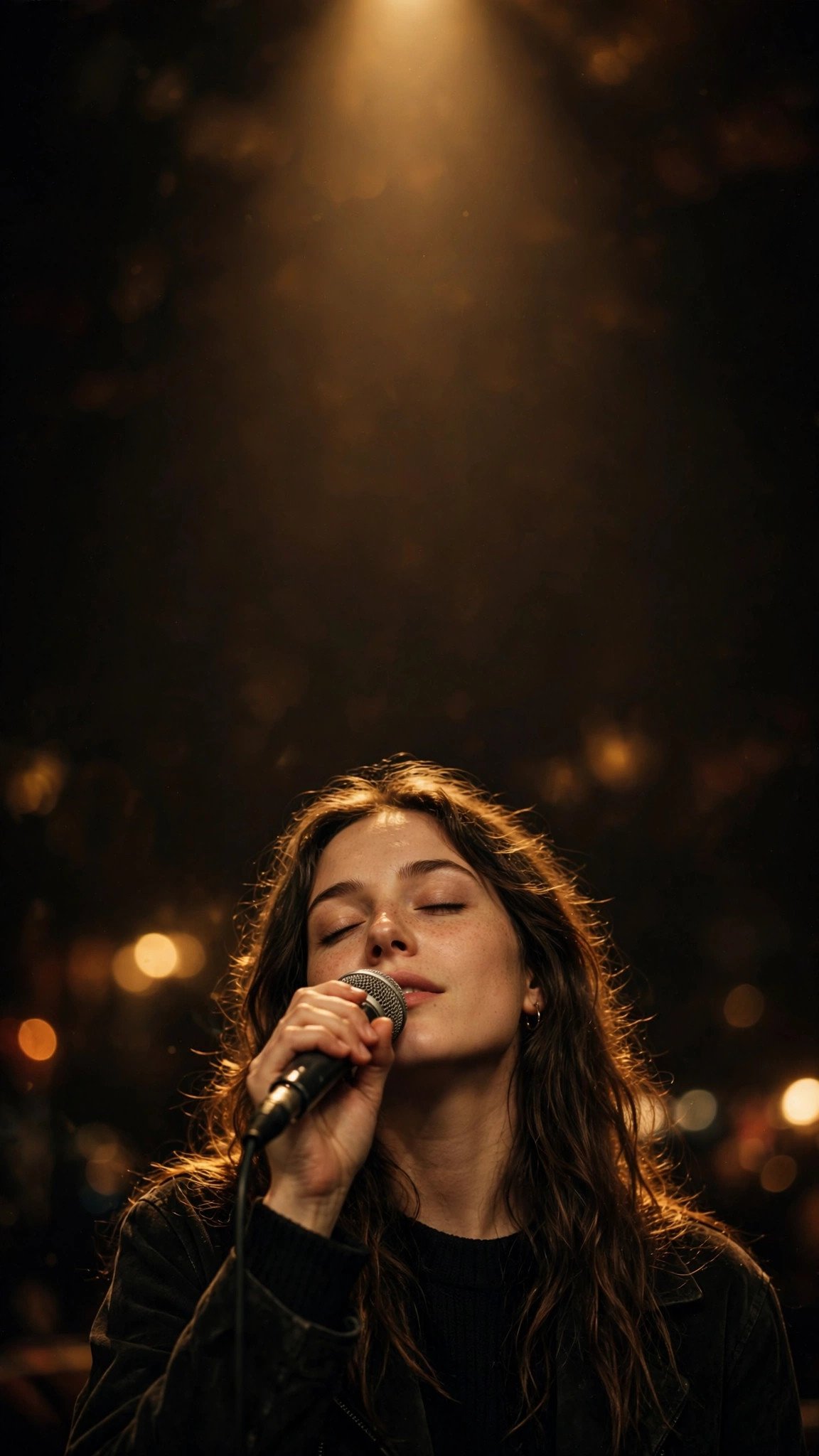
Vertical 9:16 shot of a vocalist holding a microphone close, eyes closed mid-line, warm spotlight from above, dark background with soft bokeh, empty space at the top for lyrics, tall portrait composition. 50mm lens, shallow depth of field, warm grade, film grain.
Why it works: Empty space at the top is the lyric card’s real estate, planned in the prompt rather than added later. Warm spotlight on a dark background keeps the frame clean on small screens.
Vertical Crowd Hands
Prompt Structure: Vertical frame + DJ + Crowd hands + Laser + Haze + Lens + Tall composition
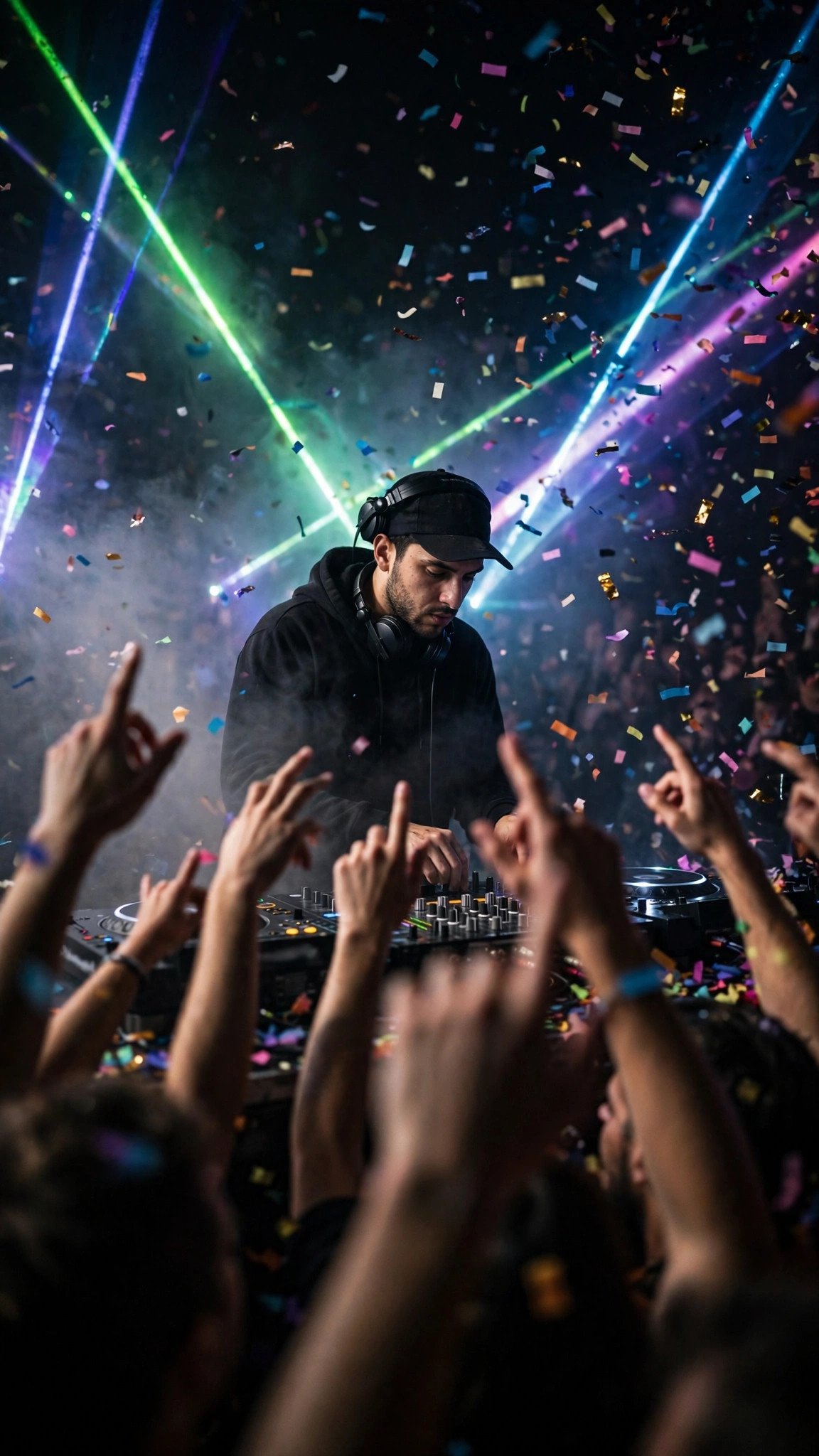
Vertical 9:16 frame of a DJ with crowd hands reaching up in the foreground, laser light cutting through haze, confetti drifting through the beams, tall portrait composition, energetic candid framing, deep blacks, saturated color, grainy low-light look. 24mm wide lens, high contrast.
Why it works: Crowd hands reaching up the tall frame use the vertical shape instead of fighting it, with energy running bottom to top. Deep blacks keep saturated color from washing out on phones.
Vertical Golden Hour Portrait
Prompt Structure: Vertical frame + Golden hour + Guitar strap + Backlight + Field blur + Lens
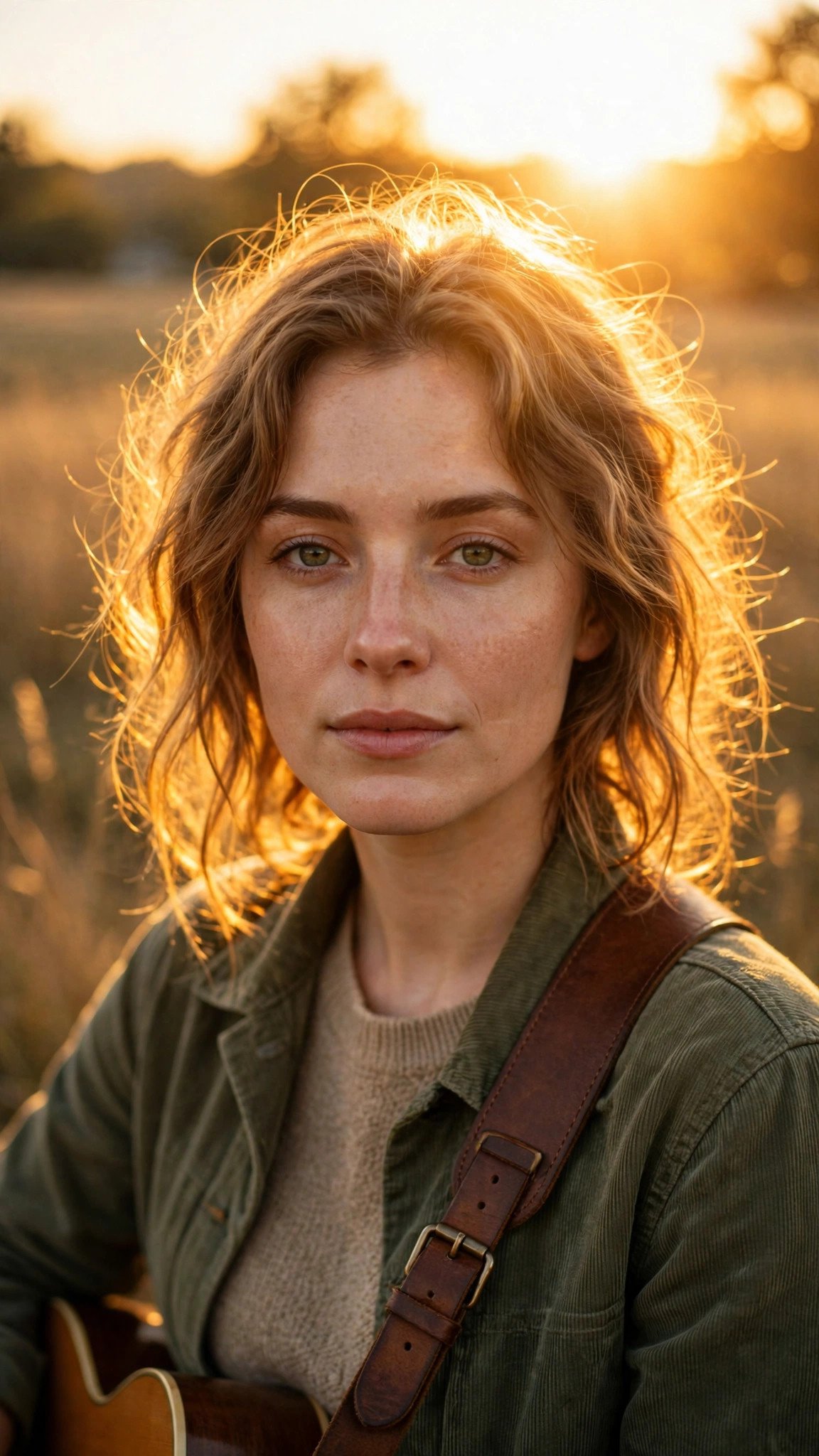
Vertical 9:16 portrait of a folk singer at golden hour, guitar strap over the shoulder, warm backlight glowing through hair, open field blurred behind, calm direct gaze, tall portrait composition. 85mm lens, shallow depth of field, warm amber grade, film grain.
Why it works: Warm backlight through hair is the golden-hour portrait code, and the tall frame keeps the singer full-length. A calm direct gaze suits folk better than a performance pose.
Vinyl & Album Cover Prompts (Square 1:1)
Negative space is planned in each prompt. Add the no-text tags from the Engine Tags table, then place the title afterwards. Midjourney: use --ar 1:1.
Square Desert Icon
Prompt Structure: Square frame + Desert + Golden hour + Negative space + Lens + Analog
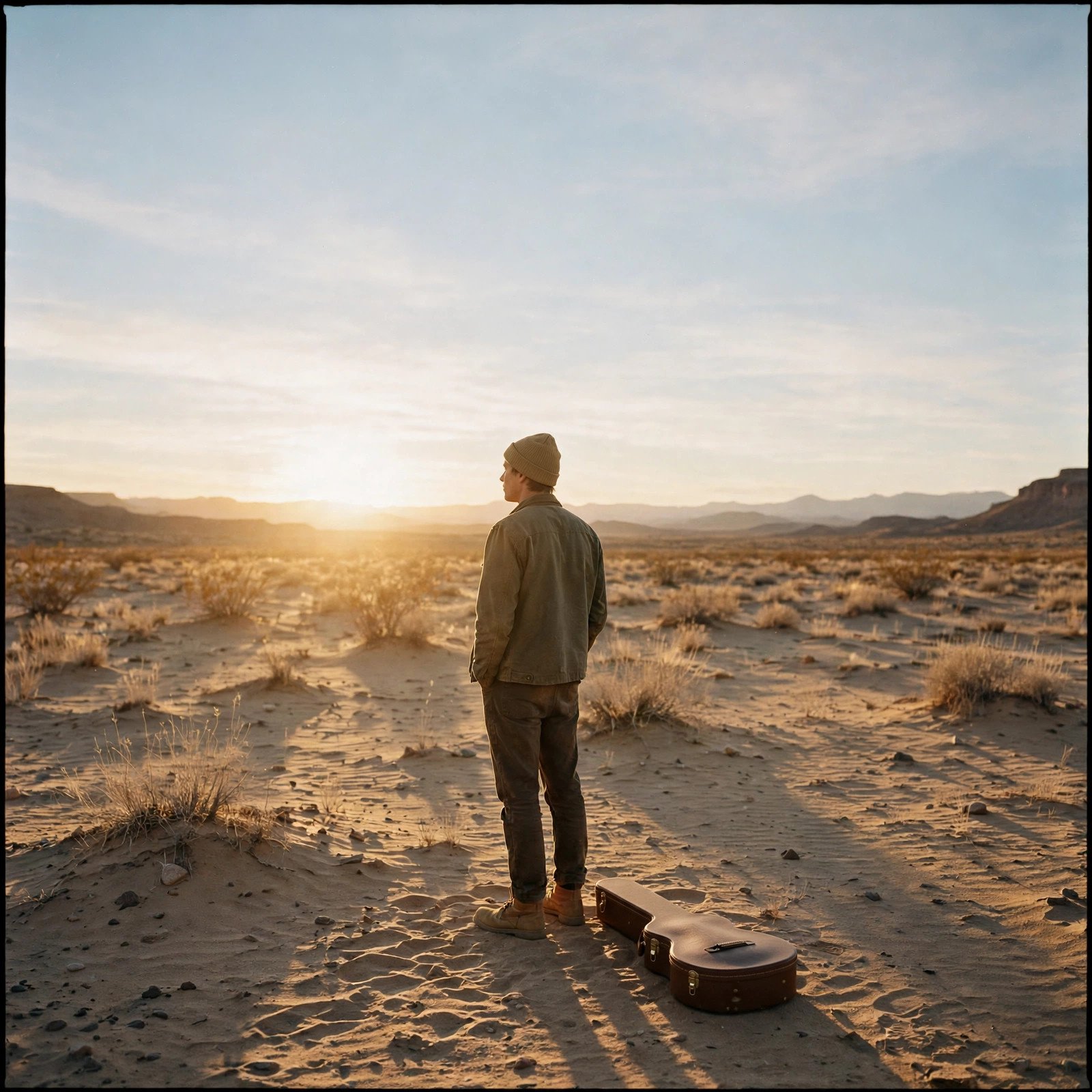
Square 1:1 composition of a lone artist standing in a desert at golden hour, guitar case at the feet, vast empty sky filling the upper third for title text, long shadows, warm backlight, analog photography look. 35mm lens, film grain, quiet cinematic mood.
Why it works: Sky in the upper third is the title’s real estate, planned before generation. A lone figure with long shadows gives the cover an icon.
Square Neon Portrait
Prompt Structure: Square frame + Neon + Profile + Dark bg + Negative space + Lens

Square 1:1 portrait of a singer under neon pink and blue light, face in profile, dark background, wide open space on one side for title text, moody editorial framing, analog look. 85mm lens, shallow depth of field, neon grade, natural skin texture.
Why it works: Profile under neon is a cover, not a concert photo: the mood comes from color. Open space on one side is where the title lives.
Square Shadow Figure
Prompt Structure: Square frame + Silhouette + White light + Haze + Negative space + Lens
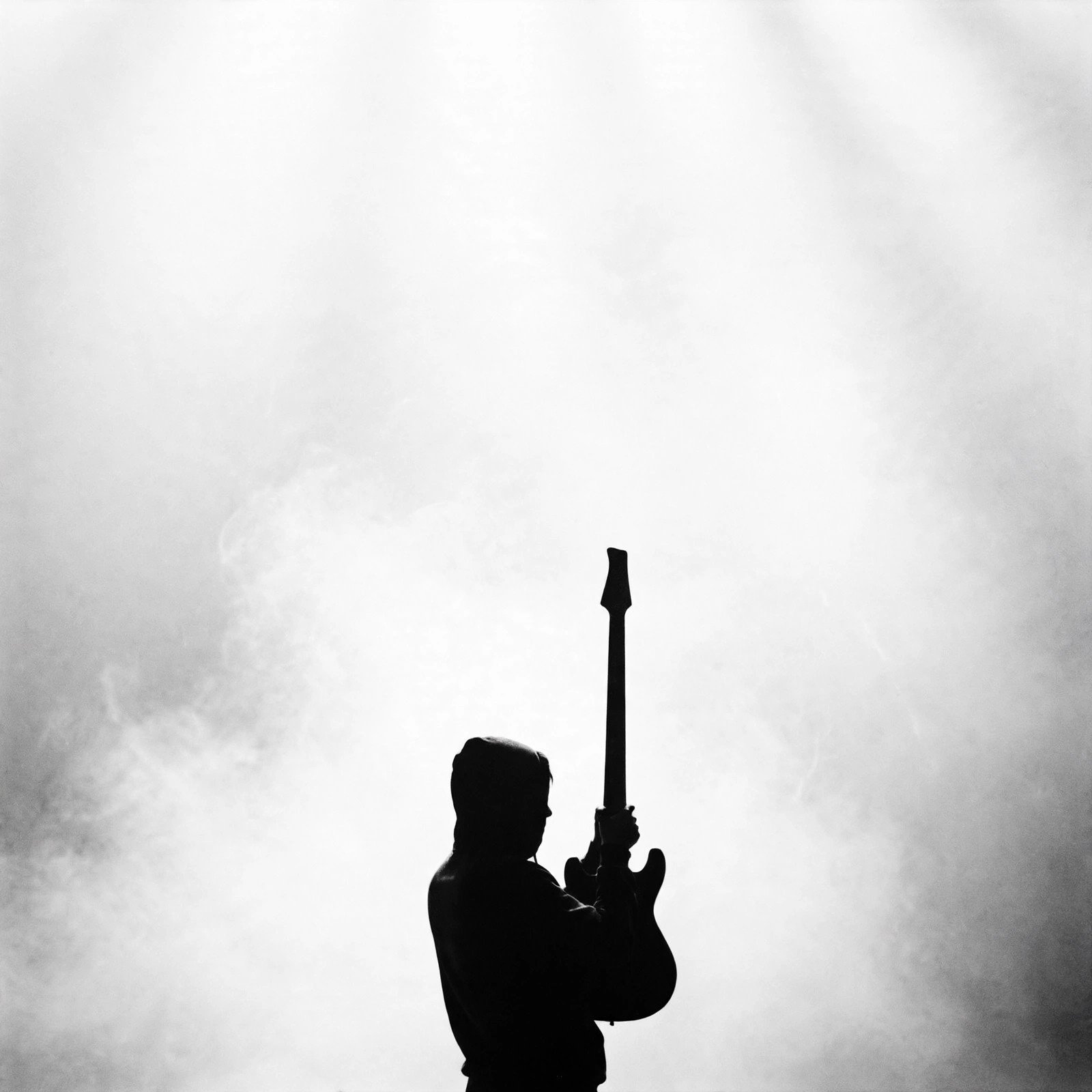
Square 1:1 silhouette of a guitarist against a white wall of light, guitar neck raised, haze in the beam, deep blacks, wide negative space around the figure for typography, minimal composition, analog look. 50mm lens, high contrast, fine film grain.
Why it works: Silhouette plus negative space is the most flexible cover layout, since text can sit anywhere. Haze gives the white wall texture, and the minimal composition stays iconic at thumbnail size.
Square Vintage Band
Prompt Structure: Square frame + 70s styling + Amps + Amber tones + Sky space + Lens
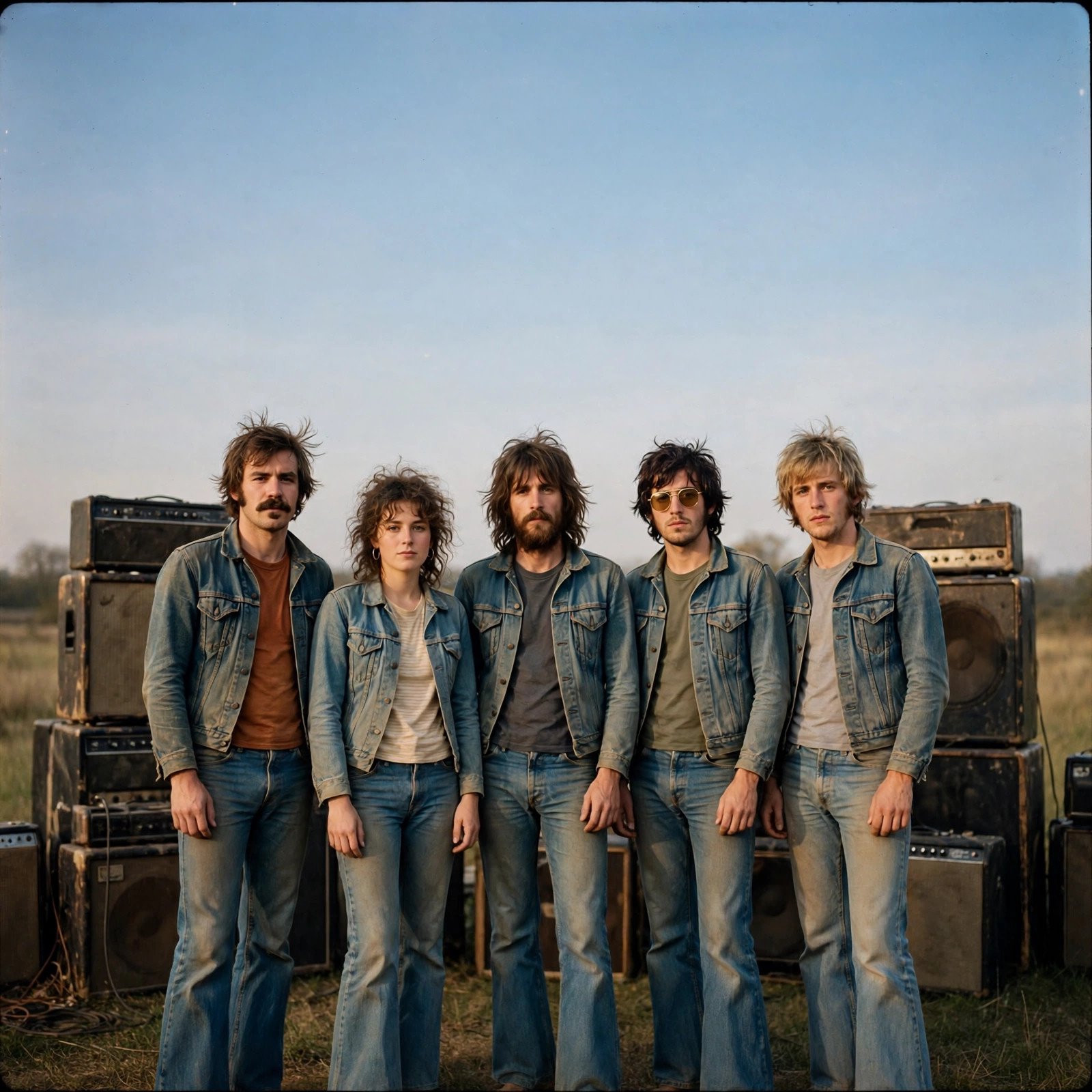
Square 1:1 full band shot in 1970s style, bell-bottoms and denim jackets, slightly disheveled hair, tube amplifier stacks behind, warm amber analog tones, soft vignette, open sky space above for title text, analog look, group posed casually against a dusty road. 35mm lens, film grain, soft natural light.
Why it works: Every element is a period marker (bell-bottoms, denim, tube amps, amber tones), so the decade comes from details rather than the word “vintage”. Soft vignette plus grain matches the film stock of the era.
Square Minimal Instrument
Prompt Structure: Square frame + Single guitar + Plain wall + Window light + Negative space + Lens
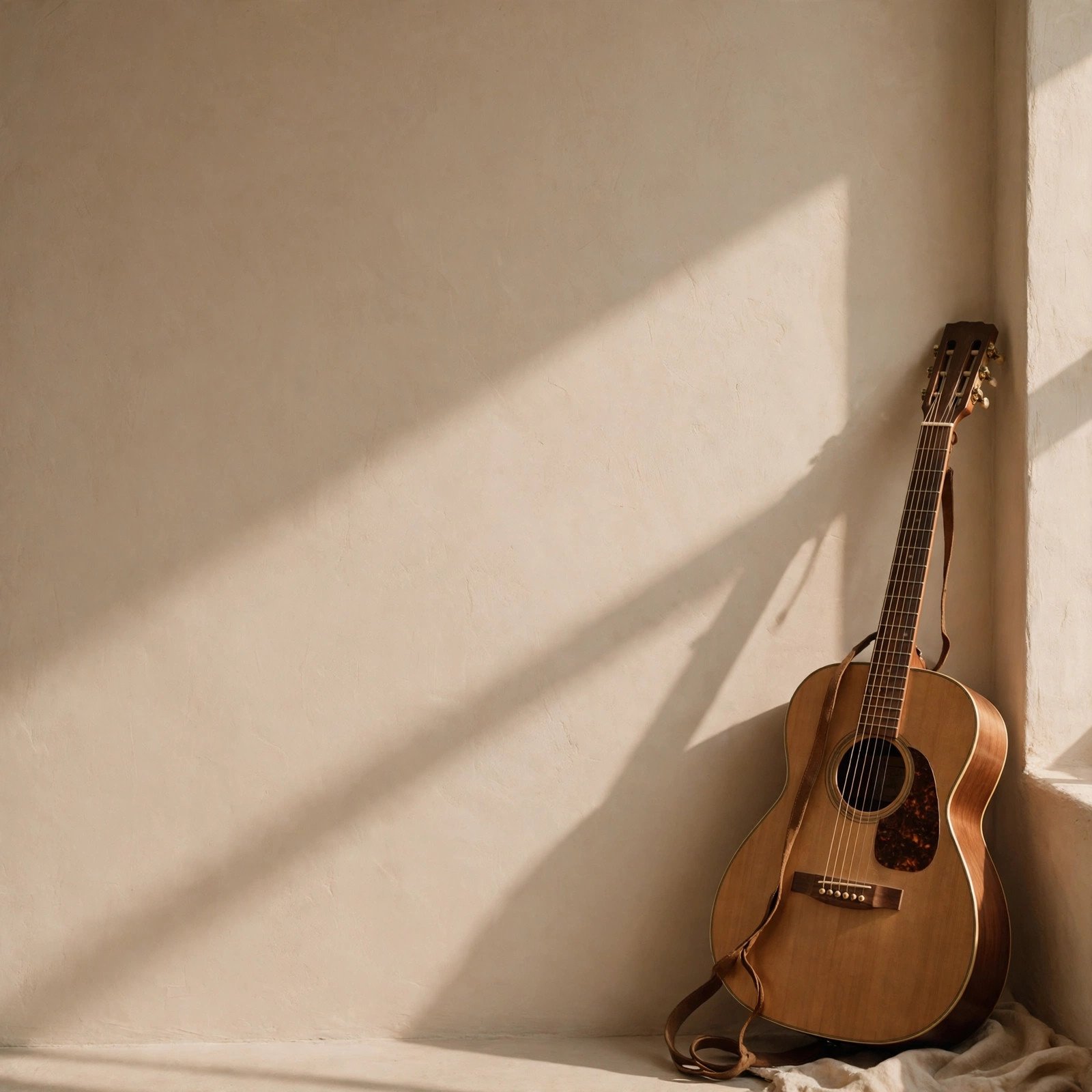
Square 1:1 minimal composition of a single acoustic guitar leaning against a plain warm wall, soft window light, long shadow, wide negative space for title text, quiet still-life mood, analog look. 50mm lens, shallow depth of field, fine film grain.
Why it works: One instrument against a plain wall survives thumbnail size, where busy scenes turn to noise. Long shadow plus window light gives the minimal frame depth.
Press Kit (EPK) Headshot Prompts
Softbox Studio Headshot
Prompt Structure: Headshot + Grey backdrop + Softbox + Even shadows + Lens + True color

Press kit headshot of a musician against a clean grey studio backdrop, large softbox light from the front, soft even shadows, calm confident expression, neutral styling, sharp focus on the eyes. 85mm lens, shallow depth of field, true-to-life color, natural skin texture.
Why it works: A press headshot has one job: the face, readable from a festival poster to a phone screen. Front softbox light removes harsh shadows, and true-to-life color keeps it honest.
Warm Editorial Headshot
Prompt Structure: Headshot + Warm softbox + Warm backdrop + Smile + Lens + Magazine framing
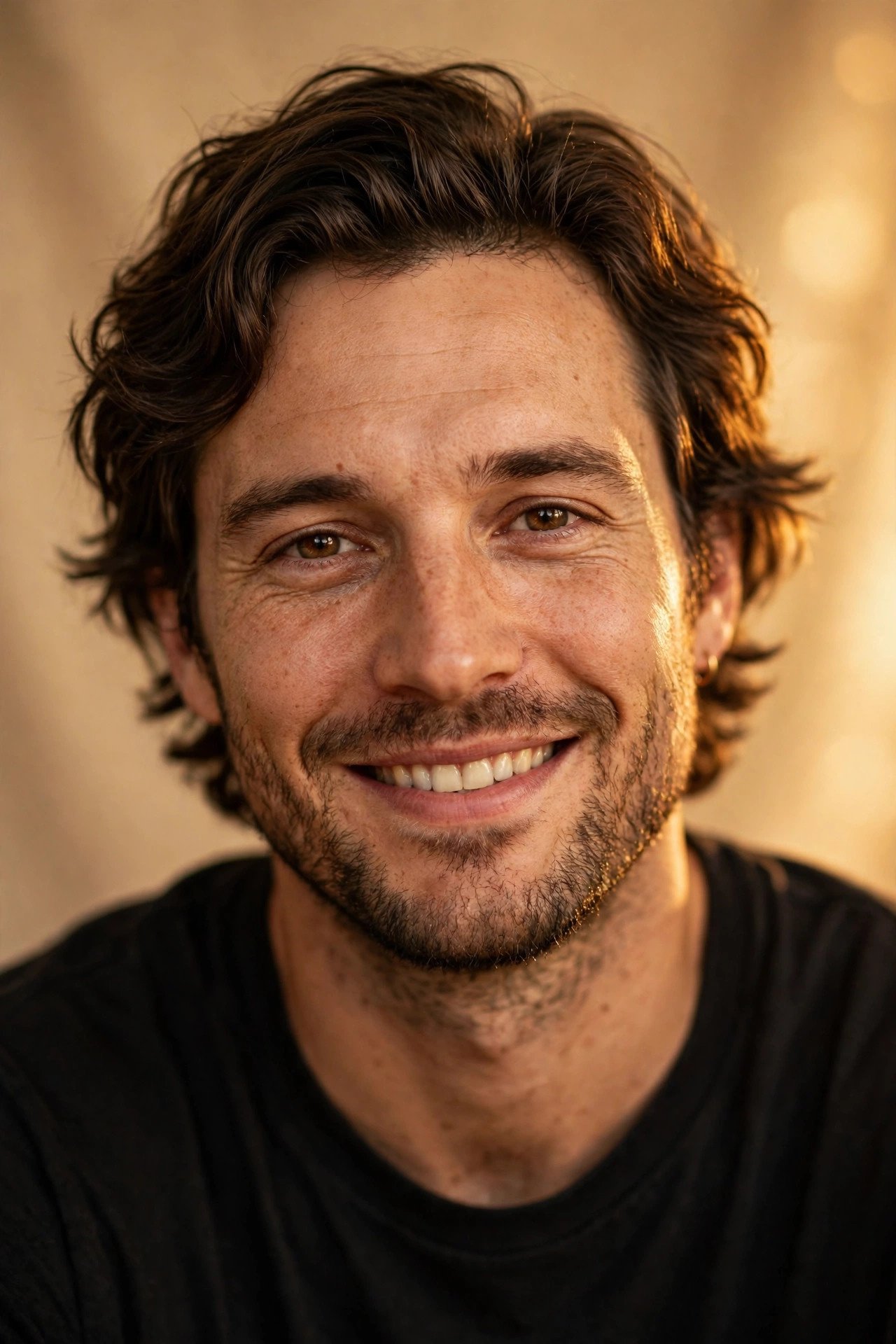
Warm editorial press headshot of a singer, softbox light with a golden tint, clean warm backdrop, relaxed genuine smile, natural makeup, sharp focus on the face, magazine framing. 85mm f/1.4 lens, shallow depth of field, warm grade, natural skin texture.
Why it works: A golden-tinted softbox gives warmth without the orange cast of stage light, and a genuine smile suits press better than a fierce stage face.
Black & White Press Headshot
Prompt Structure: Headshot + Monochrome + Side light + Half shadow + Lens + No color cast
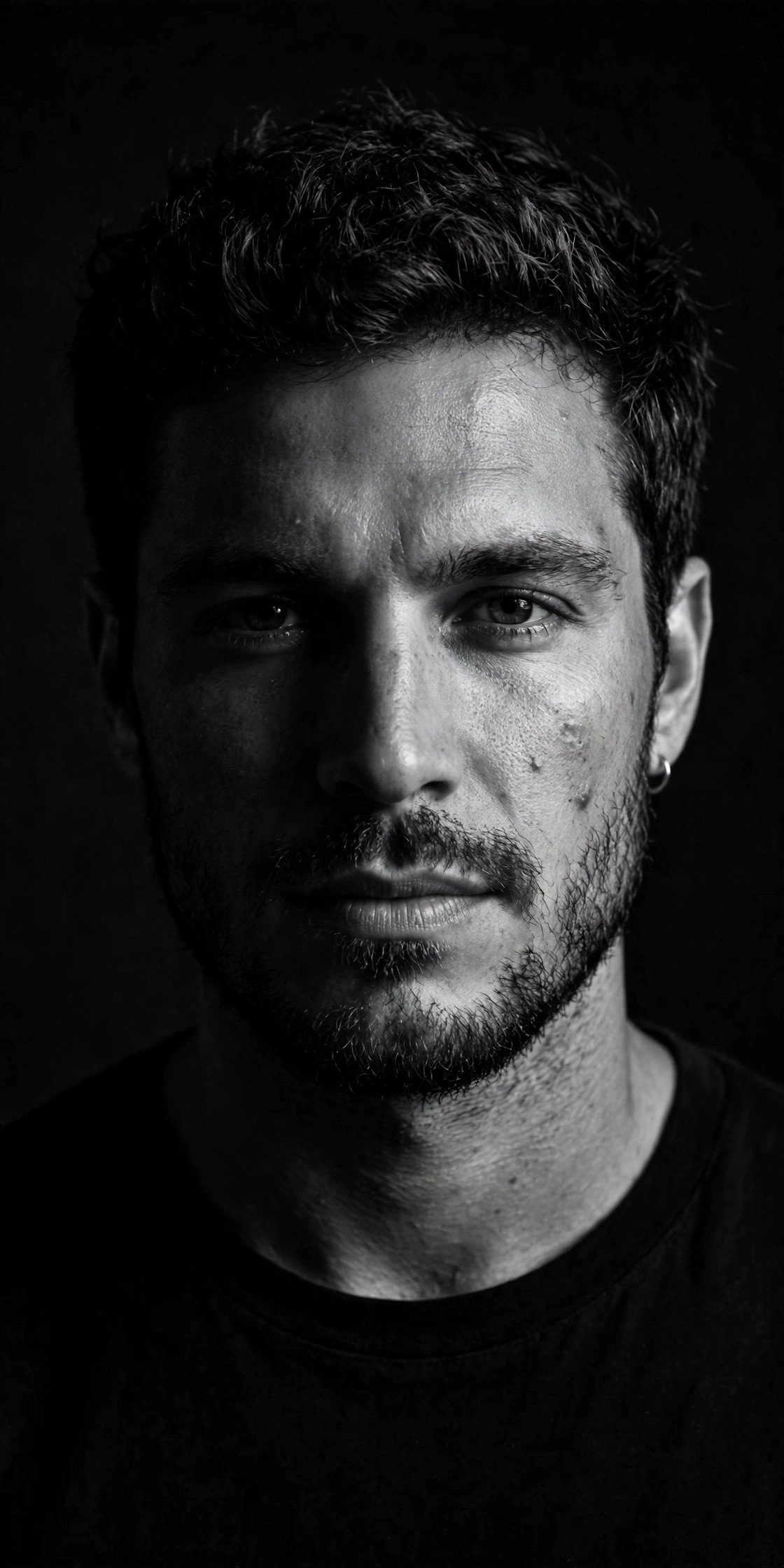
Black-and-white press headshot of a musician, single-source side light, deep shadow across half the face, clean dark backdrop, visible pores and natural texture, confident direct gaze, shoulders fully squared to the camera. 85mm lens, high-contrast monochrome grade, no color cast.
Flux note: use shot on Kodak Tri-X 400 instead of Portra.
Why it works: Removing color forces the shot to work on light alone, and side light with deep shadow is the editorial press look. Visible pores matter because there is no color to hide behind.
Outdoor Press Headshot
Prompt Structure: Headshot + Golden hour + Backlight + Park blur + Denim + Lens + Editorial

Outdoor press headshot of a musician at golden hour, soft warm backlight, blurred park background, relaxed natural pose, calm easy smile, denim jacket, sharp focus on the face, editorial framing. 85mm lens, shallow depth of field, warm amber grade, film grain.
Why it works: Golden-hour backlight with a blurred park gives a press photo that feels alive rather than studio-stiff. Denim keeps styling neutral across genres.
Instrument-in-Hand Headshot
Prompt Structure: Headshot + Instrument + Studio backdrop + Softbox + Face first + Lens
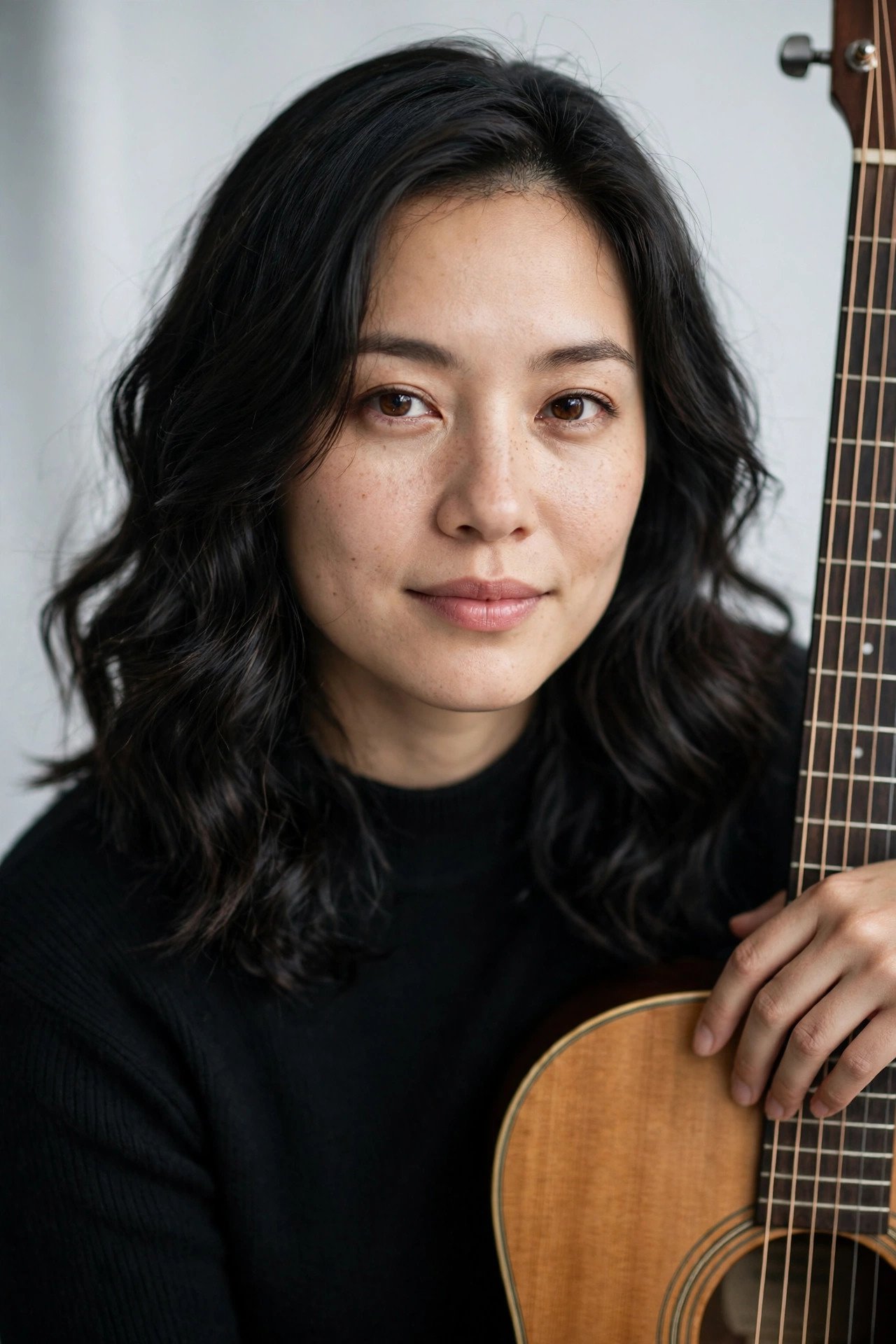
Press headshot of a musician holding their instrument, clean studio backdrop, softbox light, instrument visible but face clearly the subject, calm confident expression, relaxed shoulders, sharp focus on the eyes. 85mm lens, shallow depth of field, true-to-life color, natural texture.
Why it works: The instrument says what the musician does while the face stays the subject. A headshot that hides the face behind a guitar fails at its job.
Before & After: Why Engineered Prompts Win
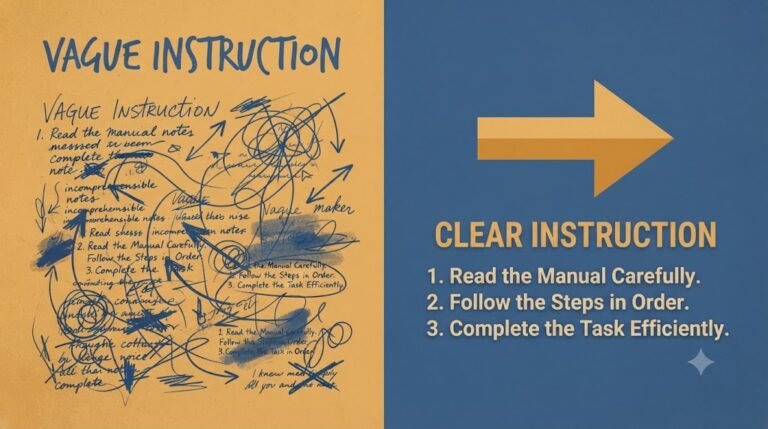
Amateur prompt: “cool rockstar with guitar”
Engineered prompt: “35mm film shot of a female bassist playing a Fender Precision in a sweaty live club, medium shot from the waist up, both hands fully in frame, single amber spotlight from the side, haze in the air, crowd softly blurred behind. 50mm lens, shallow depth of field, natural skin texture, film grain.”
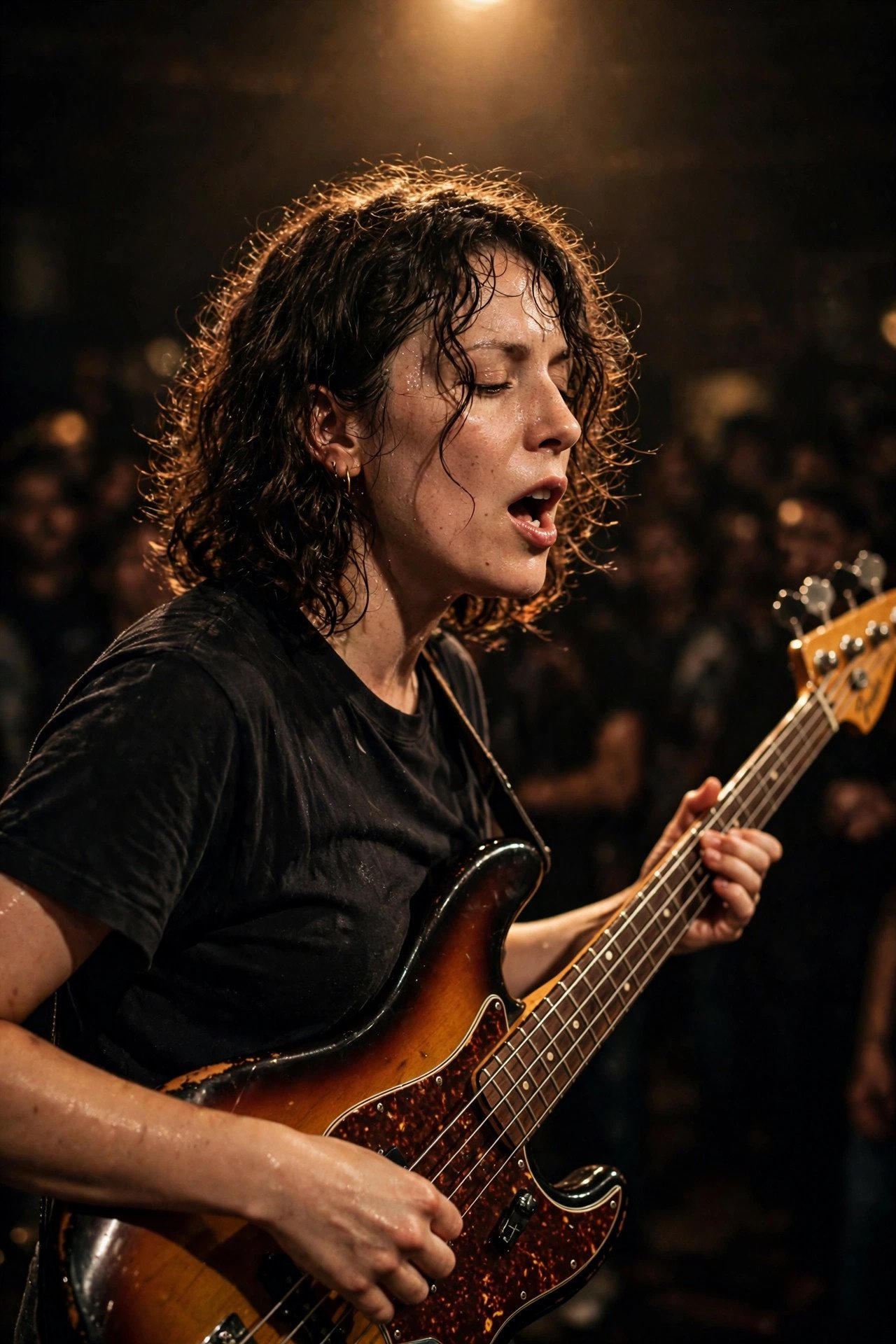
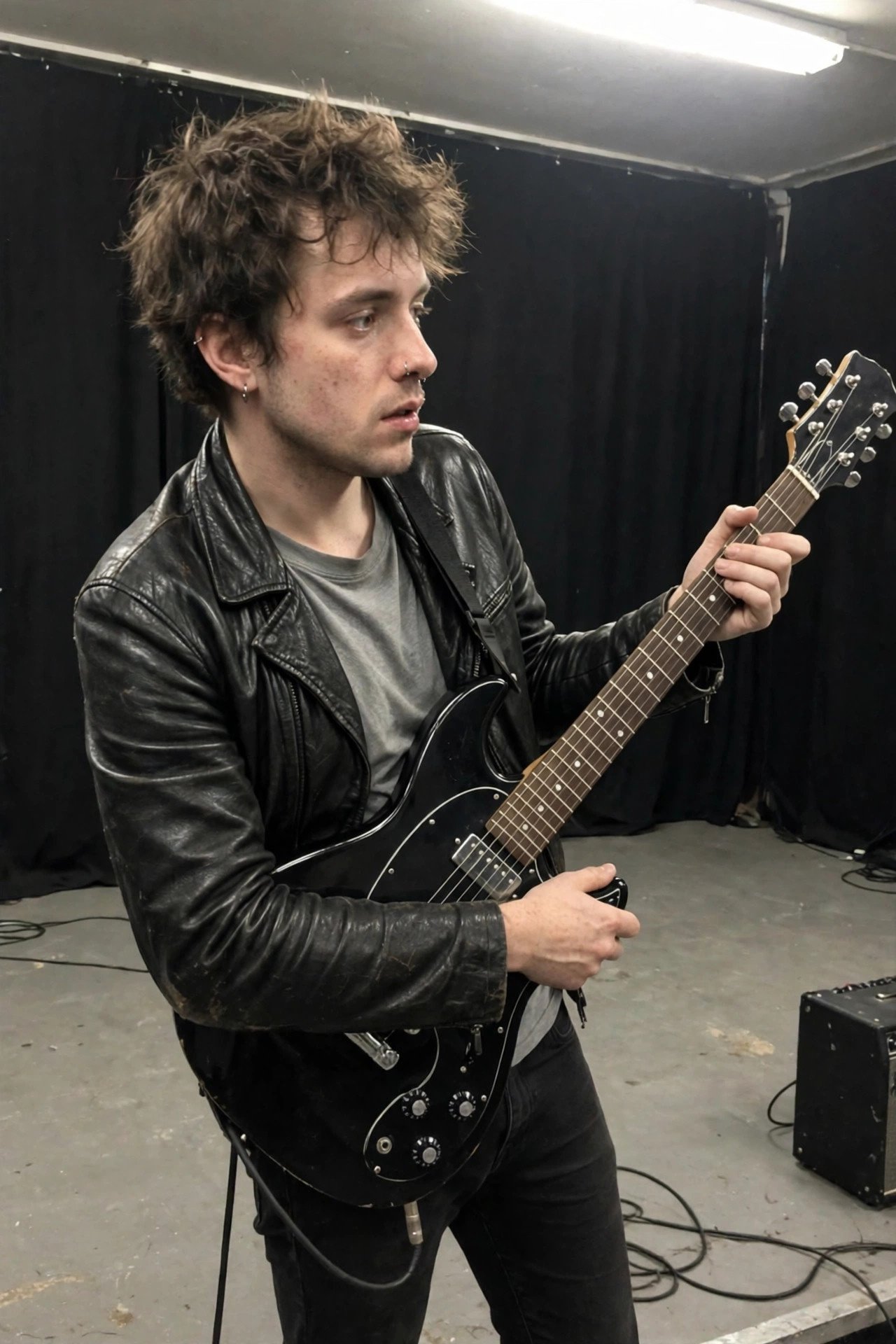 BeforeAfter
The difference is the whole guide in one image: a vague wish versus a photography brief.
FAQs
How do I stop AI from generating broken hands on guitar frets?
Use the Instrument Safety Rule: shoot waist-up or over the shoulder instead of an extreme hand close-up, show hands fully in frame rather than cropping through them, and add motion blur on the hands when the shot allows. On Midjourney add --no extra fingers, distorted guitar. On Flux, flip it positive: write “clean natural hands with five fingers and an accurate guitar shape”. Framing fixes more glitches than negative words ever will.
What is the best aspect ratio for an AI-generated album cover?
Square 1:1, with negative space planned for the title. Streaming platforms and vinyl both display square, and a cover that needs cropping loses its composition. Keep the title space empty in the image and add typography afterwards, since AI text rendering still mangles letters. For Spotify Canvas and Stories, generate a separate vertical 9:16 version instead of cropping the square.
What resolution does an album cover need?
Streaming services generally ask for a 3000 x 3000 px square. Most generators output far less, so upscale the final image with an upscaler before upload and check the distributor’s current spec.
How do I get realistic skin texture on musicians instead of plastic skin?
Write texture into the prompt: natural skin texture, visible pores, sweat sheen. Never write flawless, perfect, or beautiful skin, which pushes the model toward smoothing. Add film grain, an 85mm lens description, and natural or single-source light. Grain plus texture words together beat either one alone.
How do I prompt for a whole band instead of one musician?
Pick one musician as the subject and keep the rest soft: “singer in focus, bandmates softly blurred behind”. Use a wide lens (24mm to 35mm), limit the band to three or four people, and use silhouette when you need all of them clean. More faces means more glitches, so give the model fewer details to get right.
Can I use AI-generated musician portraits commercially on Spotify and Apple Music?
It depends on the tool you generated with. Check that generator’s current commercial-use terms before publishing anything, and never generate a real person’s likeness, because likeness rights belong to that person regardless of the tool. Original portraits of fictional musicians, made on a plan that allows commercial use, are the safe path for covers, Canvas, and press kits. This is general guidance, not legal advice, and terms change, so re-check before a commercial release.
The Bottom Line
The best musician image prompt is a photography brief, not a wish list: one real moment, one named lens, one main light, and honest imperfection. Pick the genre or format above, copy the prompt, change the artist and the light to fit your shot, and keep the structure. For deeper light control, see the lighting effect prompts guide. That method survives every model update, because cameras and light do not change even when tools do.
The preview images in this guide were generated as illustrations of each prompt. They were not made with Gemini, Midjourney, Flux, or DALL-E, so your results on those engines will differ.