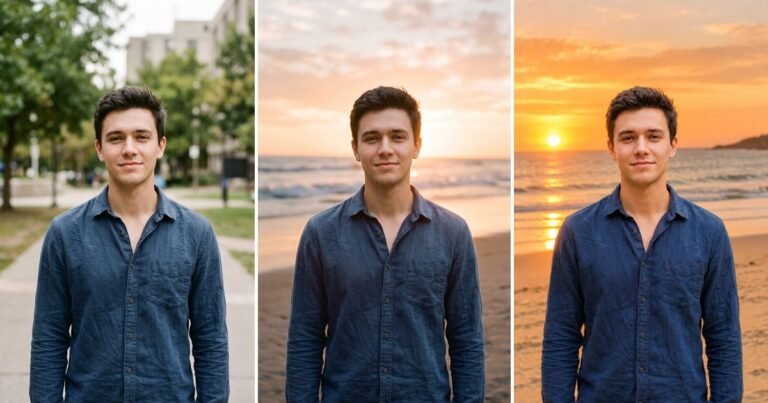
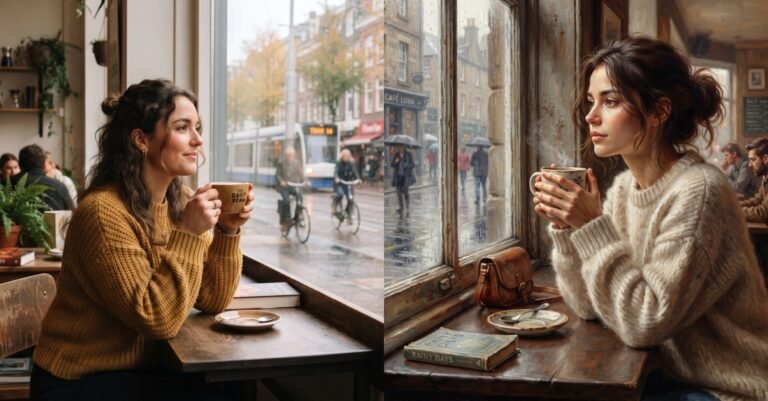
People say AI photo editing is a slot machine: same prompt, different picture every time. We wanted to know if that is actually true for Gemini, so we ran the simplest test we could think of.
Same photo. Same prompt. Ten times. Three different photos, one fixed prompt each, every run in a brand-new chat, first result only. No retries, no cherry-picking, no best-of. Whatever Gemini gave us first is what you see below.
The short answer
- 27 of 30 runs produced an image. Every single one of the 27 scored as usable — usable meaning a total of 12 or more out of 15: average 14.5 out of 15, worst run 13 out of 15.
- The face is not the gamble. Face-keeping averaged 4.7 out of 5 across all 27 images. No face failed outright. One noticeably drifted — Scenario 2’s run 9 scored 3 out of 5 for face-keeping and looks like a different person on a second look. Every other run scored 4 or 5.
- Outfit colours never changed. 0 out of 27 runs. When the prompt names the colours, Gemini locks them.
- The drift lives at the edges: pose changed once, framing changed 4 times, background details changed 8 times out of 27.
- The real failure was not a bad image. It was no image. The last 3 runs of Scenario 3 stalled completely and never produced output. More on that below, because it matters if you generate in bulk.
Scoring method: each image was scored blind out of 15 (following instructions /5, keeping the face /5, image quality /5), and each run was coded for drift against the most common result in its scenario: pose, framing, outfit colours, background. The full scores are published in the dataset at the end.
Scenario 1: the office portrait
The input photo:
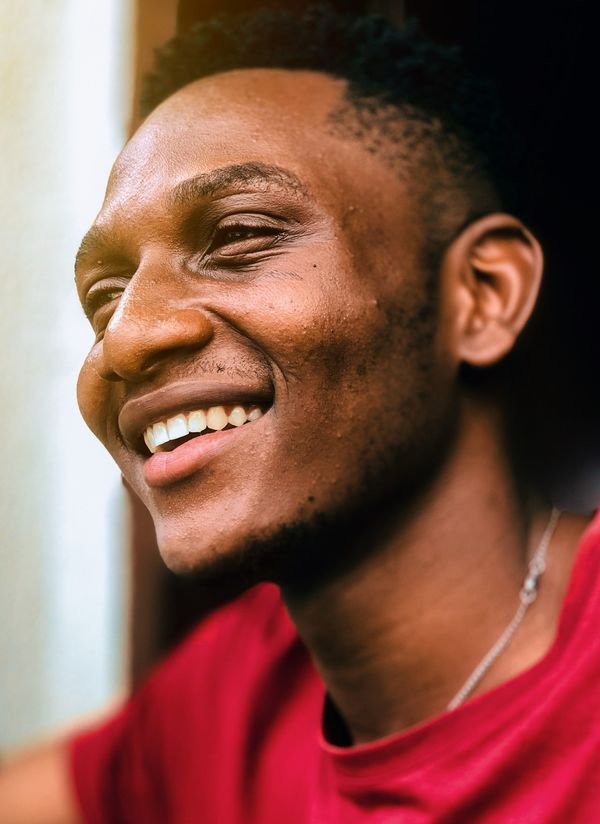
The exact prompt, pasted word for word in all 10 runs:
Edit this photo: keep the same man, same face, same hairstyle and skin tone, fully recognizable. Change the setting to a modern office portrait: navy blazer over a white shirt, soft window light from the left, plain warm gray background, waist-up framing, looking at the camera with a relaxed smile.
All 10 results:
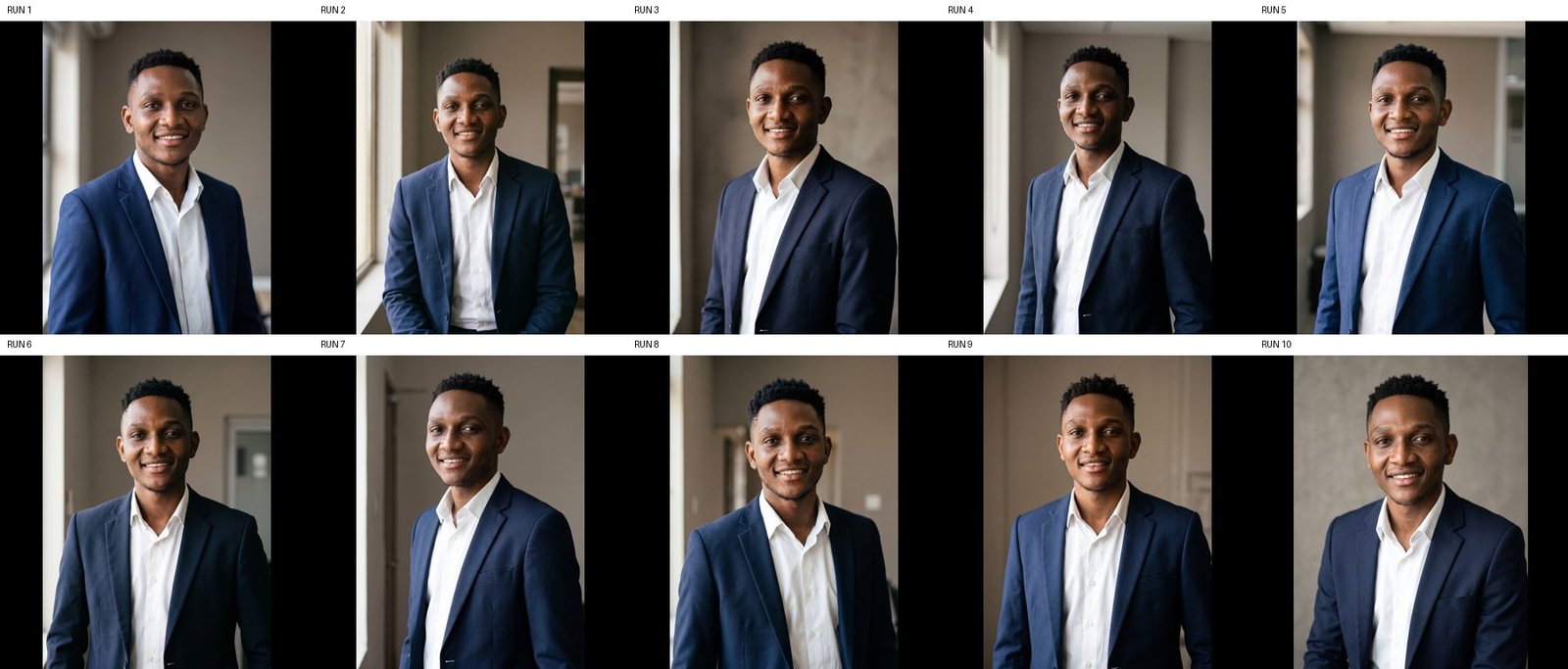
The numbers: average 14.0/15 (range 13–15) · face-keeping 4.7/5 · usable 10/10.
Why so many 4s on instruction-following: the lost point was nearly always one of two misses — no visible window where the prompt asked for window light, or tighter chest-up framing than the waist-up framing the prompt set.
What actually changed: the man, the blazer and the smile are the same in all 10. What moves is the room. A doorway appears behind him in 3 runs, the window vanishes in 3 (the light stays soft, the window itself is gone), and the framing tightens from waist-up to chest-up in 3. In one run (run 7) his body turns three-quarter instead of facing the camera. If you needed this exact composition, you would re-roll. If you needed this man in a blazer, you got him 10 times out of 10.
Scenario 2: the café swap
The input photo:

The exact prompt:
Edit this photo: keep the same woman, same face, same hairstyle and skin tone, fully recognizable. Place her at an outdoor cafe in the morning: white top and light cardigan, coffee cup on the table in front of her, soft sunlight, blurred street behind, chest-up framing, gentle smile at the camera.
All 10 results:

The numbers: average 14.7/15 (range 13–15) · face-keeping 4.7/5 · usable 10/10.
What actually changed: this is where we saw Gemini’s habit most clearly. It does not invent a new café each time. It returns to a favourite template: same pose, same round table, cup in the same spot, same blurred street. The variations are garnish. Framing tightened once, a café awning took over the background once, the cup gained or lost latte art, and background people shuffled. The one real miss is run 9, where her face shifts enough to notice: same person at a glance, different person on a second look. That single run is the difference between “consistent” and “always consistent”, and it is why we score faces separately instead of trusting the vibe of the grid.
Scenario 3: the 90s street portrait
The input photo (black and white):

The exact prompt:
Edit this photo: keep the same person, same face, same hairstyle and skin tone, fully recognizable. Dress them in 1990s street style: denim jacket over a white t-shirt, film photo look with soft grain, standing against a brick wall, upper body framing, arms crossed, confident expression.
All 7 completed results:

The numbers: average 14.9/15 (range 14–15) · face-keeping 4.9/5 · usable 7/7.
What actually changed: almost nothing, and that is the story. Pose: identical in 7 of 7. Framing: identical. Outfit: identical. The only thing Gemini kept redecorating was the wall: an alley opens up at the left in 3 runs, and one run gets a weathered, poster-covered wall. Give Gemini a pose it likes and it will hold that pose like a statue.
About runs 8, 9 and 10: they produced no image at all. Each sat on “Creating your image” for about seven minutes, page reloads changed nothing, and no error or refusal was ever shown. This happened immediately after 27 generations in roughly 70 minutes on the same account, and the honest reading is a generation throttle, not a prompt problem: runs 1–7 with the identical prompt each finished in under a minute. We are publishing Scenario 3 at 7 runs rather than quietly completing the set later, because the stall is itself a finding: under heavy back-to-back use, Gemini’s failure mode is silence, not garbage. If you batch-generate for real work, plan around that.
 Read nextPromptTick AI Photo Editing Benchmark: Gemini vs ChatGPT (Edition 1)10 min read
The verdict
- For faces, Gemini is consistent. 27 first-try edits, no outright face failures, face-keeping at 4.7/5. The slot-machine reputation is out of date for photo editing — within this test’s limits: 3 photos, one account, one scorer. A strong signal, not a census.
- For exact compositions, it is not. Something drifts in roughly 2 runs in 5 — 11 of the 27 runs changed at least one coded thing, and backgrounds alone drifted in about 3 runs in 10. If the background matters, say more about it, or expect a re-roll.
- Named colours are locked. Navy blazer, white top, denim jacket: 27 for 27. Specific instructions beat vibes.
- Gemini has favourite templates. Especially for common scenes (a café, a portrait against a wall), it reaches for a stock composition and decorates it differently. Your prompt steers the template more than it creates from scratch.
- The luck is real, but it is not where people think. It is not “will this still be me?” It is “which version of the room will I get, and will the generation finish at all?”
Try it yourself
Run the same test with your own photo. The rules that make it a test instead of a vibe: a new chat for every run, the exact same prompt pasted each time, and you keep the first result even when it disappoints you. The three prompts we used are quoted in full under each scenario above. If your face drifts more than ours did, your prompt is the first suspect: every prompt in this test started by naming exactly what had to stay the same.
Method and full data
Test design was fixed before any run was made: 3 scenarios, 10 runs each, Gemini web app (Pro account), fresh chat per run, first output only, no myth words in prompts. Scoring was done blind after all runs finished, using the rubric above. Three Scenario 3 runs produced no output and are recorded as stalls, not zeroes, because there was no image to score.
Per-run scores (Instruction / Face / Quality / Total, plus drift codes):
Scenario 1: office portrait
| Run | Instruction | Face | Quality | Total | What changed |
|---|---|---|---|---|---|
| 1 | 5 | 5 | 5 | 15 | none |
| 2 | 5 | 4 | 5 | 14 | background |
| 3 | 4 | 5 | 5 | 14 | none |
| 4 | 5 | 4 | 5 | 14 | none |
| 5 | 4 | 5 | 5 | 14 | framing |
| 6 | 4 | 5 | 5 | 14 | framing, background |
| 7 | 4 | 4 | 5 | 13 | pose, background |
| 8 | 4 | 5 | 5 | 14 | framing |
| 9 | 4 | 5 | 5 | 14 | none |
| 10 | 4 | 5 | 5 | 14 | none |
Scenario 2: café swap
| Run | Instruction | Face | Quality | Total | What changed |
|---|---|---|---|---|---|
| 1 | 5 | 5 | 5 | 15 | none |
| 2 | 5 | 5 | 5 | 15 | none |
| 3 | 5 | 5 | 5 | 15 | none |
| 4 | 5 | 4 | 5 | 14 | framing |
| 5 | 5 | 5 | 5 | 15 | none |
| 6 | 5 | 5 | 5 | 15 | none |
| 7 | 5 | 5 | 5 | 15 | none |
| 8 | 5 | 5 | 5 | 15 | background |
| 9 | 5 | 3 | 5 | 13 | none |
| 10 | 5 | 5 | 5 | 15 | none |
Scenario 3: 90s street
| Run | Instruction | Face | Quality | Total | What changed |
|---|---|---|---|---|---|
| 1 | 5 | 5 | 5 | 15 | none |
| 2 | 5 | 5 | 5 | 15 | background |
| 3 | 5 | 5 | 5 | 15 | none |
| 4 | 5 | 5 | 5 | 15 | background |
| 5 | 5 | 4 | 5 | 14 | background |
| 6 | 5 | 5 | 5 | 15 | none |
| 7 | 5 | 5 | 5 | 15 | background |
| 8 | no output | generation stalled | |||
| 9 | no output | generation stalled | |||
| 10 | no output | generation stalled | |||
Download the full per-run scores (CSV)
Input photos are free stock portraits from Pexels. This test covers photo editing with a face reference. It does not measure text-to-image generation from scratch, which is a different and much less consistent task.
More PromptTick research: the Prompt Length Test, where we ran short, medium and long versions of the same prompts 30 times to find out whether longer prompts actually work better.